Buying Guide
What Is Meenakari Jewellery? A Complete Guide
The enamel craft that travelled from Persia to Jaipur, hid on the back of jewellery for centuries, and is now the front of it.
Updated 5 min readRenu Ornaments
The technique, in plain terms
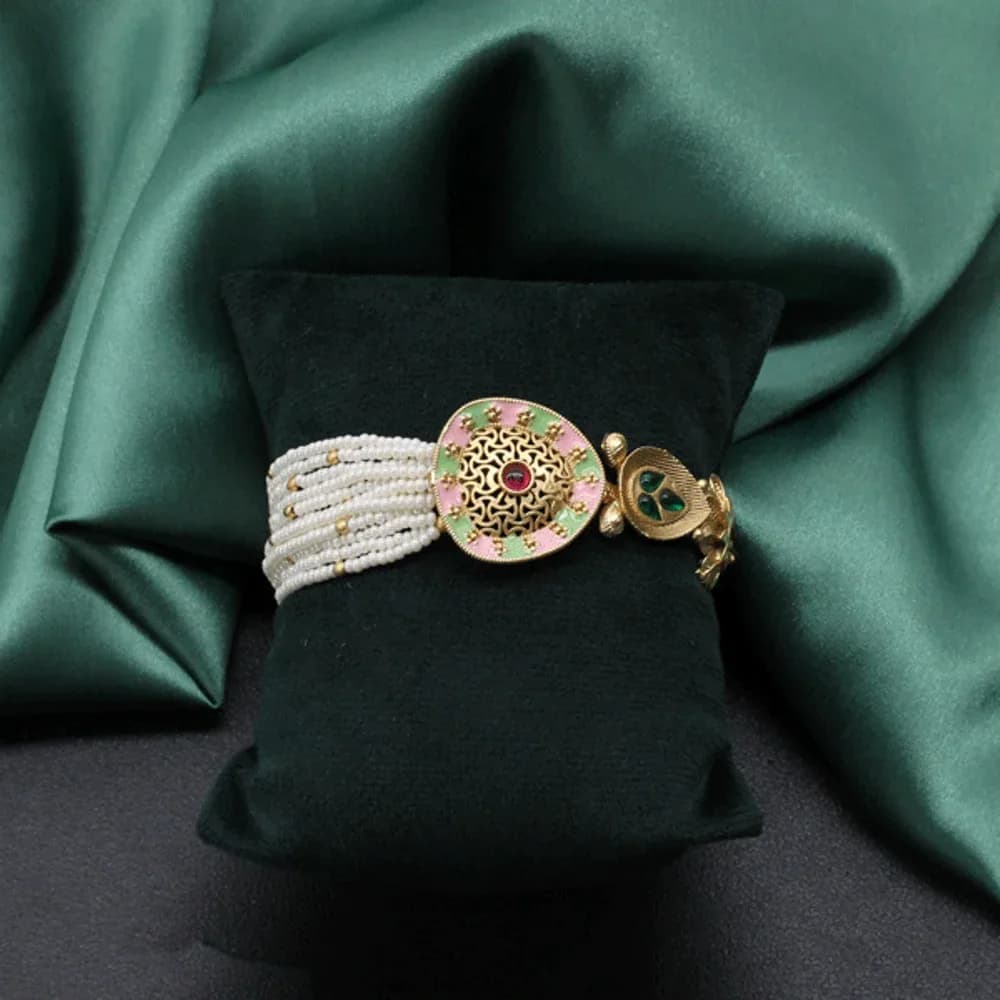
Meenakari — from the Persian mina, meaning heaven or the azure of the sky — is the art of fusing coloured glass onto metal. Fine metal walls or engraved recesses are created on the surface of a piece, coloured enamel powder is packed into those recesses, and the whole thing is fired. The powder melts, flows and hardens into a glassy, permanent colour.
Colours are fired in sequence, from the one needing the highest temperature to the lowest — traditionally white, then the harder colours, and red last, because red is the most volatile. Each firing risks the colours already laid down. That sequencing is the difficult part of the craft and the reason skilled meenakari is expensive.
How it came to India
Enamelling has a long history across Persia and Central Asia. The technique arrived in India through Mughal-era exchange and settled most famously in Jaipur, where Raja Man Singh I is credited with bringing Lahore enamellists to the city in the 16th century. Jaipur meenakari — deep reds and greens on gold — became the benchmark and still is.
Other regional traditions developed alongside it: Varanasi's pink enamel work, Lucknow's blue-and-green on silver, and Delhi's own workshops. Each has a recognisable palette.
The detail most people don't know
In classical Jaipur jewellery, meenakari was often on the reverse of the piece. The front carried kundan-set stones; the back — the side that touched the skin and that only the wearer would ever see — was enamelled in intricate florals.
It was a private luxury, and it also made the piece reversible in a practical sense: turn the necklace and you had a different look. Contemporary fashion jewellery brings the colour to the front, because colour is now the reason people buy it.
The colours and what they signal
| Colour | Traditional association | Wears well with |
|---|---|---|
| Deep red | Jaipur's signature; bridal and celebratory | Red, maroon, gold, ivory outfits |
| Green | Prosperity, and the most common festive tone | Green, gold, mustard, cream |
| Royal blue | Persian-derived; associated with Lucknow work | Blue, navy, white, silver-grey |
| White | The base colour, fired first | Everything — it neutralises a busy palette |
| Pink | A Varanasi speciality | Pastels, pink, peach, ivory |
In practice, multi-colour meenakari behaves like a neutral. Because it holds several colours at once, the eye reads it as ornament rather than as a colour that has to match the outfit.
What you are buying at fashion-jewellery prices
Museum-grade Jaipur meenakari on gold is a different market entirely. What is sold as meenakari fashion jewellery — including everything in our catalogue — is:
- A brass or alloy base, gold-toned or antique-gold plated.
- Hand-applied enamel in jewel tones, which is why colour edges vary slightly between pieces.
- Kundan-style settings holding glass or cubic zirconia stones, not diamonds.
- Imitation pearls where pearls appear.
We list the base metal, plating and stone type on every product page rather than leaving it implied. If a listing anywhere won't tell you what the base metal is, that absence is itself information.
Caring for enamel specifically
Fired enamel is hard — harder than the plating around it — but it is still glass, and glass chips. The failure modes are knocks and drops, not ordinary wear.
- Never use an ultrasonic cleaner. Vibration can lift enamel at the edges where it meets metal.
- No liquid cleaners, toothpaste or baking soda. Abrasives dull the glassy surface permanently.
- Wipe with a soft dry cloth only, in the direction of the metalwork rather than in circles.
- Store each piece in its own pouch. Enamel scratches against stone settings and vice versa.
- Keep pieces away from perfume and hairspray — the damage there is to the plating around the enamel, which is what makes the colour look dull.
The complete routine, including humid-climate advice, is in our jewellery care guide.
Where to start if you're buying your first piece
- Earrings first. Lowest risk, no sizing, and the enamel sits at conversational distance where it can actually be seen. Start with meenakari earrings.
- Then a necklace set, so the earrings and necklace coordinate without you having to solve that problem yourself.
- A ring if you want an everyday piece — see adjustable rings for fit.
- Avoid buying a full parure as a first purchase. Sets look impressive and get worn once.
Frequently asked questions
What does meenakari mean?
It comes from the Persian mina, meaning heaven or the blue of the sky. In jewellery it refers to the technique of fusing coloured enamel onto metal.
Is meenakari jewellery real gold?
Traditional Jaipur meenakari is applied to gold. Fashion meenakari jewellery, including ours, uses gold-toned or antique-gold plated brass. The enamel technique is the same idea; the base metal is not.
Does meenakari enamel fade or peel?
Fired enamel doesn't fade — it is glass. What ages first is the plated metal around it, which dulls with perfume, sweat and moisture. Chips come from knocks rather than from wear.
Can meenakari jewellery be repaired?
Re-enamelling requires re-firing and is not practical on plated fashion jewellery. Prevention matters more here than repair — store pieces separately and avoid dropping them on hard floors.
Which city is famous for meenakari?
Jaipur, above all — it has been the centre of Indian meenakari since the 16th century. Varanasi is known for pink enamel work and Lucknow for blue-and-green enamel on silver.
Shop this guide
Pieces mentioned above
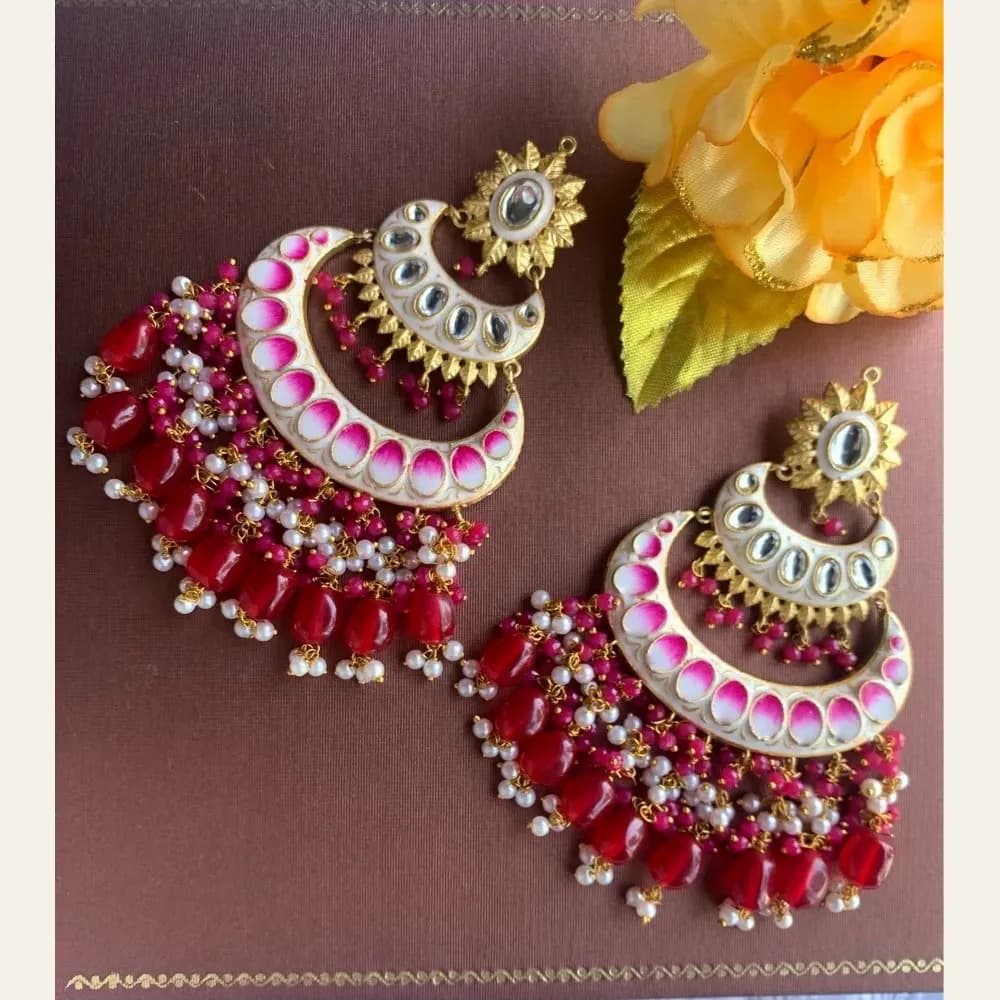
Chandbali Earrings
Rangrez Meenakari Chandbali Earrings
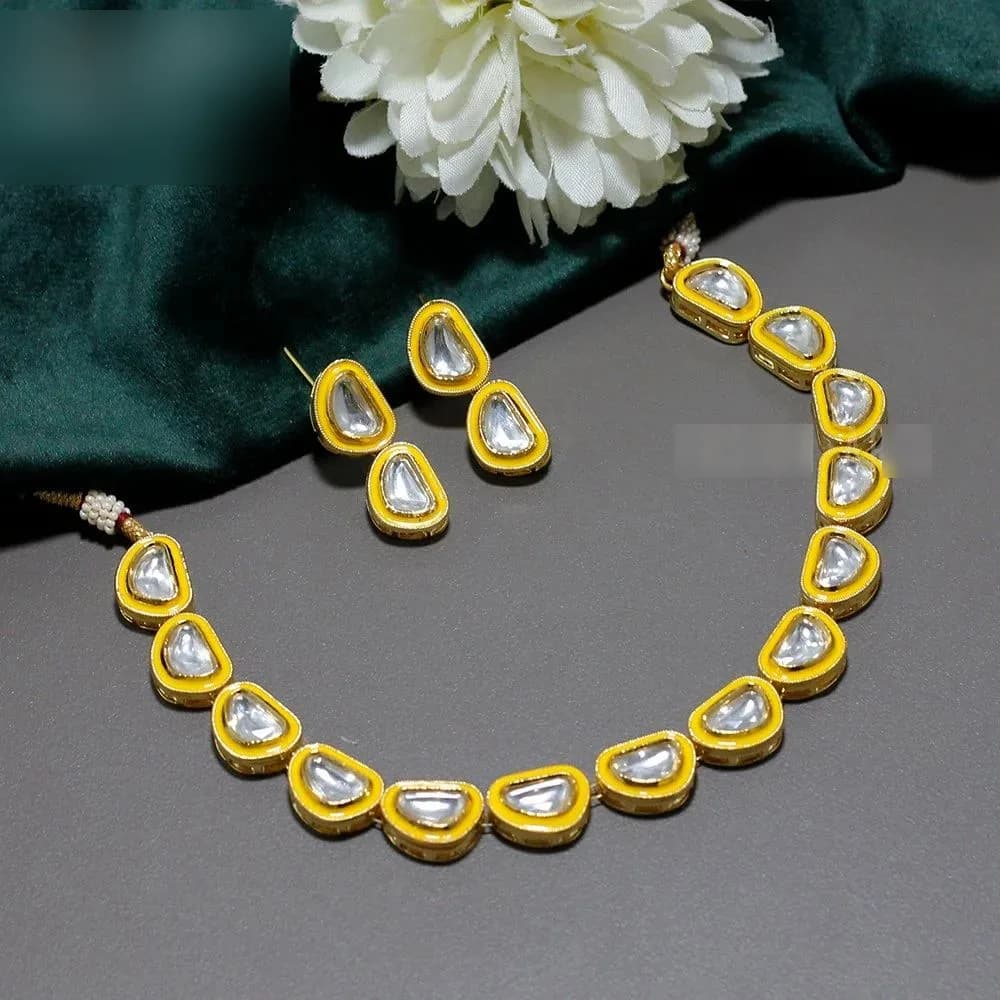
Necklace Sets
Sunehri Delicate Meenakari Kundan Necklace Set
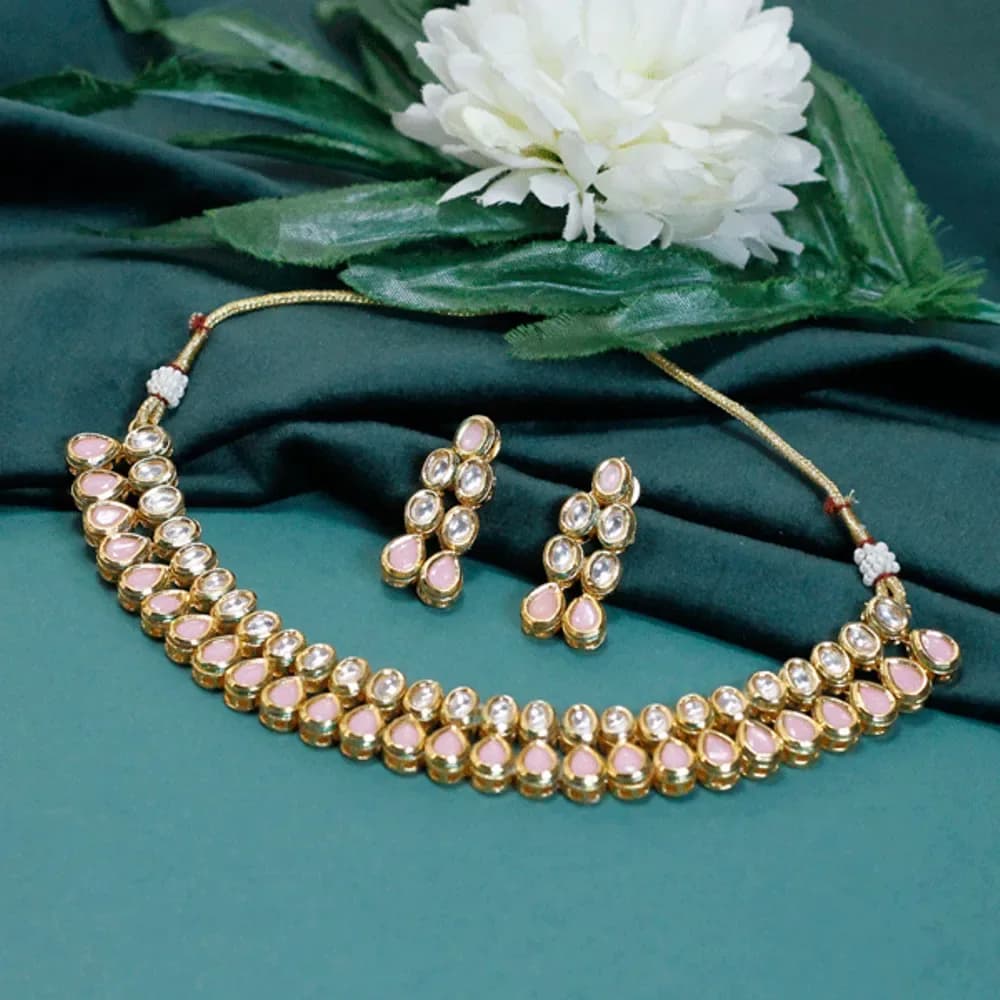
Choker Sets
Gulnaar Antique Meenakari Kundan Choker Set
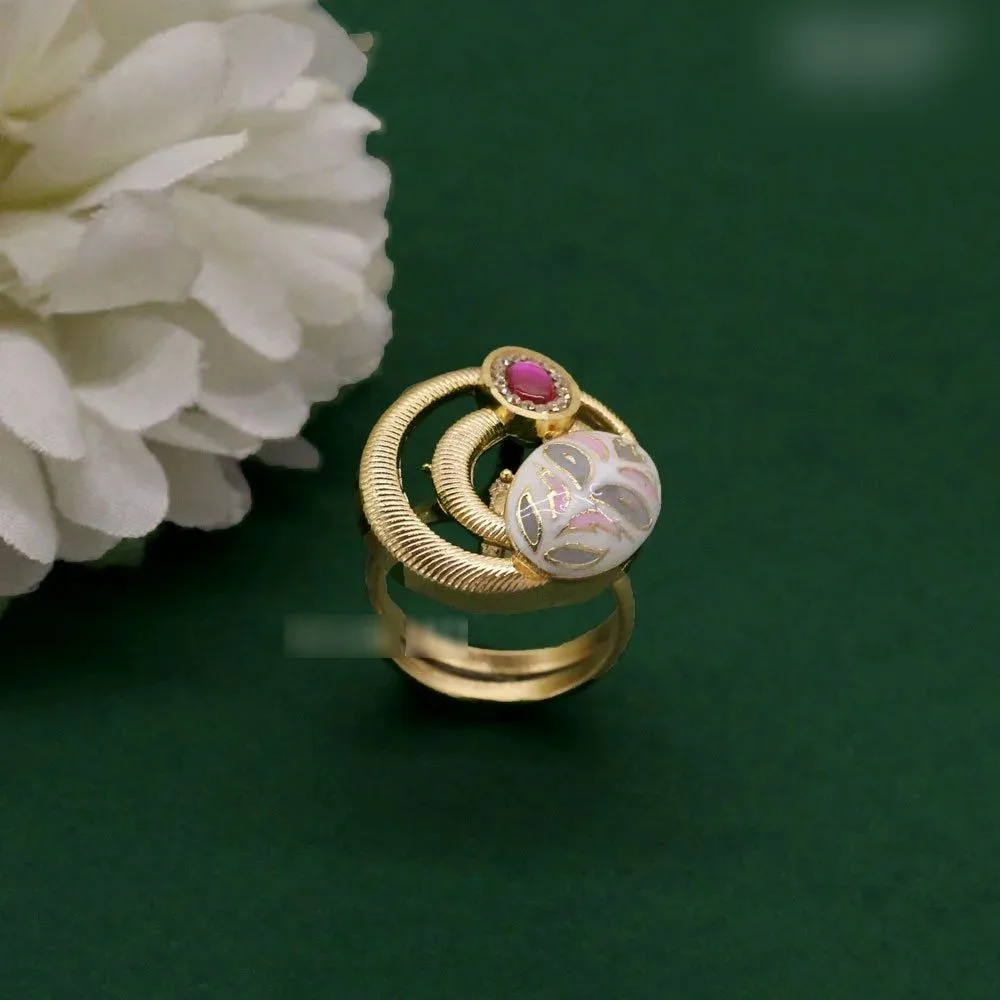
Statement Rings