Buying Guide
What Is a Chandbali? The Moon-Shaped Earring, Explained
The crescent earring that survived the Mughal court, the 1990s and Instagram — and still looks right with a cotton kurta.
Updated 3 min readRenu Ornaments
The name says it
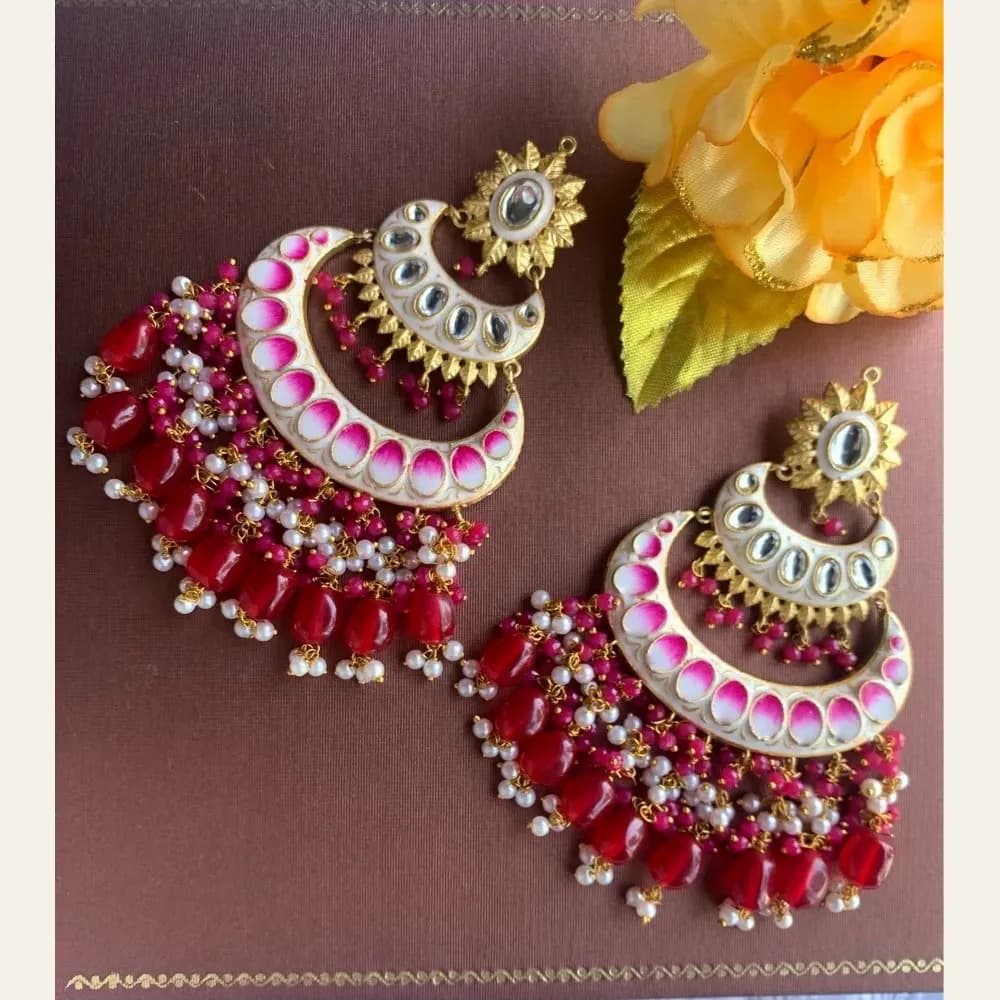
Chand is moon. Bali is a hoop or ring worn in the ear. A chandbali is a crescent-moon earring — usually a domed or flat crescent suspended from a smaller stud or hook, sometimes with a drop or a row of pearls along the lower edge.
That is the whole definition. Everything else — the size, the enamel, the stones, the pearls — is variation on a single shape. It is one of the few jewellery terms in India that describes the design rather than the technique or the material.
Where it came from
The chandbali is strongly associated with Mughal-era workshops and with Hyderabad in particular, where the combination of kundan-set stones on the front and meenakari enamel on the reverse became a signature. The crescent is a recurring motif in Islamic decorative art, and the earring form travelled with the courts across North India and the Deccan.
What kept it alive was practicality as much as beauty. A crescent distributes weight along a wide arc rather than concentrating it at one point, so a large chandbali is often more comfortable than a compact earring of the same weight.
How to tell a well-made chandbali
- It hangs flat. Hold it up by the hook. The crescent should sit roughly parallel to your jaw, not tilt outward. Poor weight distribution is the most common flaw in cheap versions.
- The back is finished. In classical work the reverse was enamelled, because that's the side the wearer saw. Even in fashion jewellery, a tidy back is a signal of care.
- The stones sit level. In a kundan-style setting, stones should be flush and even. Raised or tilted stones catch on fabric.
- The hook is smooth and the right gauge. Too thick and it hurts; too thin and it bends. This is where cheap earrings usually give themselves away.
- The enamel edges are clean. Hand-applied meenakari will never be machine-perfect, but the colour should stop where the metal boundary does.
The chandbali in our edit
What to wear it with
- Sarees — the classic. Wear your hair up or swept to one side so the crescent is visible.
- Anarkalis and long kurtas — the vertical outfit line and the wide earring balance each other.
- A plain cotton kurta — a large chandbali is the fastest way to make a simple outfit look considered.
- A solid-colour dress or shirt — surprisingly effective, provided nothing else in the outfit is ethnic.
The rule that matters: with a chandbali on, keep the neck bare or wear something very delicate. The crescent needs the space beneath it. If you want the necklace to lead instead, choose smaller earrings — the logic is set out in our necklace styling guide.
Hair matters more than you think
A chandbali with hair loose over the ears is invisible, and you have effectively worn nothing. Half-up, a low bun, a side-swept style or simply tucking one side behind the ear all make the difference between wearing the earring and owning it.
Frequently asked questions
What is the difference between a chandbali and a jhumka?
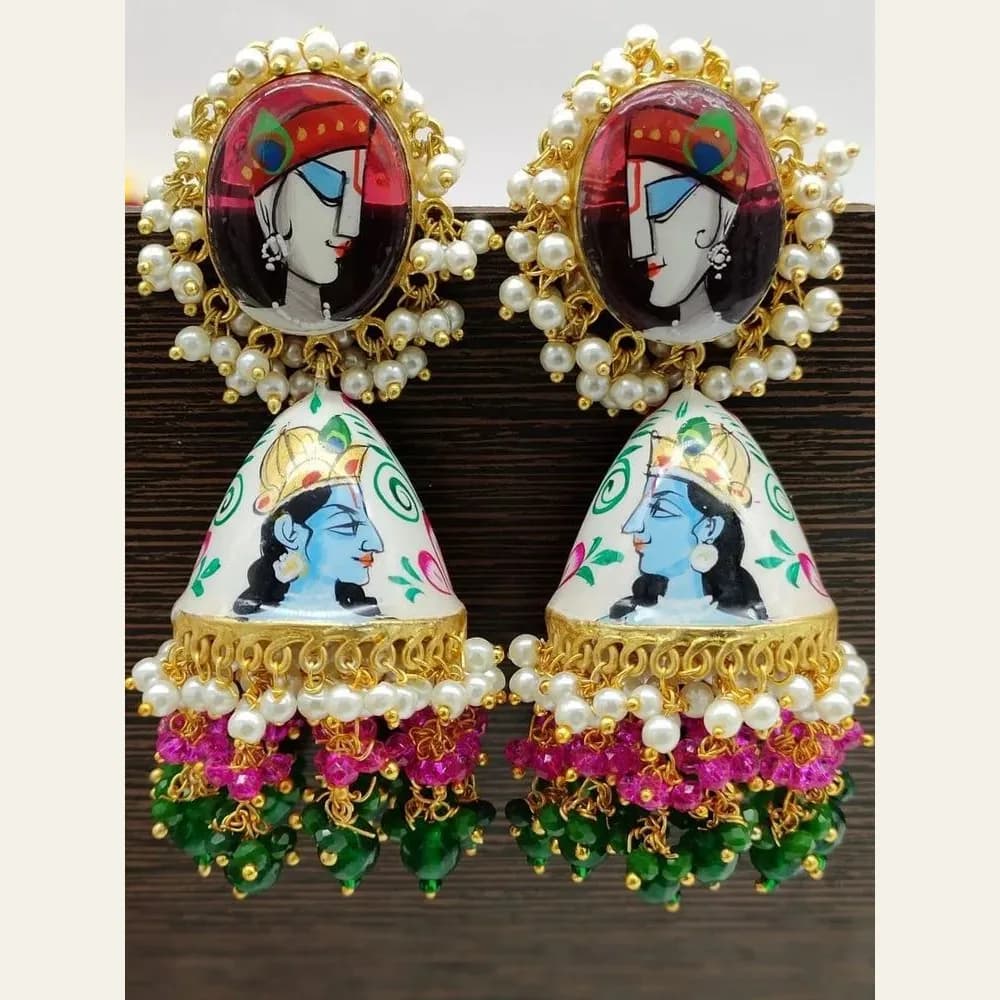
A chandbali is a crescent; a jhumka is a bell or dome that hangs downward. Chandbalis read wide, jhumkas read long. There is a full comparison in our chandbali vs jhumka guide.
Are chandbali earrings heavy?
They can be, but the crescent shape spreads weight across a wide arc, so a chandbali often feels lighter than its size suggests. Check the listed weight — ours are stated on each product page.
Can I wear chandbalis every day?
Smaller ones, yes. Large statement chandbalis are better kept for occasions — not because they are fragile, but because ear comfort over an eight-hour day is a real limit.
What is a meenakari chandbali?
A chandbali finished with meenakari enamel — coloured glass fused onto the metal — usually in jewel tones like green, pink, blue and white. It is the traditional Jaipur and Hyderabadi combination.
Shop this guide