Buying Guide
Chandbali vs Jhumka: Which Pair Should You Buy First?
Two traditional shapes, two very different effects. If you're buying one statement pair, this is how to decide.
Updated 3 min readRenu Ornaments
The shapes, side by side
| Chandbali | Jhumka | |
|---|---|---|
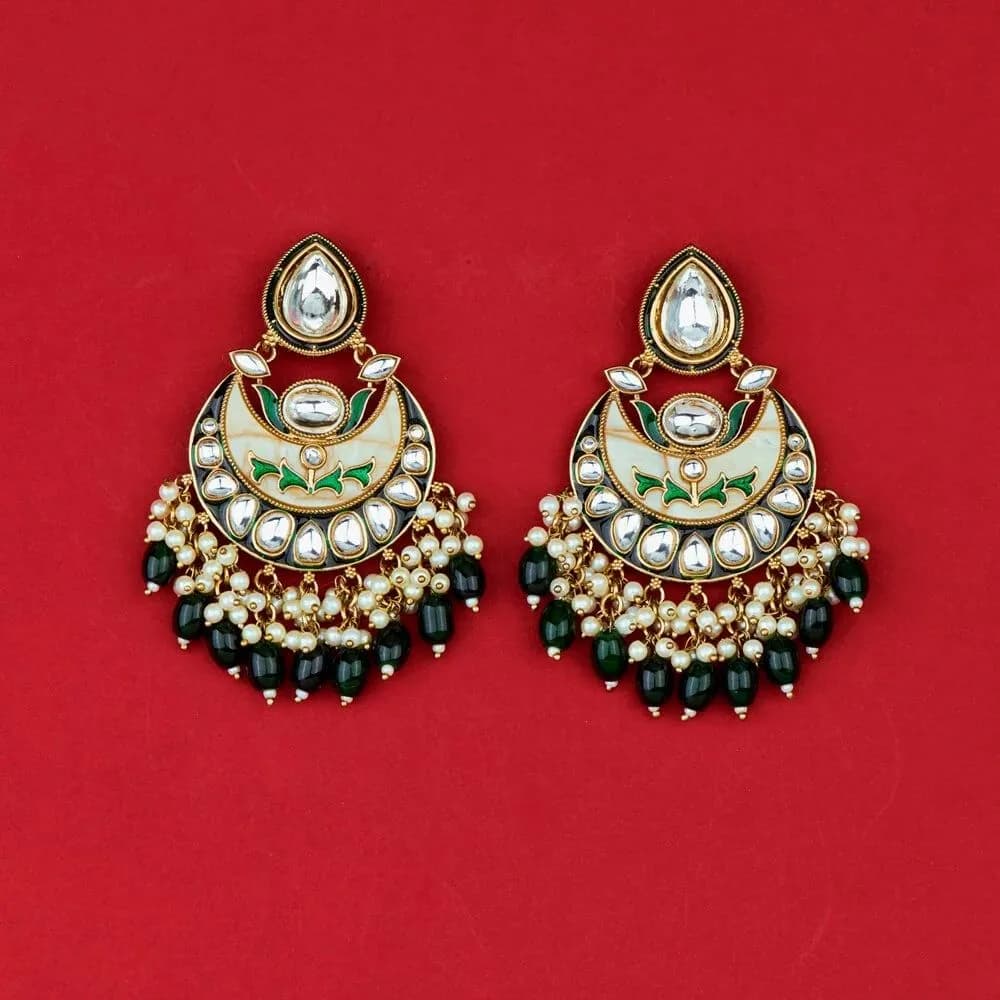
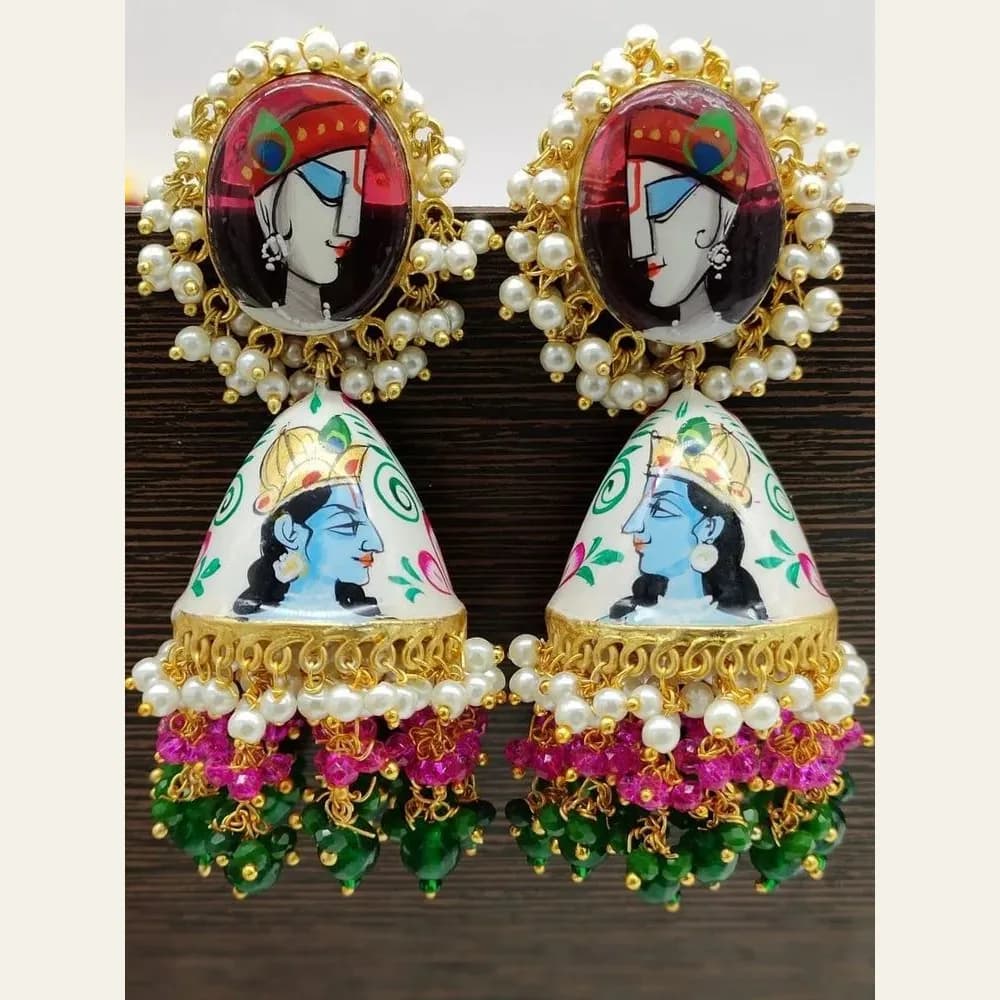
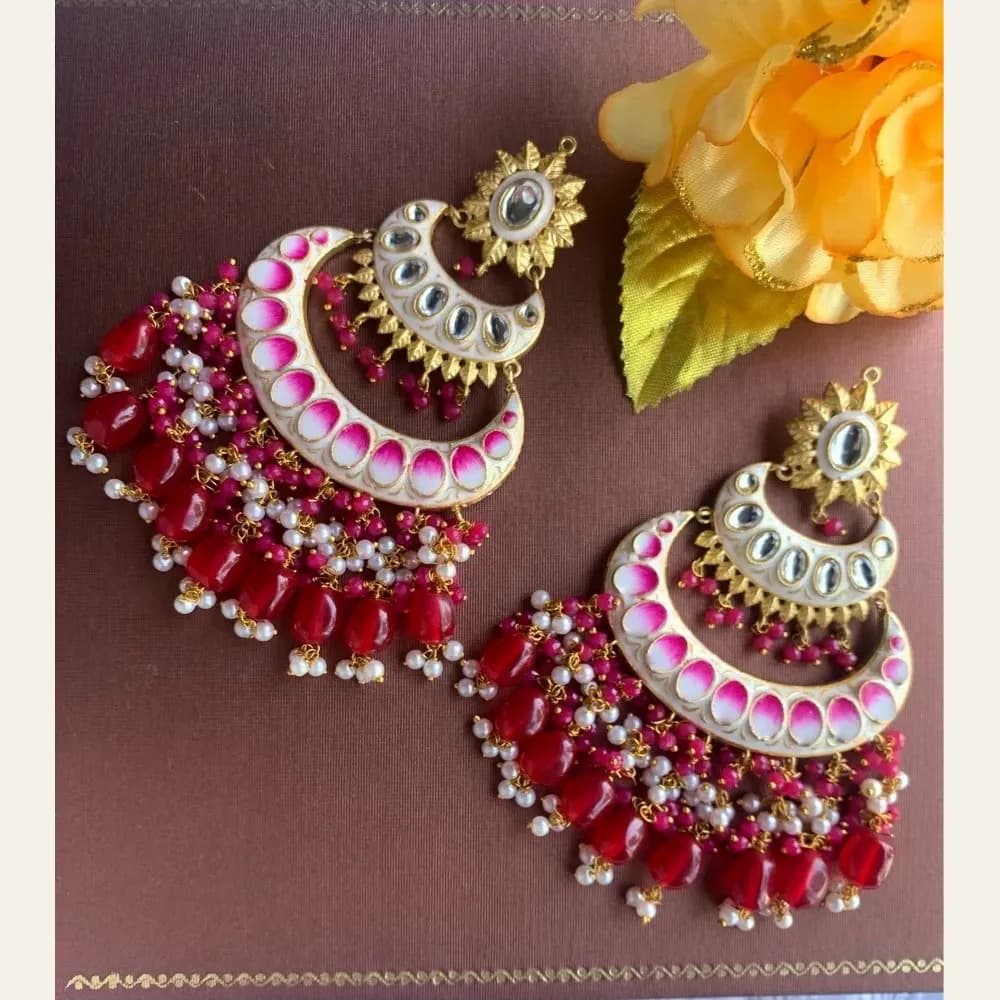
| Shape | Crescent moon, worn wide | Bell or dome, hangs downward |
| Visual direction | Horizontal | Vertical |
| Register | Slightly formal, courtly | Traditional, festive, everyday-capable |
| Movement | Swings side to side | Swings and often chimes softly |
| Best hair | Up, or swept to one side | Up, half-up, or loose behind the ears |
| Typical weight | Spread across the crescent | Concentrated at the bell |
Choose a jhumka if…
- You want one pair that works for a festival, a family function and a Friday at the office in the same year.
- You wear a lot of kurtas. The jhumka is the natural partner to a straight or A-line kurta.
- Your face is on the longer side — a downward drop with width at the base balances it.
- You want the more traditional of the two. A jhumka is instantly readable as Indian jewellery in a way a chandbali sometimes isn't.
Choose a chandbali if…
- You mostly dress up for weddings and evening functions rather than daytime festivals.
- You wear sarees often. The crescent and a draped pallu are a long-standing pairing.
- You have a rounder face and want a shape that widens then tapers — the crescent creates a jawline more than a jhumka does.
- You already own a jhumka. This is the honest answer for most people: the chandbali is a brilliant second pair.
The comfort question, which decides more purchases than style
A statement earring you take off two hours into an evening is not a good purchase, however it looked in the photos. Two things determine whether that happens: the total weight, and where the weight sits.
- Under about 8 g a pair, most people are comfortable for a full evening.
- Between 8 g and 15 g, use a supportive ear-back and put your hair up so nothing tugs.
- Above 15 g, treat it as a two-to-three hour piece unless you're used to heavy earrings.
Every product page on this site lists an approximate weight. It is one of the few numbers that genuinely predicts whether you'll wear something twice. See how to wear statement earrings without hurting your ears for the practical fixes.
What about buying both?
At under ₹1,000 each, buying both is a reasonable plan and it is what most of our repeat customers do. Just don't buy them in the same colour — the point of owning two statement pairs is that they cover different outfits.
If you want a third that isn't a statement pair at all, a minimal drop covers the days neither of these fits.
Frequently asked questions
Which is more traditional, chandbali or jhumka?
Both are traditional, but the jhumka is more widely worn across India and reads as traditional more immediately. The chandbali carries a stronger Mughal and Deccan association.
Can I wear jhumkas to a wedding?
Yes. A large meenakari jhumka is entirely appropriate wedding-guest jewellery — pair it with a bare neck or a very delicate necklace.
Are chandbalis out of fashion?
No. The shape has been in continuous use for centuries and cycles between quiet and loud rather than in and out. Size trends move; the crescent doesn't.
Which suits a round face better?
A chandbali, generally — it adds width at the cheekbone then tapers, which creates definition. But hairstyle affects this more than earring shape does.
Shop this guide