Buying Guide
Kundan vs Polki vs Meenakari: What's Actually Different
Three words used almost interchangeably in shop windows — and three genuinely different techniques. A plain-language explanation.
Updated 4 min readRenu Ornaments
Kundan: a way of setting, not a stone
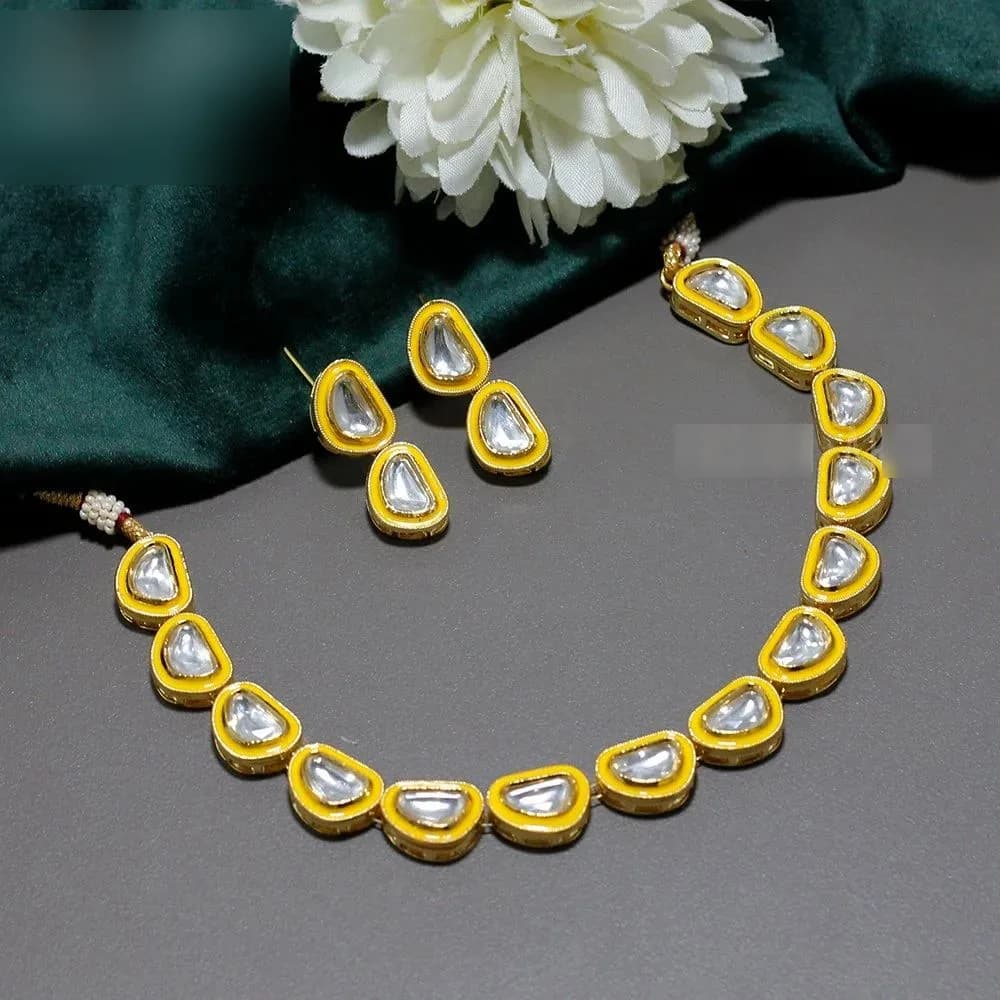
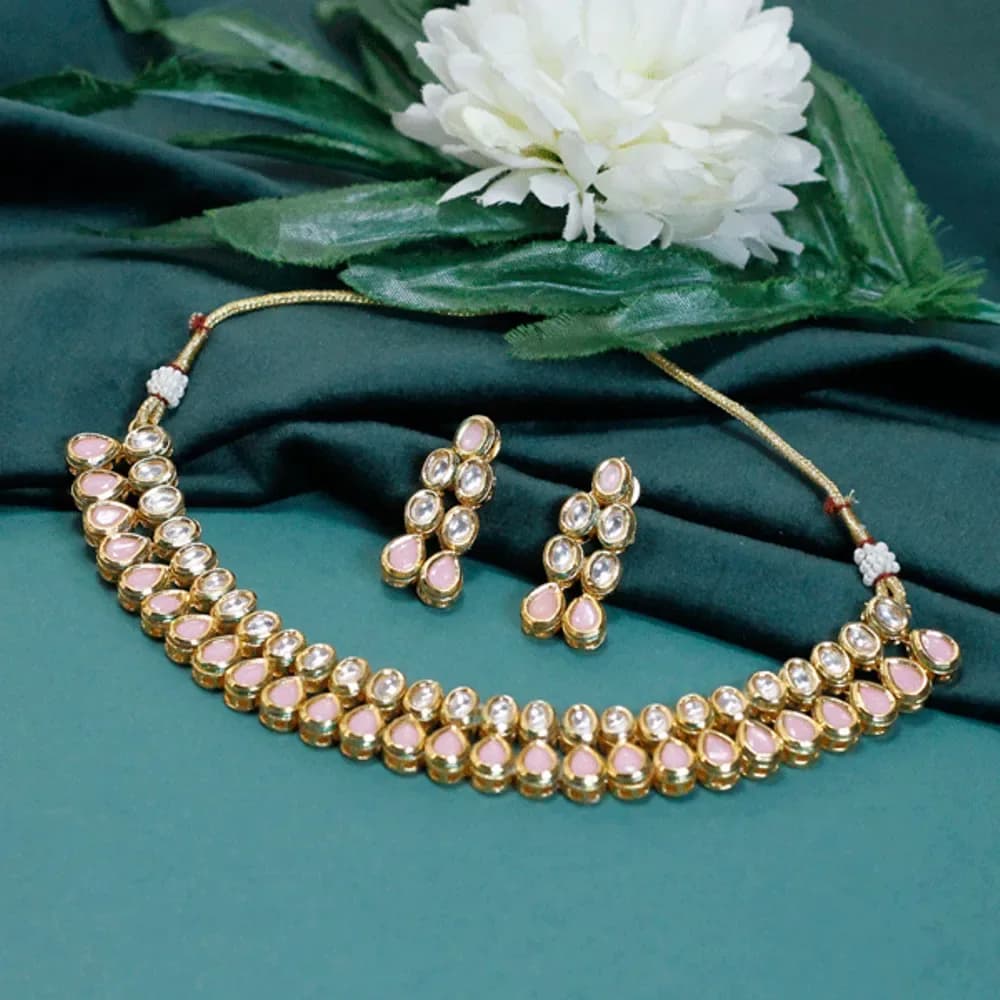
Kundan is the oldest of the three ideas and the most misunderstood. It is a setting technique from Rajasthan and the Mughal workshops: highly refined gold is worked at room temperature into a foil, and that foil is pressed around a stone to hold it in the piece. There are no claws or prongs — the metal itself grips the stone, which is why kundan settings have that smooth, poured-in look.
So when a shop says 'kundan necklace', it is describing how the stones sit, not what they are. In traditional fine jewellery those stones would be uncut diamonds. In fashion jewellery they are glass or cubic zirconia set into a plated base to reproduce the same visual effect.
Polki: the stone
Polki is an uncut, unpolished natural diamond — the raw stone with its natural surface, rather than a brilliant-cut one. Because it is not faceted, polki doesn't sparkle the way a modern cut diamond does; it glows softly and looks slightly cloudy. That look is the point.
Polki is almost always set using the kundan method, which is why the two words end up glued together in conversation. Real polki jewellery is expensive — genuinely expensive — because you are buying diamonds. Anything sold as 'polki' for a few thousand rupees is a fashion reproduction of the look.
Meenakari: the colour
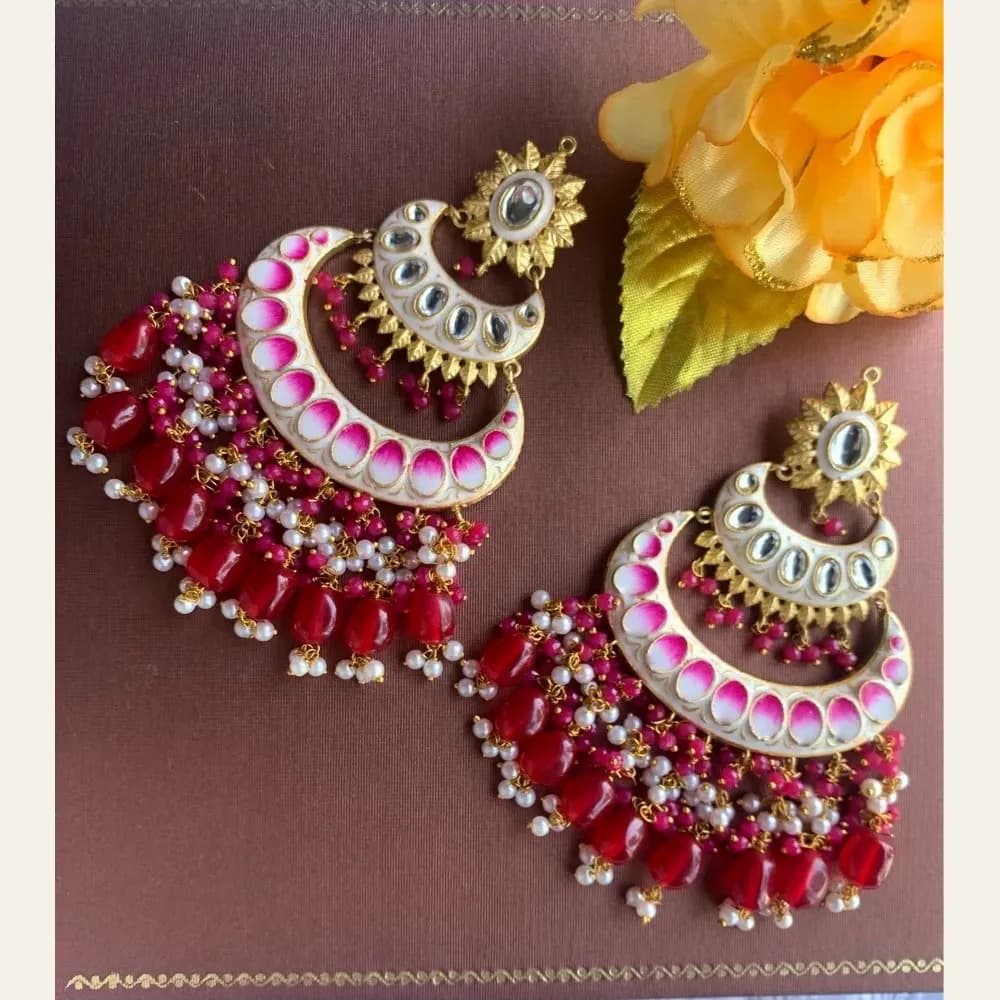
Meenakari is enamelling. Powdered coloured glass is applied to metal and fired so it fuses into a hard, glossy surface. It arrived in India through Persian craft traditions and settled most famously in Jaipur, where the technique reached its peak.
The detail most people don't know: in classical Jaipur work, the meenakari is often on the back of the piece. The front carried the kundan-set stones, and the reverse — the side only the wearer saw — was enamelled in reds, greens and whites. It was a private luxury.
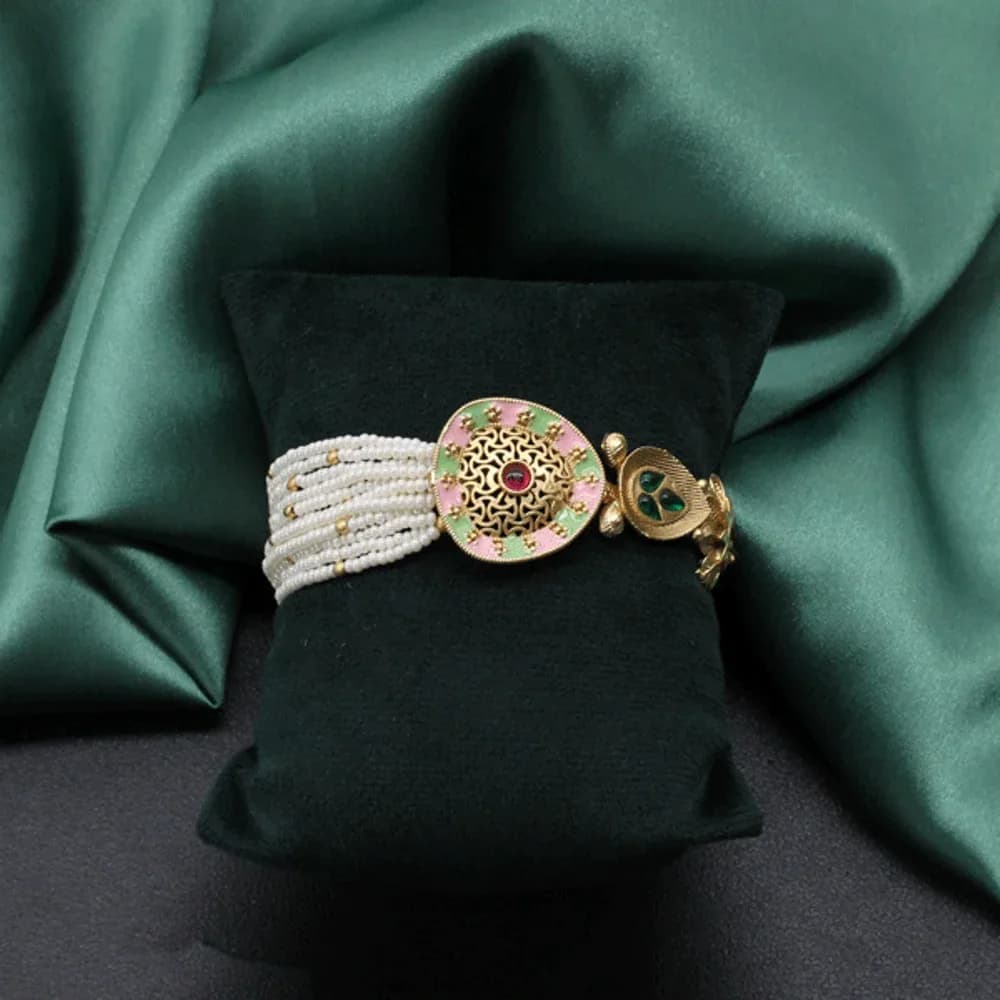
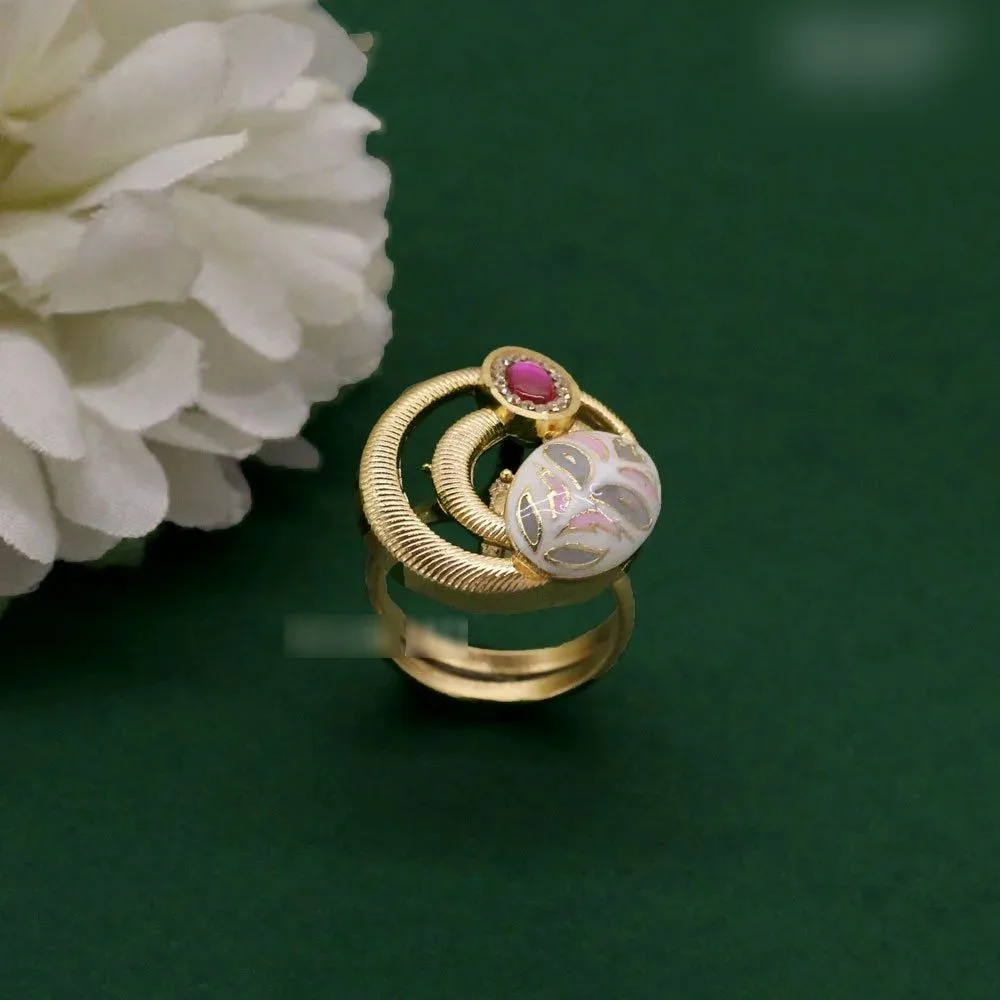
In contemporary fashion jewellery the enamel comes to the front, because colour is the whole appeal. That is what our catalogue is built on: hand-applied enamel in jewel tones on a gold-toned base. Read the longer story in our guide to meenakari jewellery.
Side by side
| Kundan | Polki | Meenakari | |
|---|---|---|---|
| What it is | A setting technique | An uncut natural diamond | Enamel (fused coloured glass) |
| Refers to | How the stone is held | The stone itself | The colour on the metal |
| Traditional home | Rajasthan, Mughal workshops | North India | Jaipur, via Persia |
| Look | Smooth, prong-free settings | Soft, uncut glow | Bright jewel-tone colour |
| In fashion jewellery | Glass or CZ set kundan-style | Reproduced look only | Hand-applied enamel |
So what are you buying from us?
We would rather be boring and accurate than use words that inflate the product. Every piece in our catalogue is:
- A brass or alloy base, gold-toned or antique-gold plated.
- Kundan-style settings holding glass or cubic zirconia stones — not diamonds.
- Hand-applied meenakari enamel, which is why no two pieces are identical down to the millimetre.
- Imitation pearls where pearls appear.
- Priced between ₹599 and ₹1,199, because it is fashion jewellery and should be priced like it.
How to judge a piece when you can't hold it
- Look for the base metal and plating in the product details. If a listing won't say, that is information too.
- Check whether the stone type is named. 'Kundan stones' with no material stated usually means glass — which is fine, as long as it's said.
- Look at the back of the piece in the photos. Neat finishing on the reverse is a reliable signal of care.
- Check the weight. Very light pieces are comfortable but hollow; very heavy ones pull on ears and necklines.
- Read the return policy before the description. Ours is 2-day, free-pickup returns — that is the real safety net when buying online.
Frequently asked questions
Is kundan jewellery real gold?
Traditional kundan uses highly refined gold foil to set the stones, so yes — real kundan is a gold technique. Fashion kundan jewellery, including ours, reproduces the look with plated brass and glass stones and is not gold.
Which is more expensive, kundan or polki?
Polki, by a wide margin, because you are paying for uncut natural diamonds. Kundan describes a setting method, so its cost depends entirely on what is being set.
Does meenakari come off over time?
Fired enamel is hard and durable, but the plated metal around it wears first. Chips happen from knocks and drops rather than from ordinary wear. Avoid liquid cleaners and ultrasonic machines, which can lift enamel edges.
Can I wear meenakari jewellery every day?
The lighter pieces, yes — drops and small earrings hold up well. Heavier statement pieces are better kept for occasions, simply because more surface area means more chances to knock it.
Shop this guide