Occasions
Navratri Jewellery: Nine Nights Without Repeating Yourself
Nine nights, a lot of dancing, and jewellery that has to survive both. A plan rather than a shopping list.
Updated 5 min readRenu Ornaments
The constraint nobody plans for
Navratri jewellery advice usually focuses on how things look. The actual constraint is that you will be dancing for three or four hours a night, in a crowd, for nine nights, often outdoors and often in heat.
That changes the criteria completely. Secure closures matter more than size. Weight matters more than sparkle. And anything with a long free-swinging drop will hit you in the face during a fast raas.
What to wear, by piece
Earrings — the main event
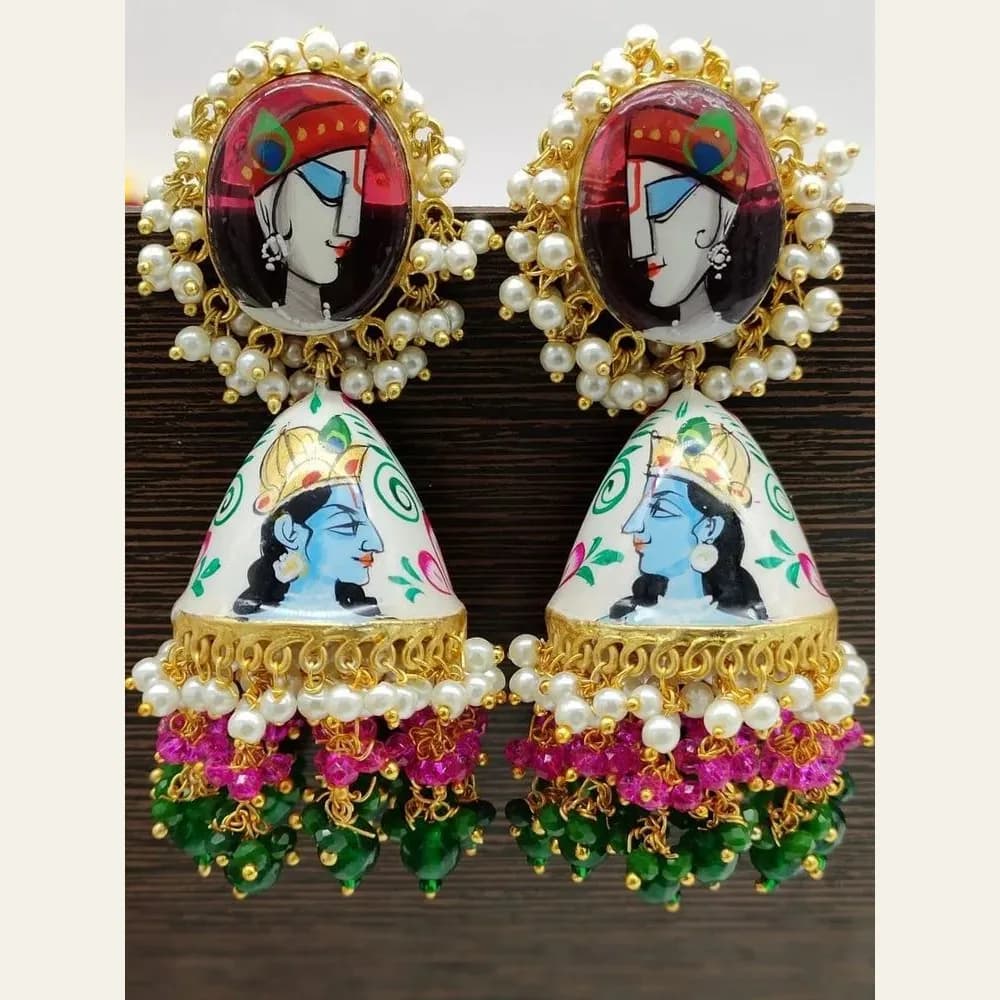
Jhumkas are the traditional and practical choice: the weight sits low and close, the shape swings in a controlled arc, and the sound is part of the experience. Keep the pair under about 10 g if you're dancing seriously.
Use a supportive back — a wide silicone or plastic disc. Over nine nights, ear fatigue is real. Details in the comfort guide.
Garba-friendly earrings
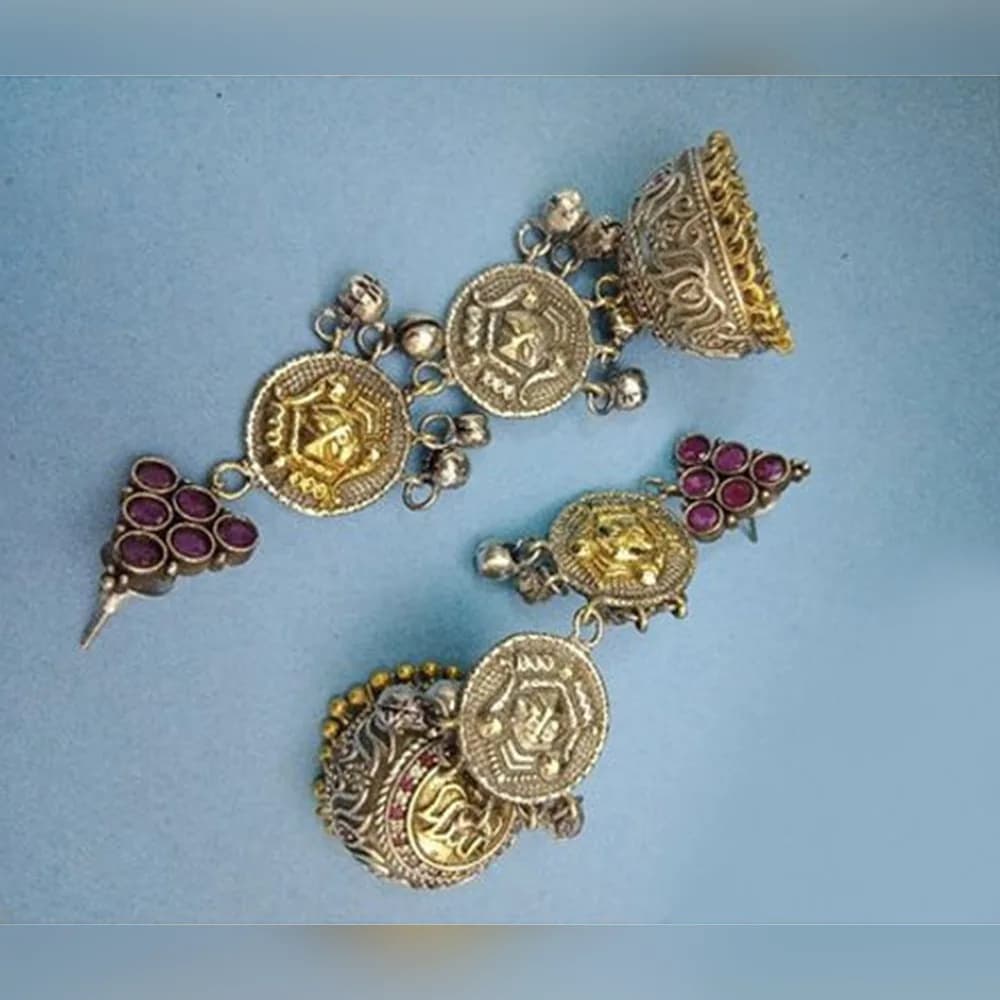
Prefer the classic silver-tone garba look? Our oxidised edit has two jhumkis built for it: the Shakti Durga coin jhumki, with goddess-coin drops and tiny ghungroo bells, and the Kalapi two-tone peacock jhumki in six stone colours. The oxidised earrings guide compares every pair by weight, length and closure.
Oxidised jhumkis
Bangles and bracelets — where tradition and physics disagree
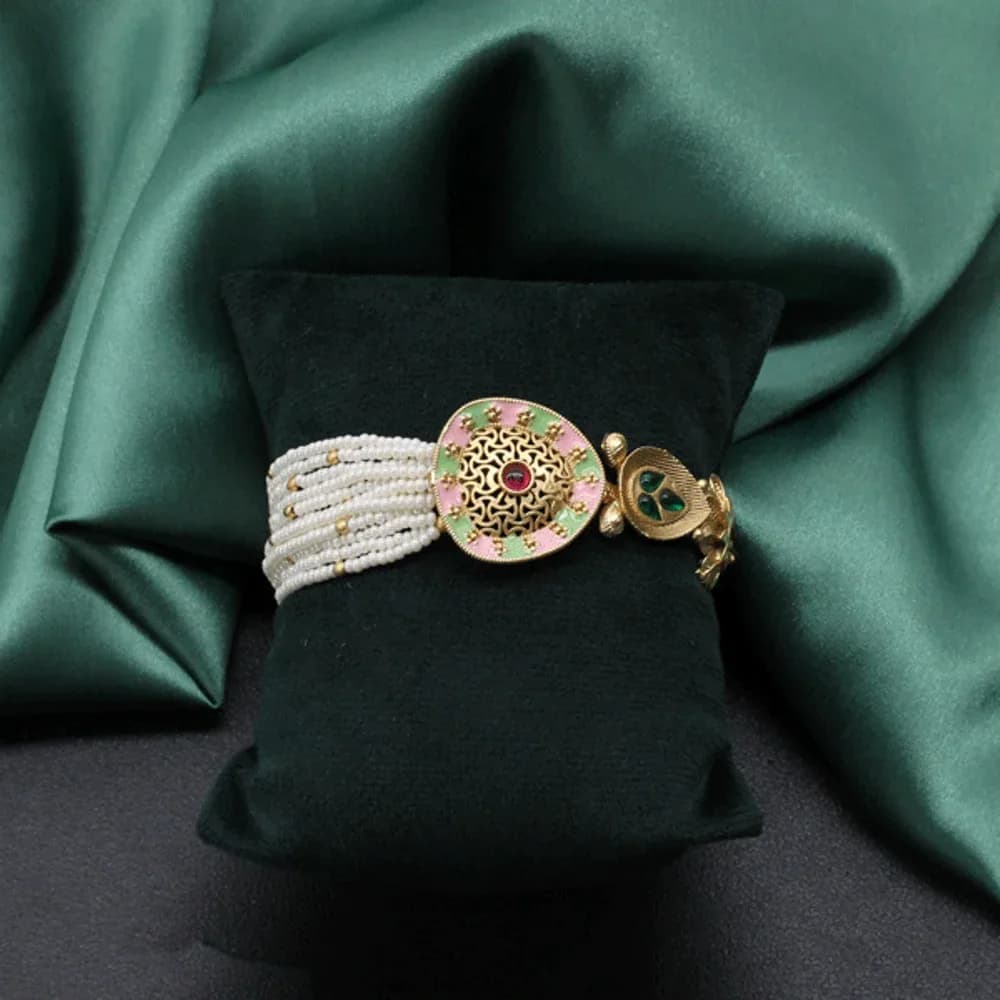
Full bangle stacks are traditional and look wonderful, but glass bangles break in a crowd and heavy metal stacks bruise. A beaded bracelet plus two or three bangles gives the same visual effect with less risk.
Neck — keep it light or skip it
A heavy necklace bounces. If you want something at the neck, a fitted choker is far better than a mid-length necklace with a pendant, which will swing.
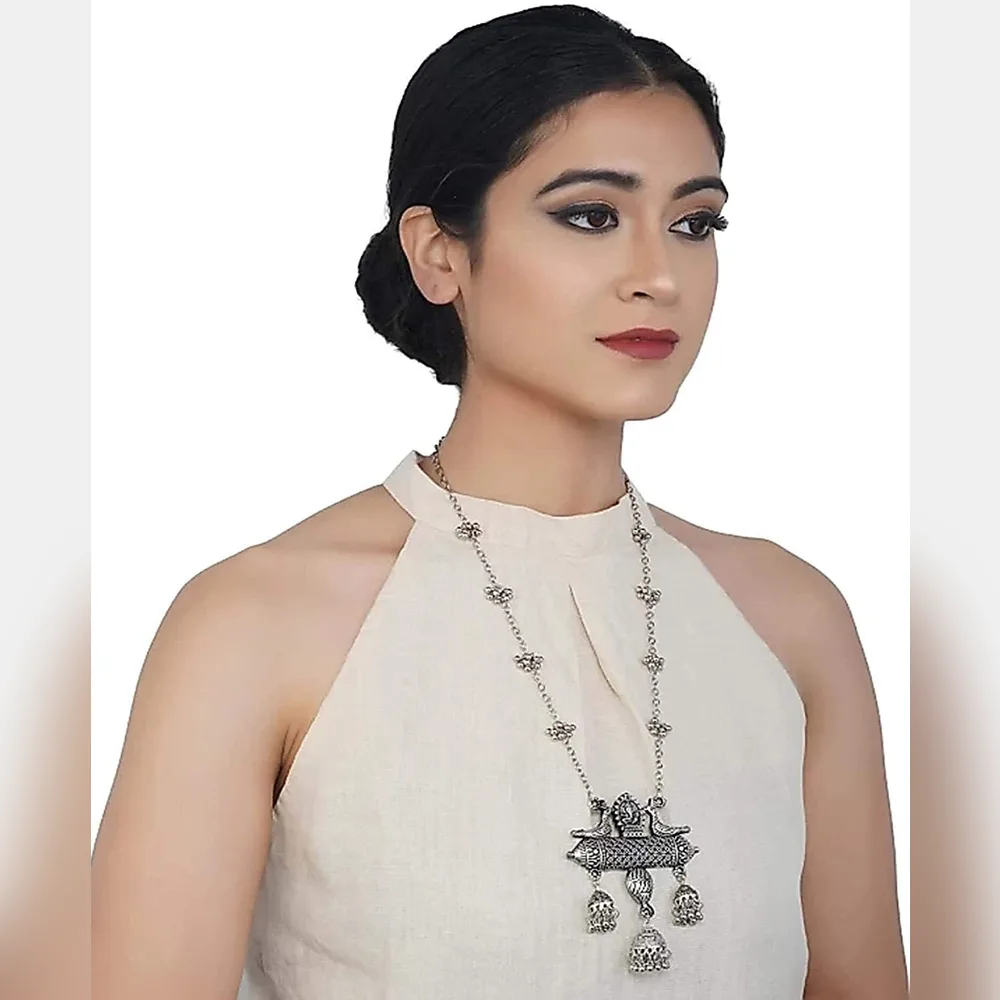
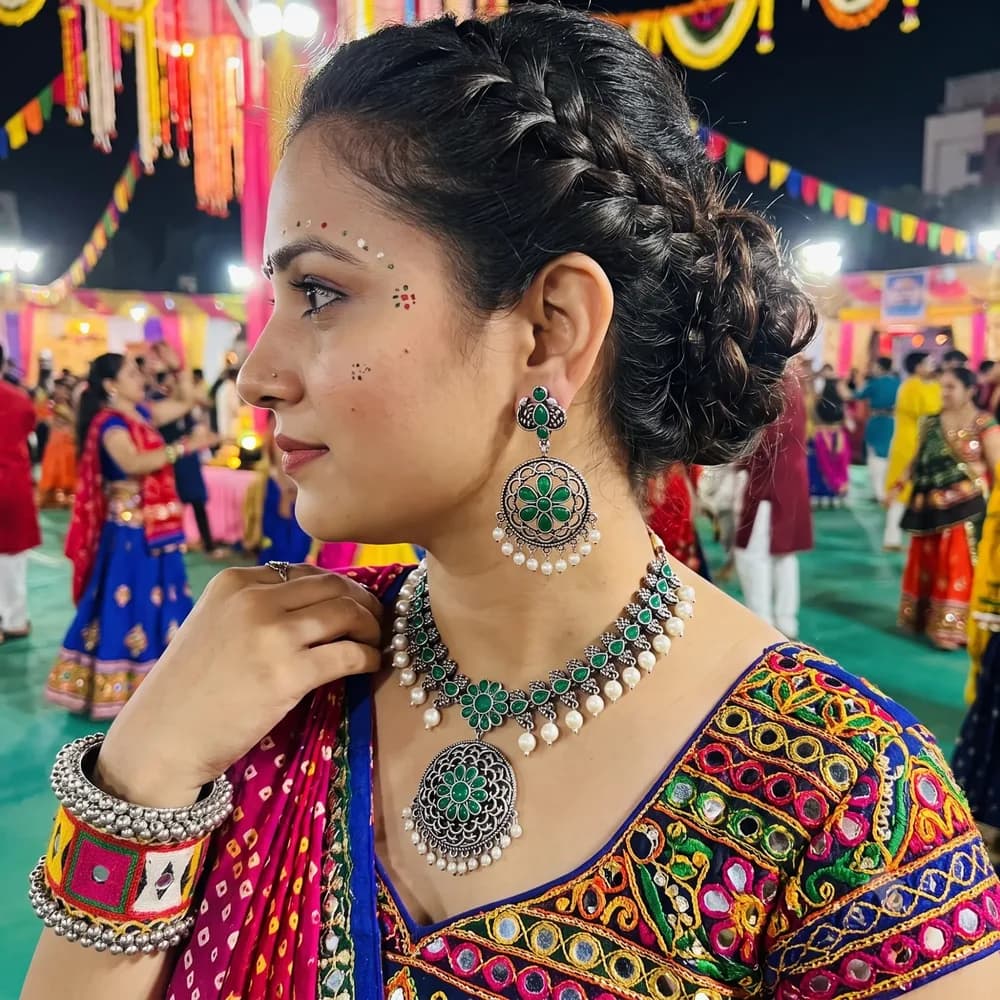
The exception is ghungroo. The Mor ghungroo combo gives you a fitted ghungroo choker for the dancing nights and a long peacock-pendant chain for the slower ones — wear one at a time, not both. The Panna green stone choker set covers the green and peacock-green nights. Which neckline suits which piece is in our chaniya choli necklace guide.
Ghungroo and choker sets
Rings — free volume
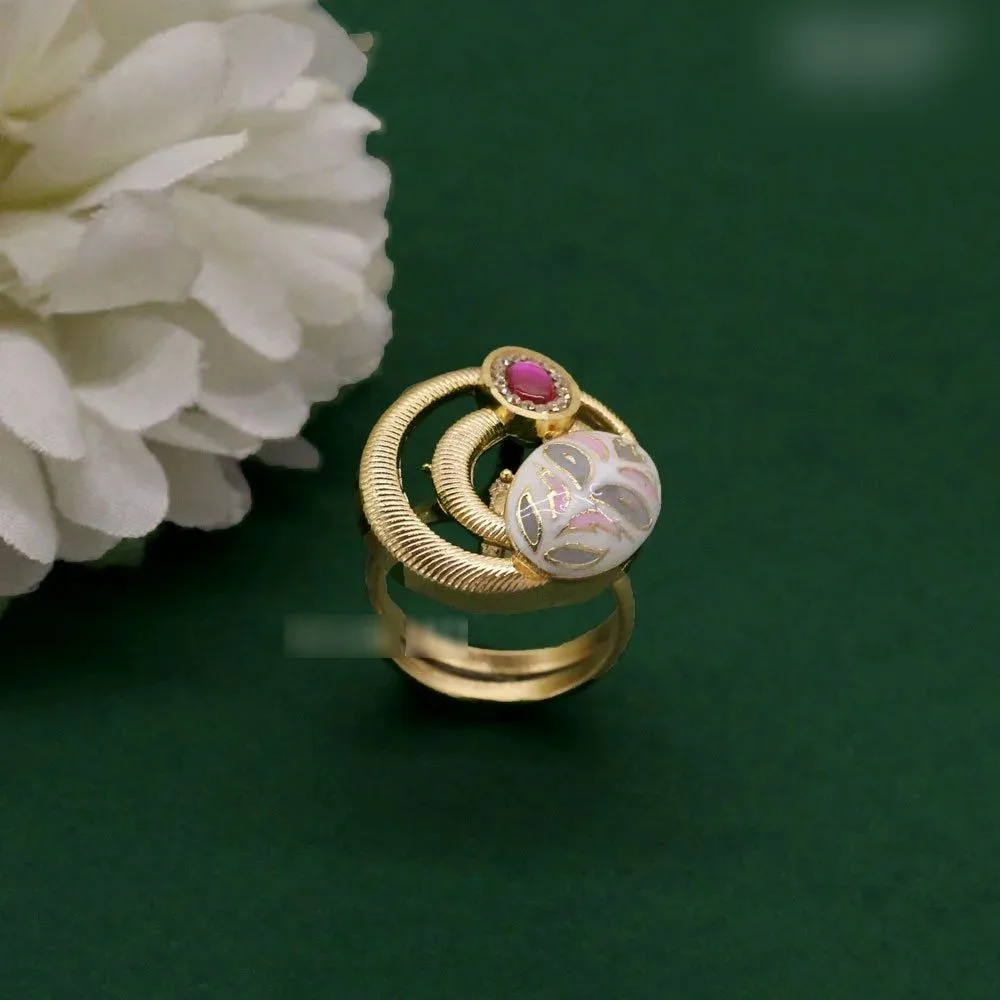
Rings are the one category with no downside during garba. An adjustable statement ring adds a lot for very little trouble.
Hands and wrists
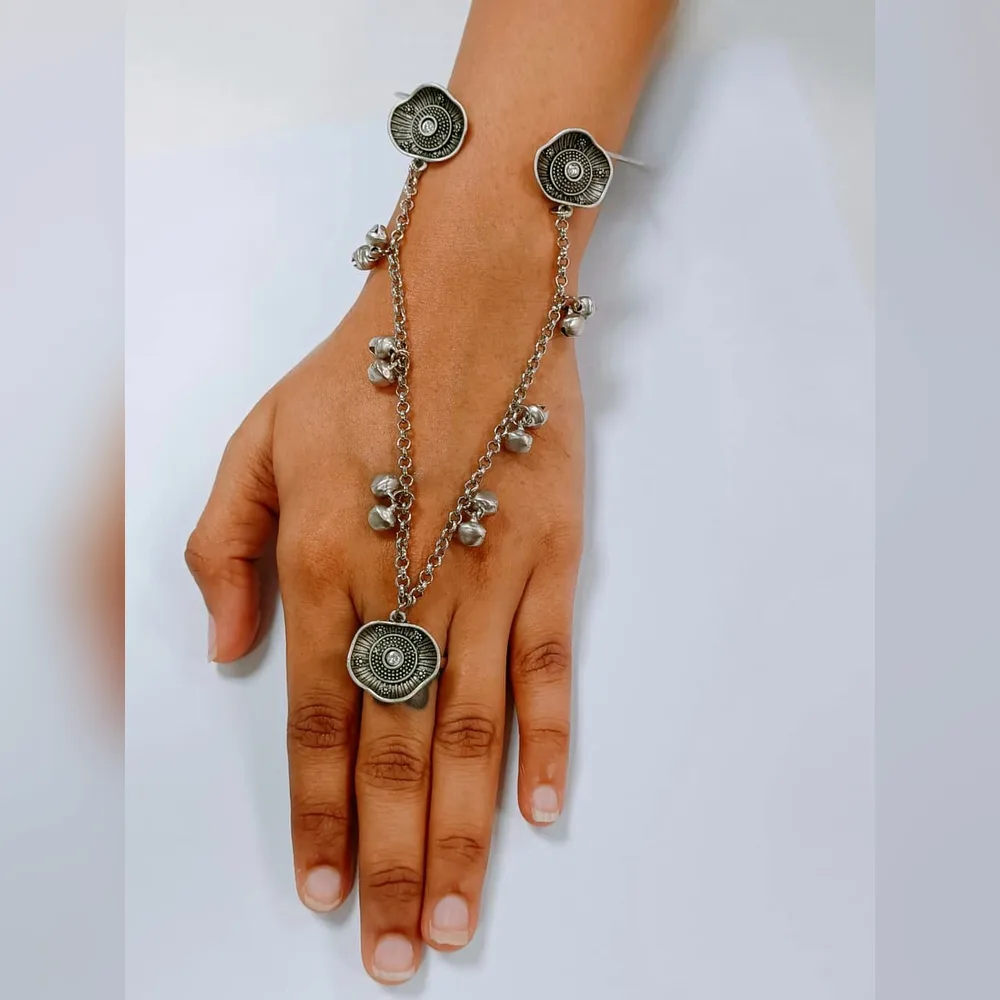
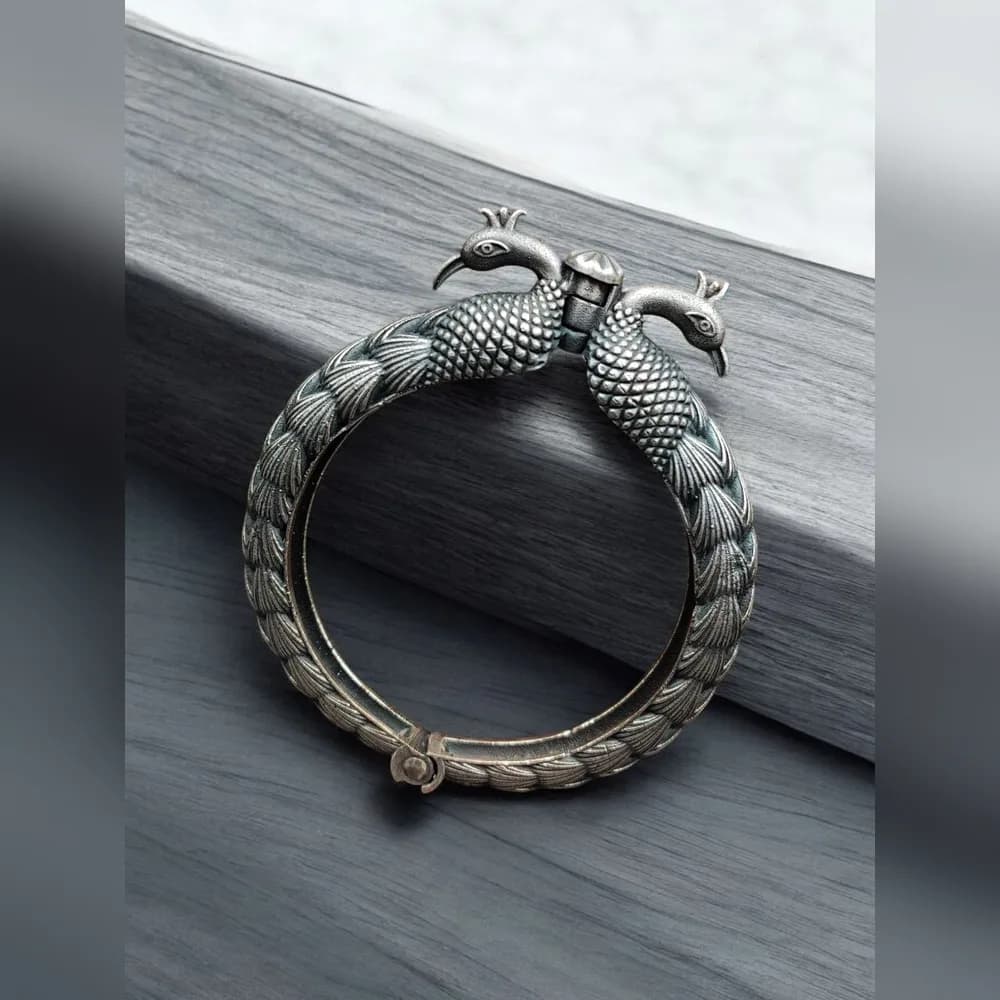
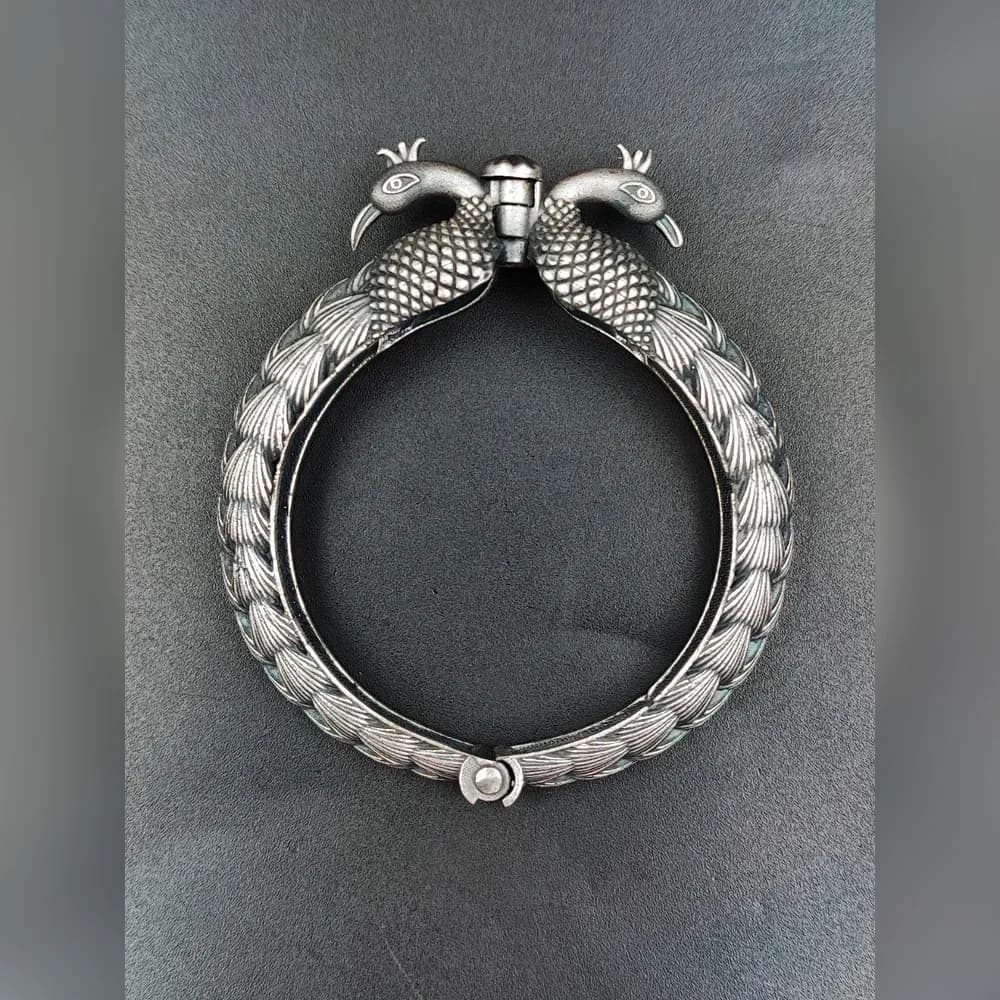
For an oxidised look on the hands, a hathphool joins a bracelet to a ring and stays put while you clap, and a carved peacock kada replaces a whole bangle stack with one piece. How to wear both is in the hathphool and kada guide.
Planning nine nights with four pieces
The point is not to own nine sets. It is to have three or four strong pieces and change how they are combined.
| Nights | Combination | Effect |
|---|---|---|
| 1, 4, 7 | Statement earrings, bare neck, one ring | Highest impact — save for the busiest nights |
| 2, 5, 8 | Choker or short necklace, small earrings, bracelet | Different focal point entirely |
| 3, 6, 9 | Bracelet stack, ring, medium earrings | Hands-forward, lightest to dance in |
Nobody at a garba tracks what you wore on night two. Changing the focal point is what makes a look feel new, not changing every piece.
Colour: the thing meenakari solves
Chaniya cholis are saturated and often multi-coloured. Matching a single-colour piece to a different outfit each night is a losing game. Multi-colour meenakari sidesteps it — because the enamel already contains several jewel tones, it reads as ornament rather than as a colour that has to coordinate.
Practical rule: if the outfit is one strong colour, choose enamel that contains that colour somewhere. If the outfit is heavily printed or mirror-worked, choose gold-dominant pieces with less enamel so you aren't adding a third pattern.
Following the nine colours? Navratri 2026 runs from 11 to 19 October, and the day-wise list with a jewellery pairing for each night is in Navratri 2026 colours. Oxidised silver-tone is the one finish that sits with all nine, which is why it is the garba default — the oxidised garba look builds it head to wrist.
Aftercare across nine nights
- Wipe every piece with a dry cloth the same night, not at the end of the festival. Sweat left on plated metal overnight, nine times over, is what turns a new piece dull.
- Rotate. Never wear the same pair on consecutive nights — give each piece a night to dry out fully.
- Store in individual pouches between nights rather than dropping everything into one box.
- In Ahmedabad, Surat, Vadodara and Rajkot, where garba runs longest, add a silica sachet to the box.
Frequently asked questions
What jewellery is best for garba?
Jhumkas with secure backs, a few bangles rather than a full stack, and rings. Avoid long swinging pendants and anything heavy enough to feel it after an hour of dancing.
Should Navratri jewellery be oxidised or gold-toned?
Both work. Oxidised silver-tone is the classic garba look and suits mirror-work and multi-colour chaniya cholis; gold-toned meenakari photographs better under the strong lighting at large venues. We carry both — the Navratri edit pairs oxidised ghungroo sets, jhumkis, a hathphool and a kada with the meenakari jhumkas and chandbalis.
How many jewellery pieces do I need for nine nights?
Three or four is plenty. Rotate the focal point — earrings one night, neck the next, hands the third — and the looks read as different.
How do I stop my earrings hurting after a few nights of garba?
Use wide silicone disc backs, keep the pair under about 10 g, alternate pairs between nights, and put your hair up so nothing tugs.
Shop this guide
Pieces mentioned above
Jhumka Earrings
Zar Meenakari Jhumka Earrings
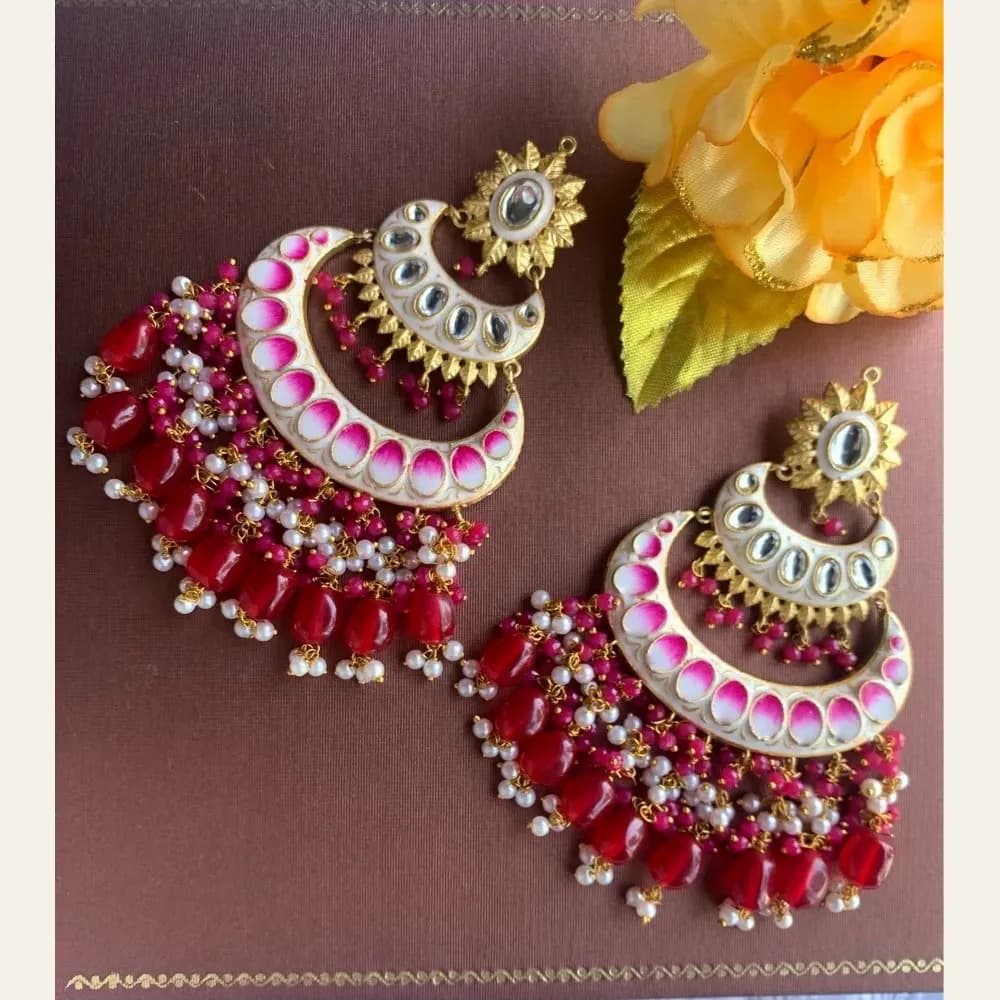
Chandbali Earrings
Rangrez Meenakari Chandbali Earrings
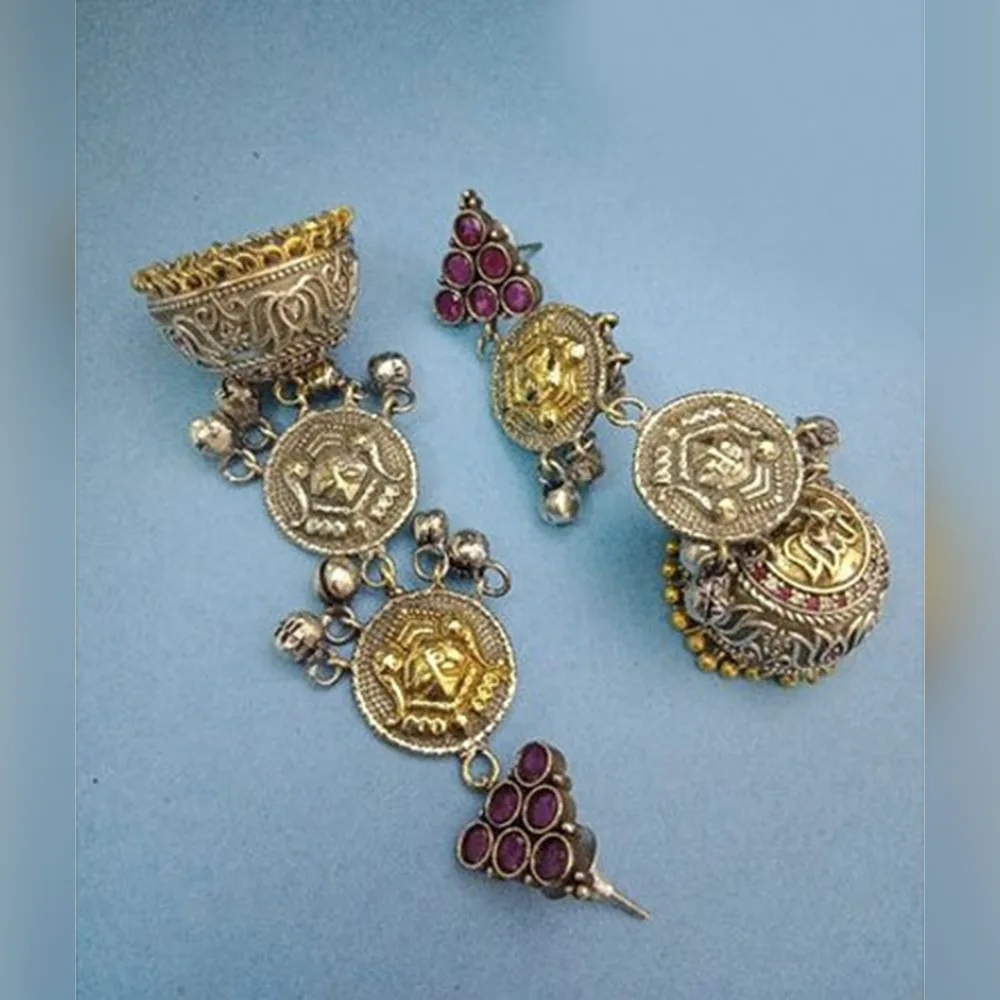
Jhumka Earrings
Shakti Dual-Tone Durga Coin Jhumki
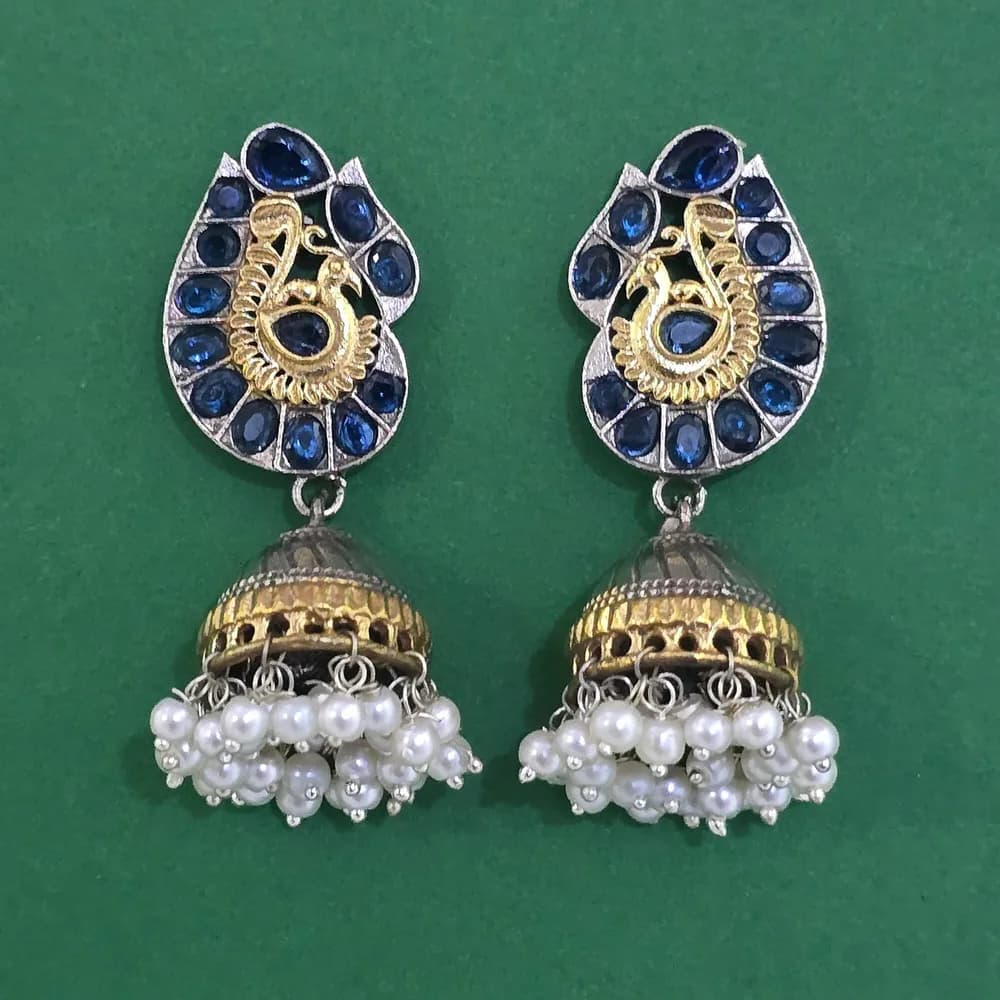
Jhumka Earrings
Kalapi Two-Tone Peacock Jhumki
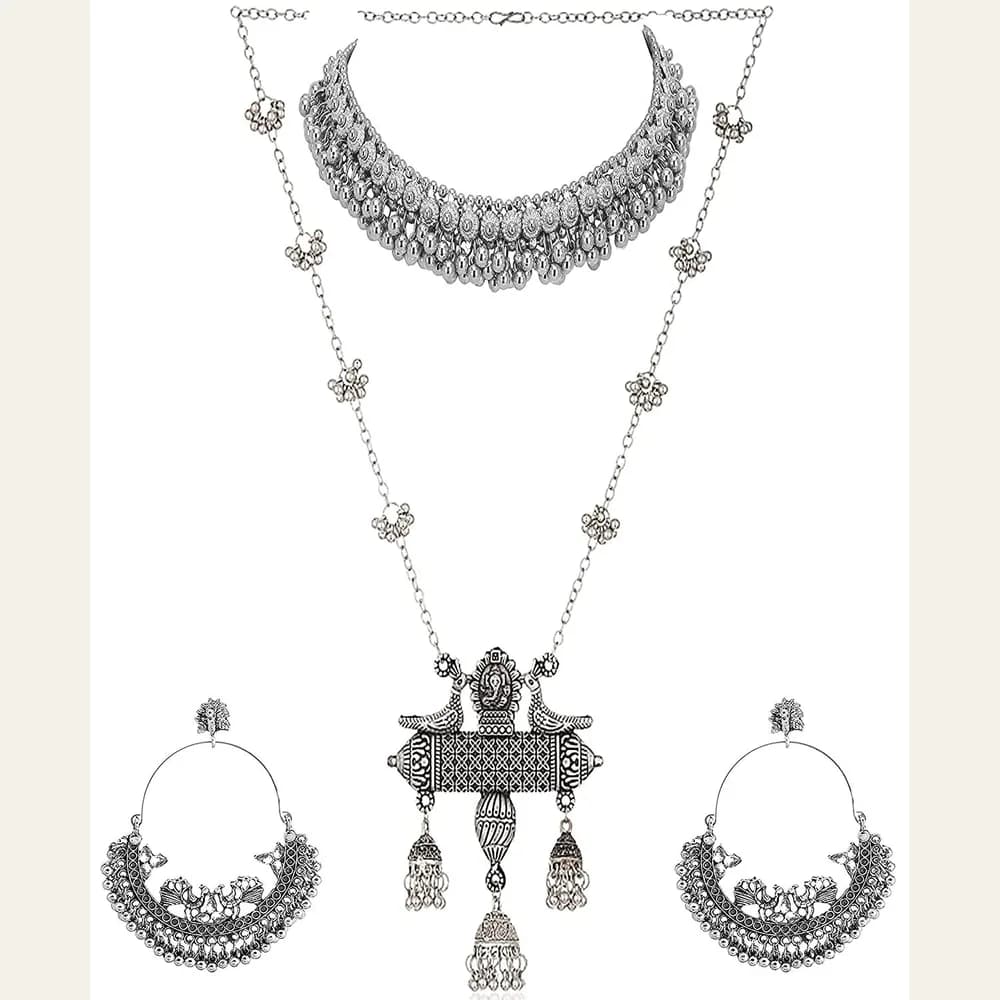
Oxidised Necklace Combos
Mor Ghungroo Oxidised Necklace Combo
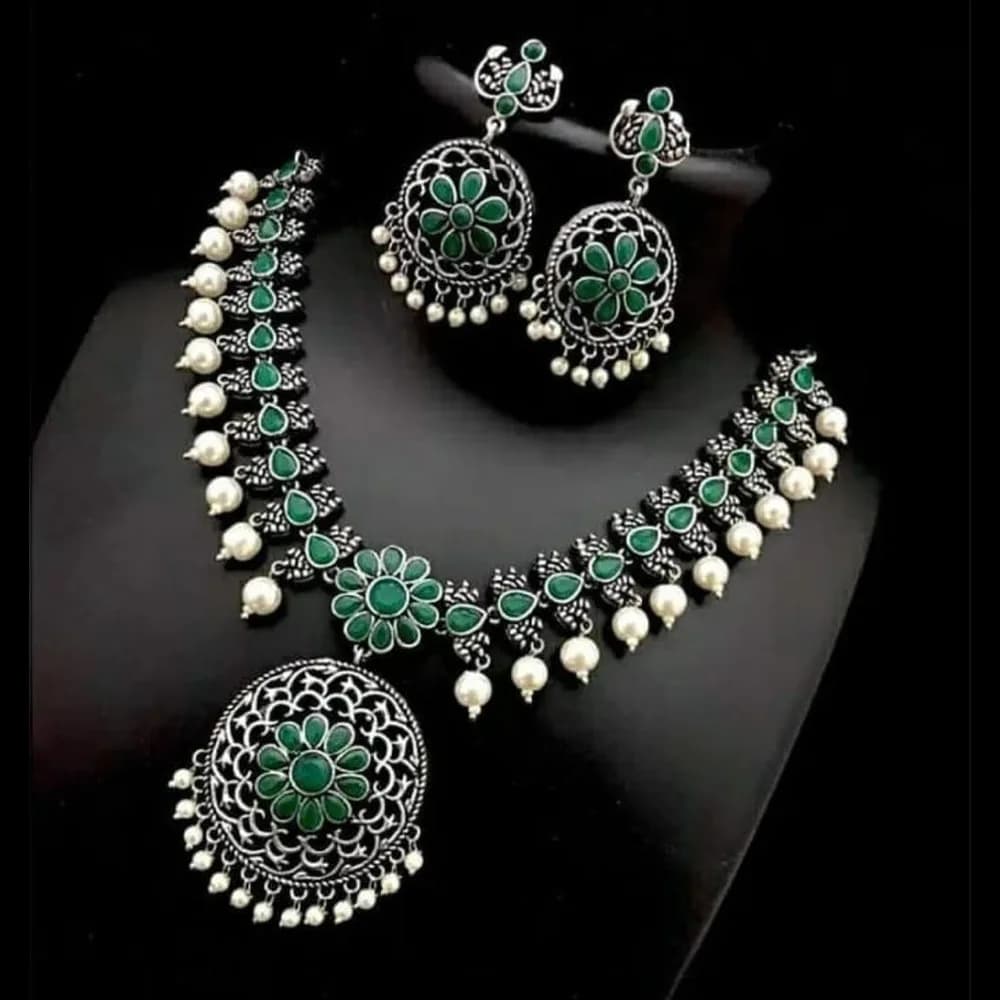
Oxidised Choker Sets
Panna Green Stone Oxidised Choker Set
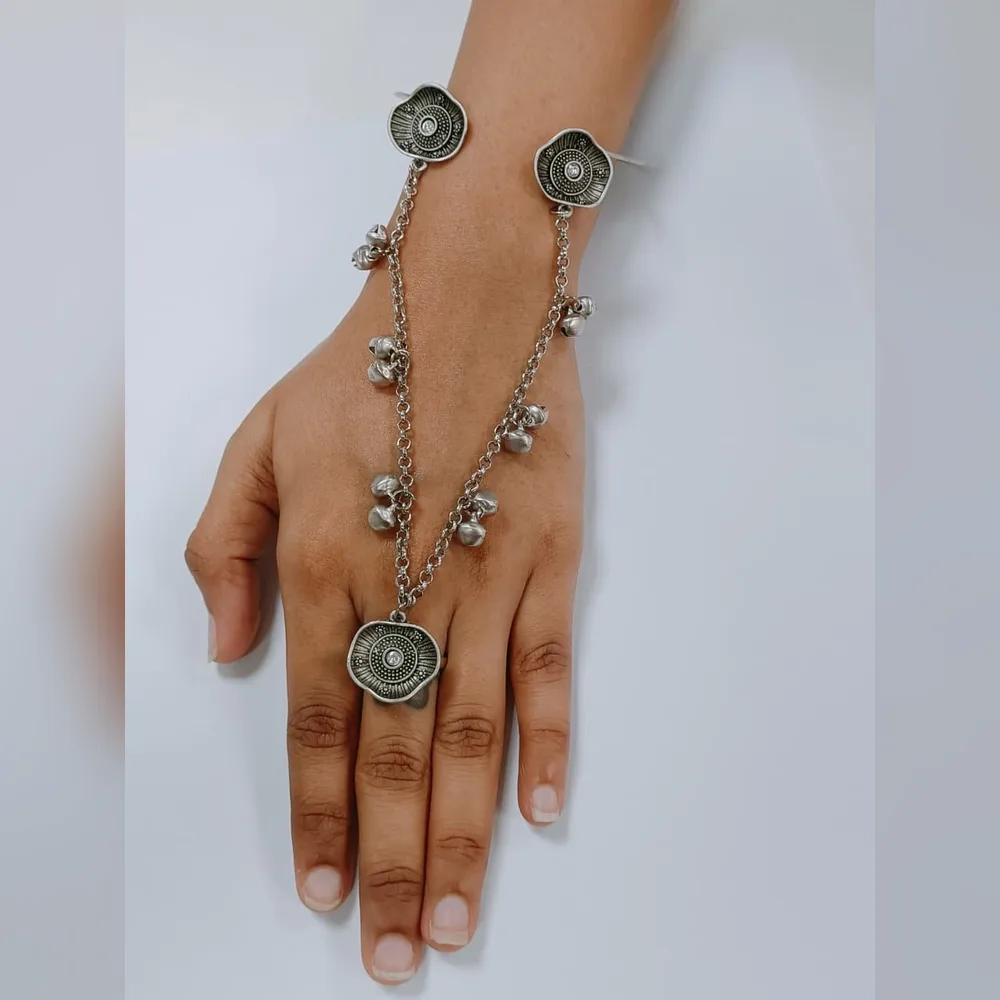
Hathphool
Phoolwari Oxidised Hathphool
Kada
Morni Peacock Oxidised Kada
Ethnic Bracelets
Aabha Pearl Beaded Meenakari Antique Bracelet
Statement Rings