Styling
Hathphool and Kada: How to Wear Hand Jewellery for Navratri and Weddings
A ring, a bracelet and a chain between them. How to wear one — and a kada beside it — without catching it on everything.
Updated 7 min readRenu Ornaments
What a hathphool is
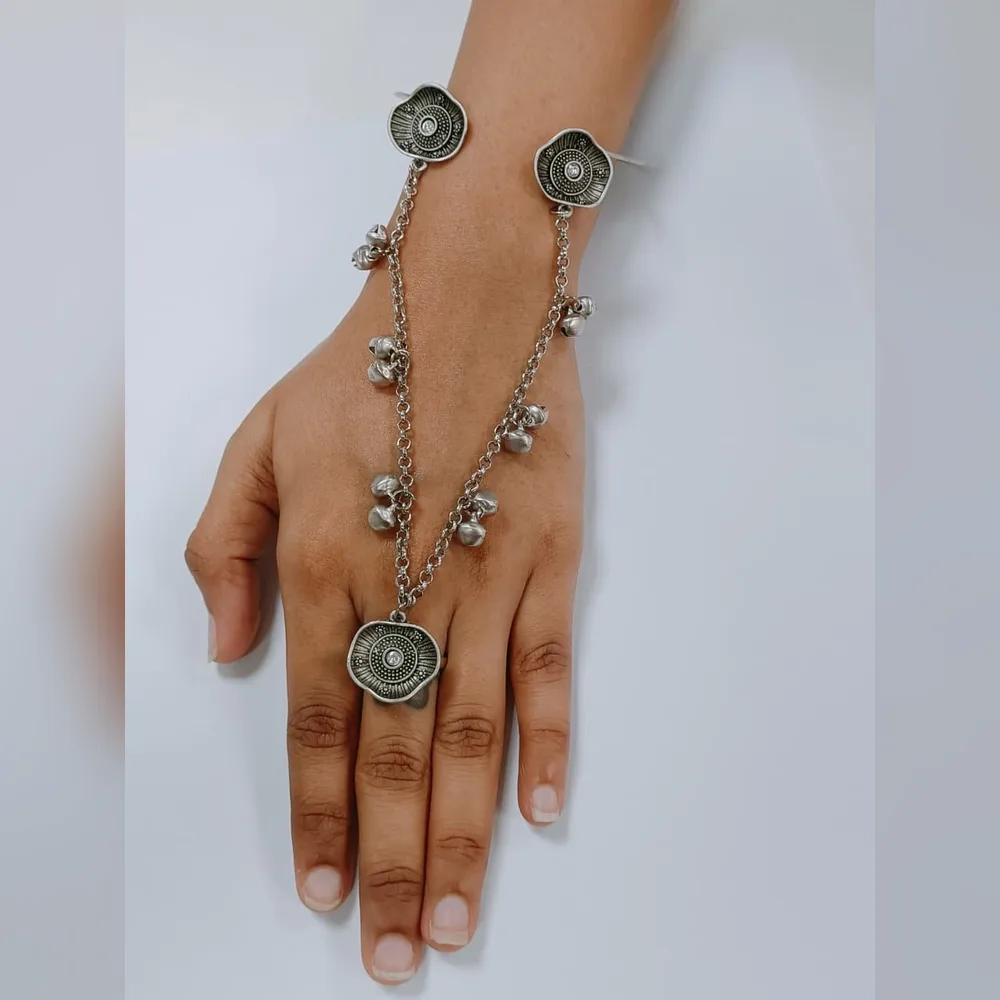
A hathphool — haath phool, literally 'hand flower' — is a hand ornament in three parts: a bracelet at the wrist, a ring on one finger, and a chain or panel joining them across the back of the hand. Some designs add a ring for every finger; most everyday ones use a single ring. In Bengal the bridal version is called a ratanchur.
It is traditional bridal and festive jewellery across much of North and West India, and it has crossed into festival and fusion dressing because it decorates the one place no other piece reaches: the back of the hand. That is exactly where mehendi goes, and exactly what shows in every photograph of someone holding a dandiya, a diya or a glass.
Designs range from a fine chain with a single floral ring to heavy kundan panels covering the whole hand. Oxidised designs sit at the lighter end and suit festival wear better than bridal. Our Phoolwari hathphool is the light kind: an oxidised silver-tone floral bracelet chain linked to a matching finger ring by a delicate chain with small bead and bell accents. It is alloy, adjustable and free size, and listed at under 10 g.
How to put one on, and getting the fit right
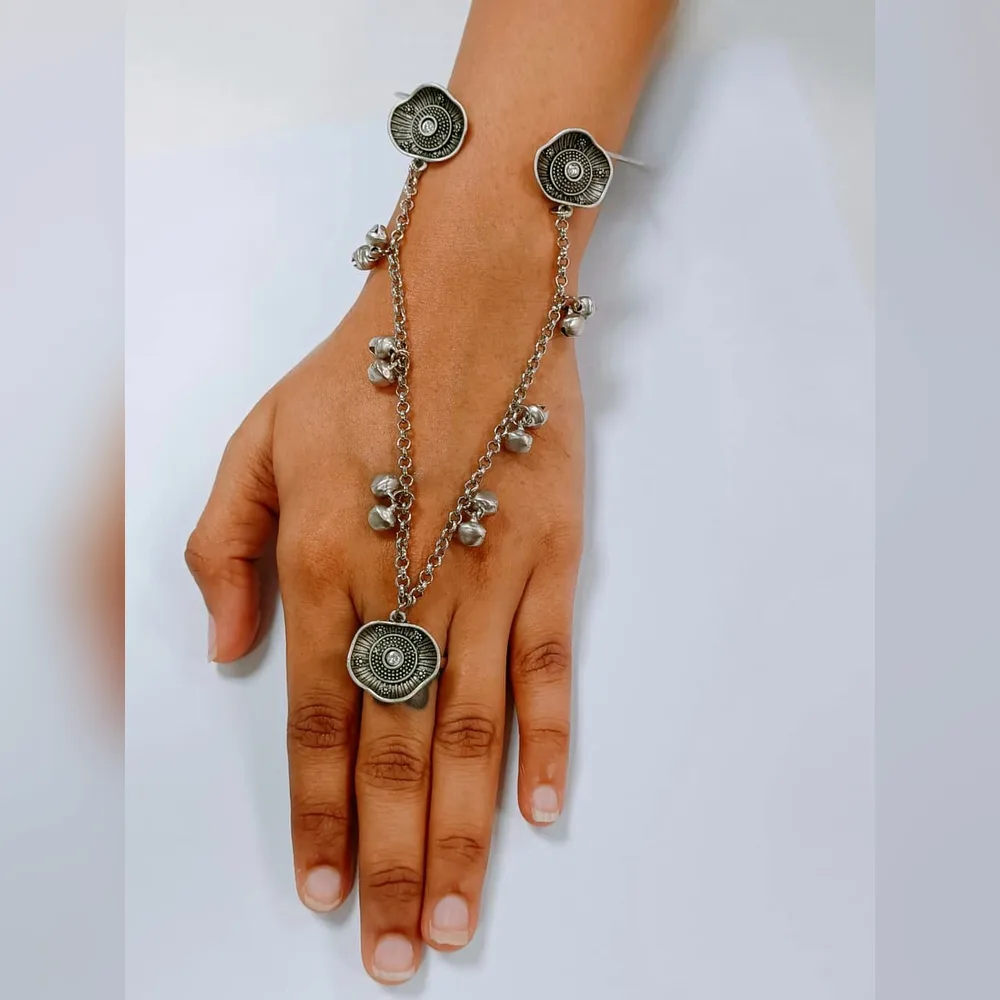
- Ring first. Slide the ring onto your middle finger — the usual choice, because it centres the chain on the hand. The ring finger works too if the middle feels crowded.
- Lay the chain flat along the back of your hand towards the wrist. Check it isn't twisted; a twisted chain shows in every photograph.
- Fasten the bracelet at your wrist. This is the fiddly part one-handed, so ask someone the first time, or rest your wrist on a table and work with the other hand.
- Check the tension. Spread your fingers, then make a loose fist. The chain should lie flat with your hand open and never drag the ring backwards when you bend your finger.
- To take it off, reverse the order: bracelet first, then the ring.
On fit: a hathphool set too tight pulls the ring down the finger every time you close your hand; too loose, and the chain droops and snags. Phoolwari is adjustable and free size, so set the bracelet first, then check the chain with your hand open and closed before you go out.
Hathphool with mehendi
This is the pairing the hathphool exists for. A fine oxidised chain over a dark mehendi stain gives strong contrast — silver-grey against deep brown-orange — and lets the design show through rather than covering it.
- Wait until the paste is off. Wear it once the mehendi has dried, been scraped away and the hand wiped clean, usually the next day. Wet paste smudges under the chain, and the oils and lemon-sugar mix used to deepen the colour are hard on any metal finish.
- Let the design lead. If your mehendi is dense across the back of the hand, choose a fine chain like Phoolwari rather than a heavy panel, or one will hide the other.
- Take it off for haldi. Turmeric paste stains and settles into the recesses of an oxidised piece. Wear the hathphool for the photographs before the haldi, then put it away until your hands are washed and dry.
Which hand?
There is no fixed rule. Practically, wear a single hathphool on the hand you use less. At a wedding you will be eating, greeting people and holding a plate, and a ring chained to your wrist gets in the way of all three. For a full bridal look, both hands.
The kada: one strong piece
A kada is a single rigid bangle, thicker and heavier than an ordinary bangle and meant to be noticed. An oxidised kada is an easy way to add weight to a look without anything more at the neck or ears.
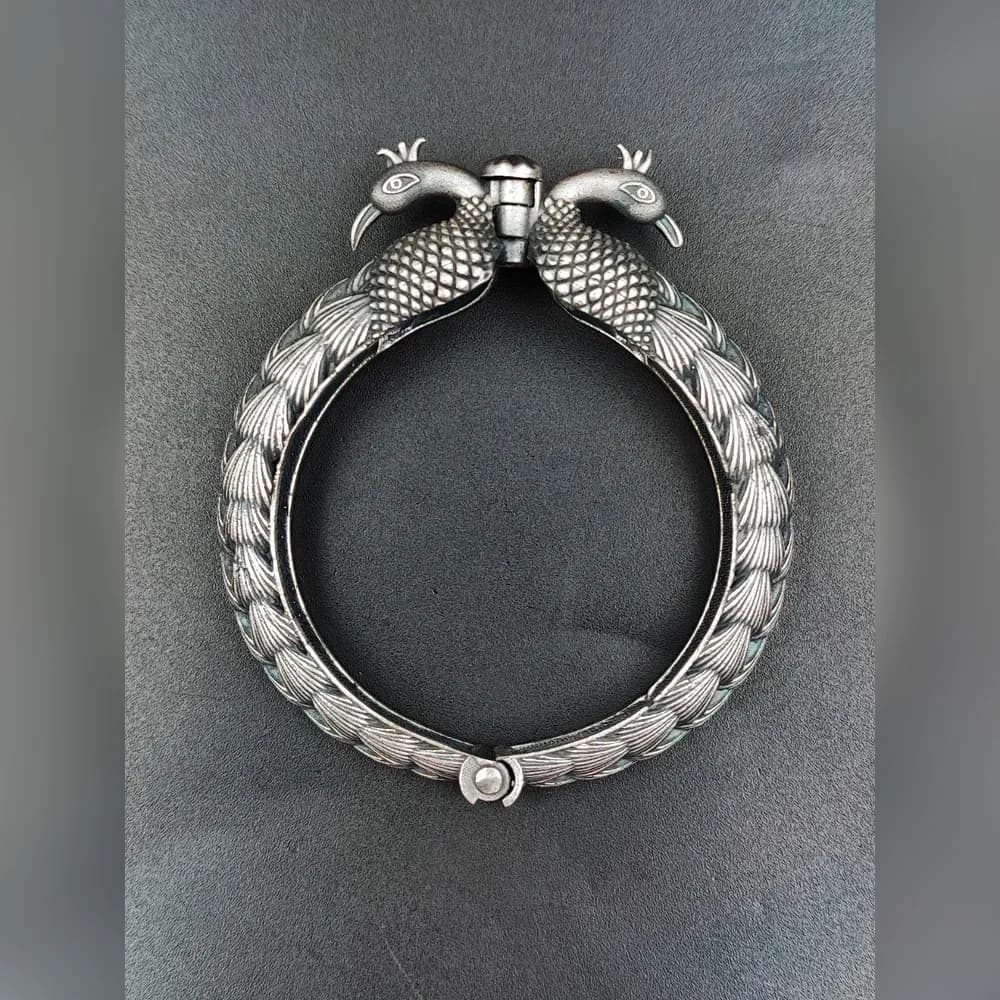
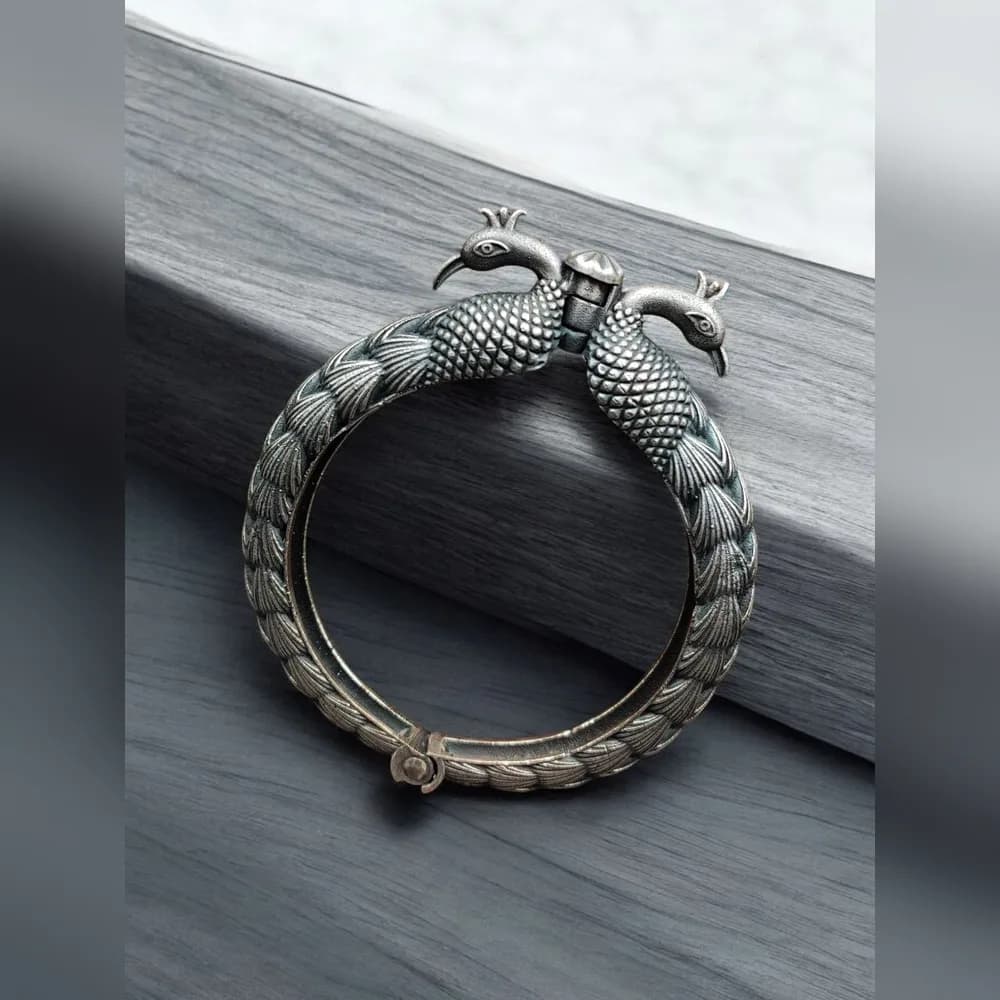
Our Morni peacock kada is brass with an oxidised silver finish, carved with two facing peacock heads and a feather-textured body. It is about 78 g, which is substantial: you will feel it on your wrist, and it gives the hand a solid, finished look. As photographed, it opens with a small screw clasp, so it goes around the wrist rather than over the knuckles.
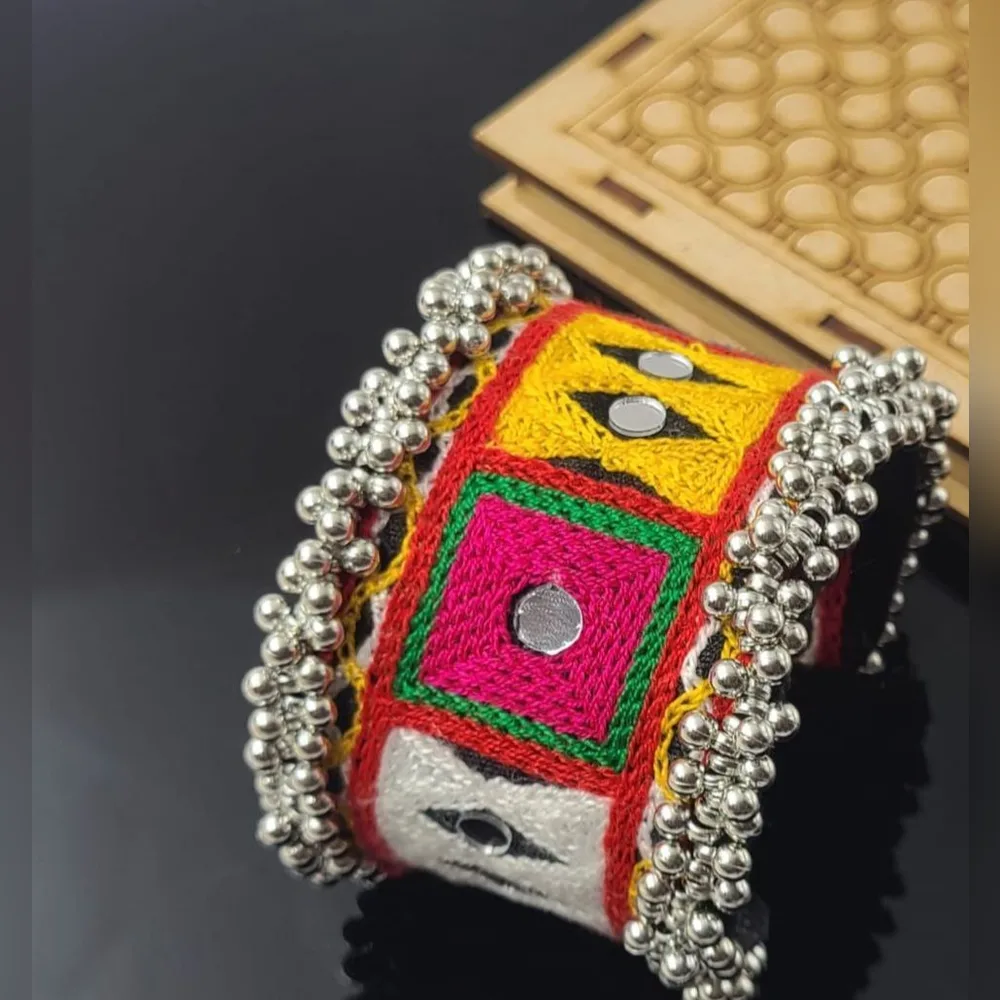
The lighter, louder alternative is thread work. The Toran kada is a wide band of colourful embroidery and small mirrors edged with rows of oxidised ghungroo bells, in five designs and sold singly. It is the garba choice — it chimes with every clap — where Morni is the one to wear to a wedding.
Wearing them together, and with bangles
A hathphool and a kada can share a wrist or split across both. Each works for a different reason.
- Same arm. The hathphool's bracelet sits at the wrist bone and the kada sits just above it, a little up the forearm. Together they read as one complete hand look. Leave the other wrist bare or give it a single thin bangle.
- Split. Hathphool on one hand, kada on the other. More balanced, more comfortable over a long night because neither wrist carries everything, and easier if you'll be clapping through garba.
With bangles, keep the count low. A 78 g kada plus a full stack is a great deal of metal on one wrist and will bruise during dancing. Two or three light bangles beside the kada is plenty. The general rules — one wrist, odd numbers, change one variable — are in stacking bracelets and bangles.
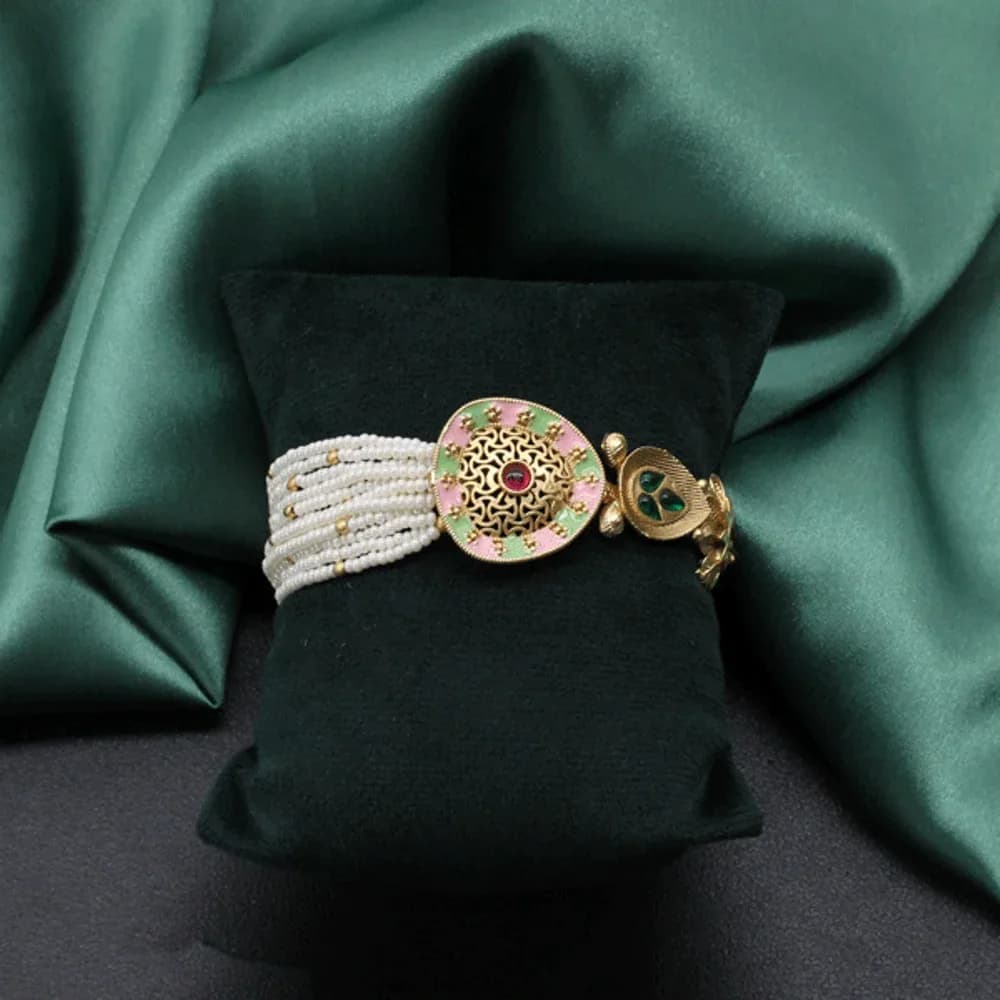
Mixing tones works when it looks intended. A gold-toned beaded bracelet like the Aabha pearl meenakari bracelet beside the oxidised kada makes a deliberate two-metal wrist. Repeat both tones somewhere else — a dual-tone jhumka does it neatly — so the gold doesn't look like a stray.
Garba, dandiya and weddings: practical notes
Garba and dandiya
Hand jewellery and dancing have one real conflict: snagging. A hathphool's ring and chain catch on dupatta edges, mirror-work borders and other people's sleeves in a crowded circle. In dandiya raas, where both hands grip a stick, the ring also presses between finger and stick all night.
- Wear the hathphool on your less active hand, or wear it for the aarti and photographs and slip it into a pouch before the fast rounds.
- Tuck or pin the dupatta end away from the jewelled hand.
- Keep a kada on the wrist that is working least, with no more than two or three bangles beside it. A heavy kada swinging into glass bangles breaks them.
Weddings
Oxidised hand jewellery is strongest at the functions where oxidised fits naturally: mehendi, sangeet, a Rajasthani- or Gujarati-themed evening, or a day function in cotton and handloom. For the main ceremony, where the dress code usually leans gold, a dual-tone or gold-toned piece blends more easily — though an oxidised kada still works with a silver-grey or pastel outfit.
Whatever the event, wipe hand jewellery when you take it off. Hands touch food, sanitiser, hand cream and mehendi oil, and all of it ends up on the metal. The routine is in how to clean oxidised jewellery, and the rest of the edit is in Navratri jewellery.
Frequently asked questions
What is a hathphool?
A hand ornament made of a bracelet and a finger ring joined by a chain or panel across the back of the hand. The name means 'hand flower'. It is worn at weddings, mehendi functions and festivals.
Which finger is a hathphool ring worn on?
Usually the middle finger, which centres the chain on the back of the hand. The ring finger works too. Multi-ring designs have a ring for every finger.
Is a hathphool one size?
Many are adjustable. Ours, Phoolwari, is listed as adjustable and free size. Set the bracelet first, then check that the chain lies flat with your hand open and doesn't pull when you make a fist.
Can I wear a kada with bangles?
Yes, but keep it light: one kada with two or three thin bangles on the same wrist. A heavy kada beside a full stack is uncomfortable and breaks glass bangles during dancing.
Shop this guide