Buying Guide
What Is Oxidised Jewellery? German Silver, Silver Plating and What to Check
The dark finish is deliberate, the 'silver' usually isn't silver, and the listing tells you more than the photo does.
Updated 7 min readRenu Ornaments
What 'oxidised' actually means
Oxidised jewellery is jewellery that has been darkened on purpose. The metal is treated so that a dark layer forms across the surface, then the high points are polished or brushed back to bright. What stays dark sits in the recesses — the grooves of a carving, the background behind a motif, the gaps between beads. The result is contrast: the design reads the way it does on a piece of silver that has aged for decades.
The word is slightly loose chemistry. On real silver, the darkening is usually done with a sulphur compound, and the dark layer is silver sulphide rather than an oxide. Nobody in the trade calls it sulphided jewellery, so oxidised it is. On fashion jewellery the same effect is created over a silver-tone or base-metal surface. The look is the same idea; the metal underneath is not.
The metals underneath: German silver, brass, alloy and sterling
The finish tells you nothing about what a piece is made of. Four base materials turn up under oxidised finishes, and they behave quite differently.
German silver
German silver — also called nickel silver — is an alloy of copper, nickel and zinc. It contains no silver. The name comes from its convincing silvery-white colour and from the German metalworkers who popularised it in the 19th century. It is hard, holds fine detail and takes an oxidised finish well, which is why so much oxidised choker work is made from it.
Brass
Brass is copper and zinc, and it is naturally yellow. To look silver it is plated with a silver-tone layer and then oxidised. It is the most common base for fashion jewellery generally — our gold-toned meenakari range is brass too — and it suits dual-tone pieces, where some areas stay gold and others go dark.
Alloy
On a listing, alloy is a catch-all for a cast base-metal mix. It allows intricate shapes at low weight, which is useful for long danglers and hand jewellery. It tells you the piece is neither brass nor silver, and not much more.
Sterling silver
Sterling is 92.5% silver and 7.5% other metal, usually copper. Oxidised sterling is a real and lovely thing, but it is priced by the weight of silver in it and is usually stamped 925.
| German silver | Brass, silver-tone plated | Sterling silver | |
|---|---|---|---|
| Made of | Copper, nickel and zinc | Copper and zinc, with a plated surface | 92.5% silver, 7.5% other metal |
| Contains silver? | No | Only if the plating is silver — a very thin layer | Yes |
| Colour underneath | Silvery white | Yellow | White-grey |
| Contains nickel? | Yes — it is a main ingredient | Not in the brass itself; platings vary | Not normally |
| How it ages | Dulls and darkens further with time | Plating wears at contact points and brass shows | Tarnishes, but can be re-polished and re-oxidised |
| Priced by | Design and finish | Design and finish | Weight of silver |
| Stamp | None | None | Usually 925 |
Is oxidised jewellery real silver? Being straight about ours
It can be, but at fashion-jewellery prices it almost never is. If an oxidised necklace set costs a few hundred rupees, it is German silver, brass or alloy. There is no shortcut around the price of silver.
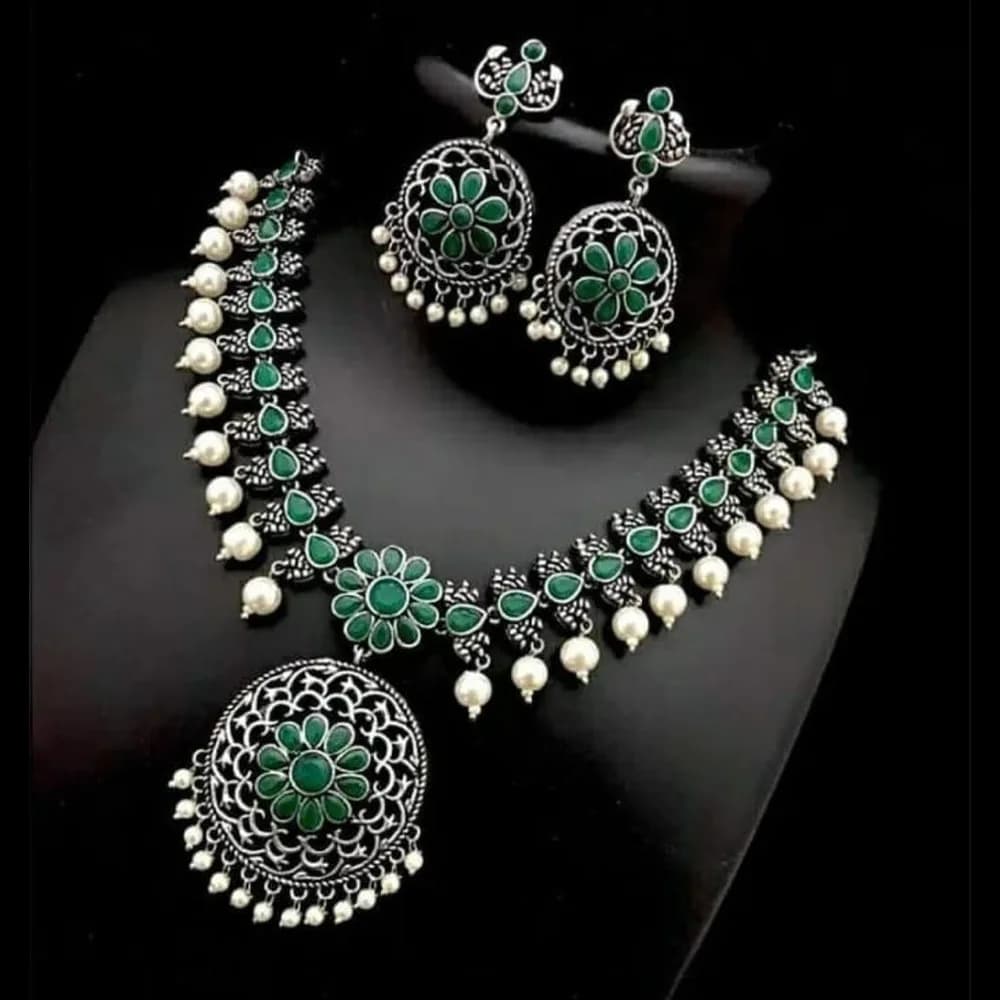
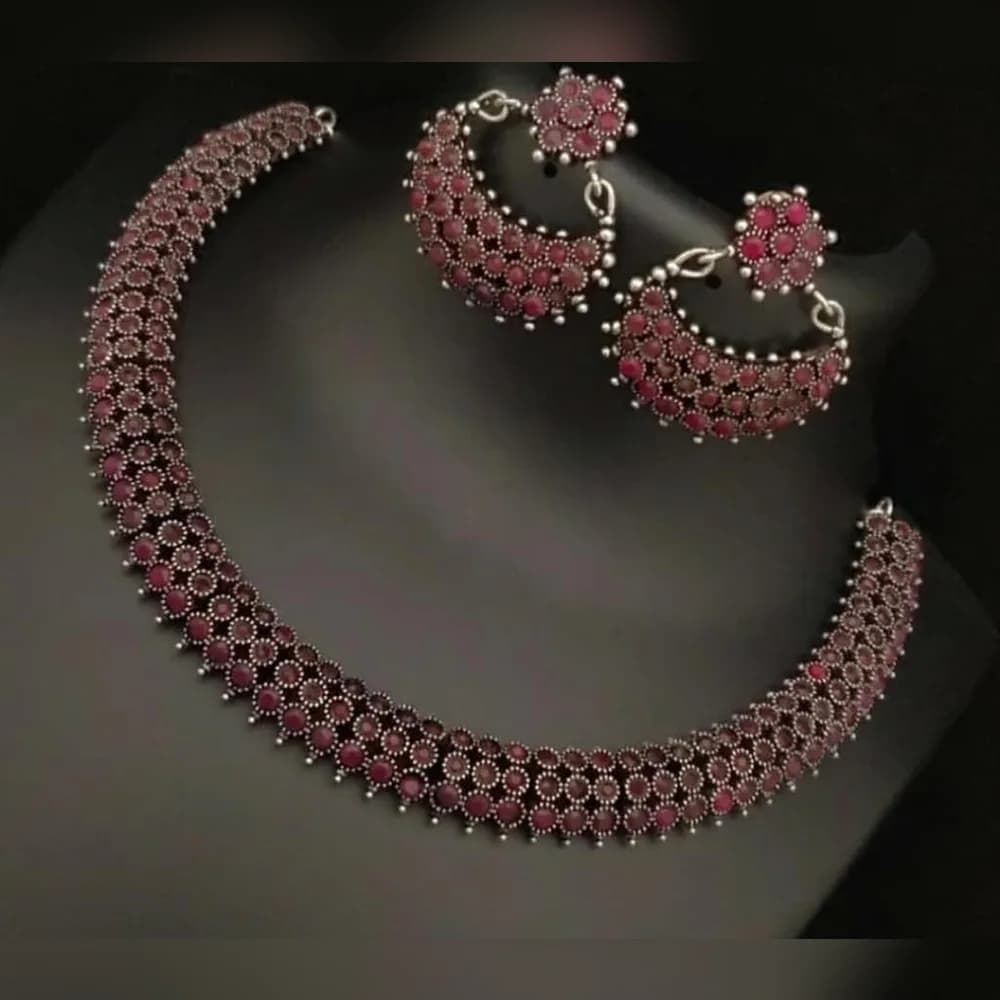
Everything in our oxidised edit is fashion jewellery. The two stone choker sets — Panna and Gulmohar — are German silver. Most of the earrings and the Morni kada are brass, and lighter pieces such as the Phoolwari hathphool are alloy. None of it is sterling or solid silver, and where a listing says silver-plated, that is a thin surface finish over brass.
We name the base metal on product pages because it is the single most useful fact about a piece of fashion jewellery. A listing that says oxidised silver and never names the metal is leaving out the part that matters.
Why oxidised suits Indian festive wear
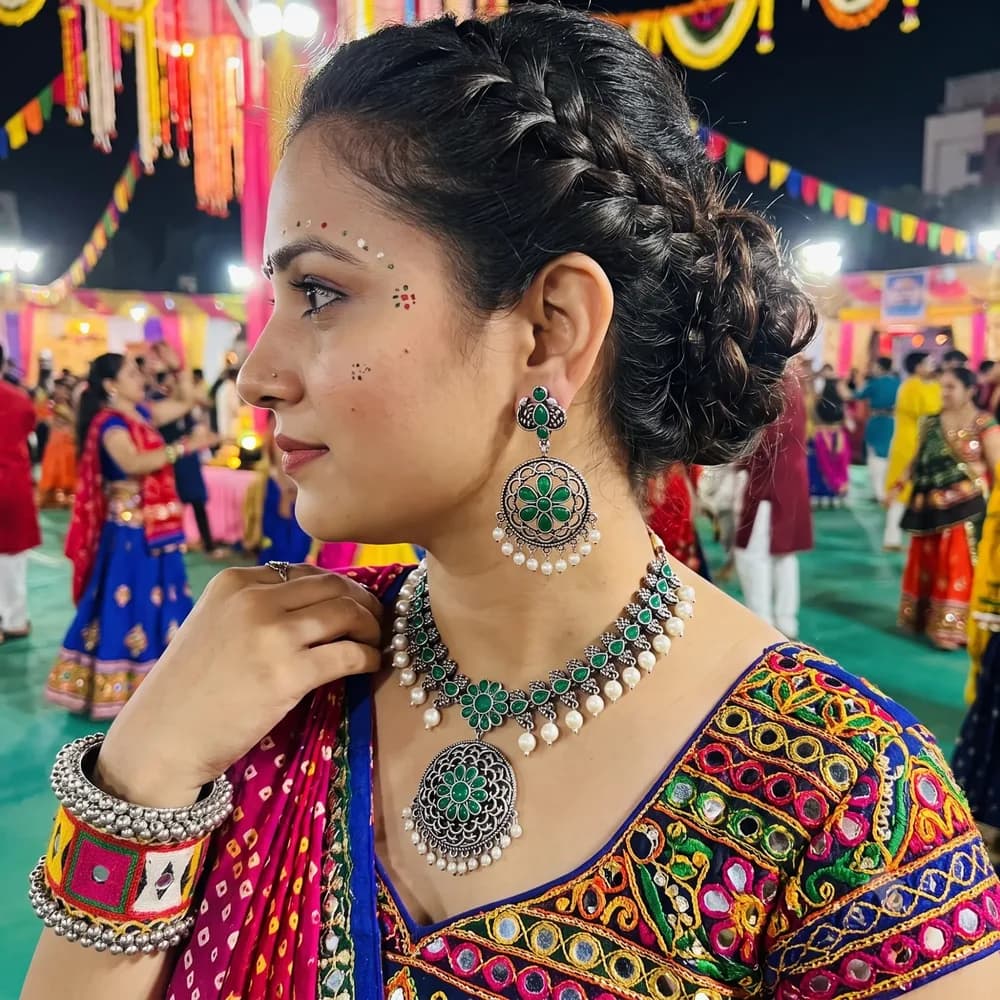
Silver has long been the everyday metal of village and pastoral communities across Gujarat, Rajasthan and Kutch: chunky, worn daily and darkened by years of use. Oxidised fashion jewellery borrows that look, which is why it feels at home with the clothes that come from the same regions.
- Mirror work and embroidery. A bright gold necklace competes with a mirror-work chaniya choli. A matte, darkened piece sits back and lets the embroidery supply the shine.
- Cotton, handloom and block print. Oxidised reads informal and earthy, so it suits ikat, bandhani, block print and handloom sarees in a way polished gold sometimes doesn't.
- Garba. It is the default Navratri look for a reason. A darkened finish shows small scuffs less than mirror-bright plating, and ghungroo-heavy pieces like the Mor ghungroo combo add their own sound to the dance.
- Indo-western. An oxidised jhumka with a plain kurta and jeans, or a white shirt, is one of the easiest ways to wear traditional jewellery away from a function.
Where it is less natural: a heavy silk saree with a lot of gold zari, or a red-and-gold bridal lehenga. Those ask for gold-toned pieces like our meenakari jewellery — or a dual-tone piece that bridges both.
Dual-tone pieces: the bridge between gold and oxidised
Dual-tone jewellery combines a gold-toned area and an oxidised silver area in one piece. It solves a real problem: what to wear when an outfit has both gold zari and silver-grey tones, or when you want an oxidised kada and gold-toned earrings in the same look without the two arguing.
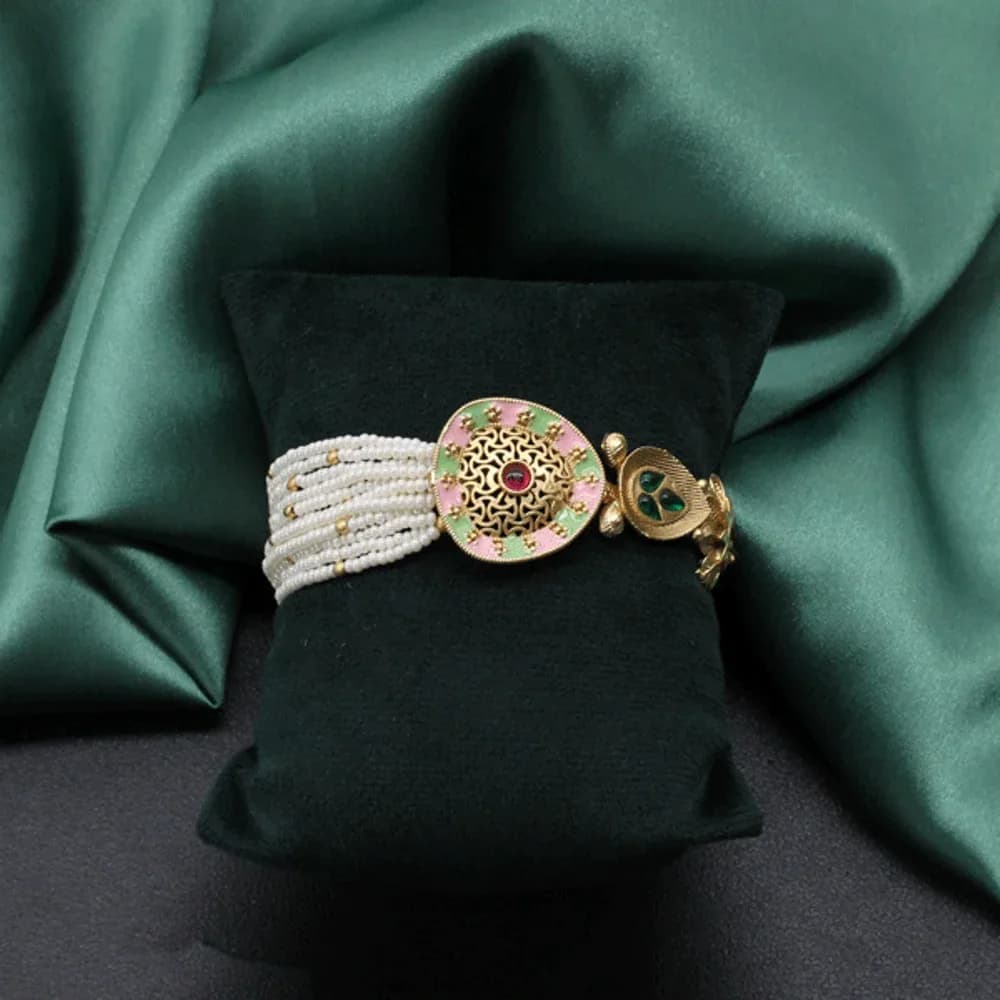
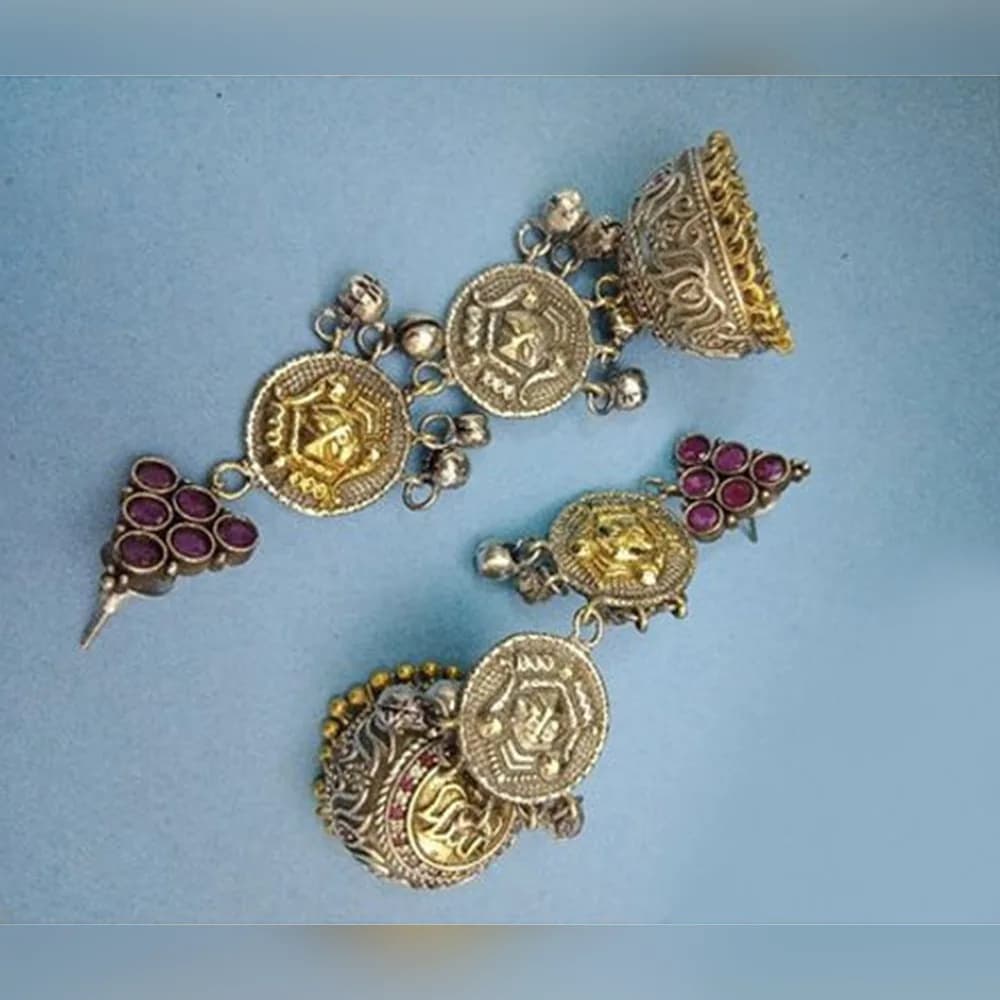
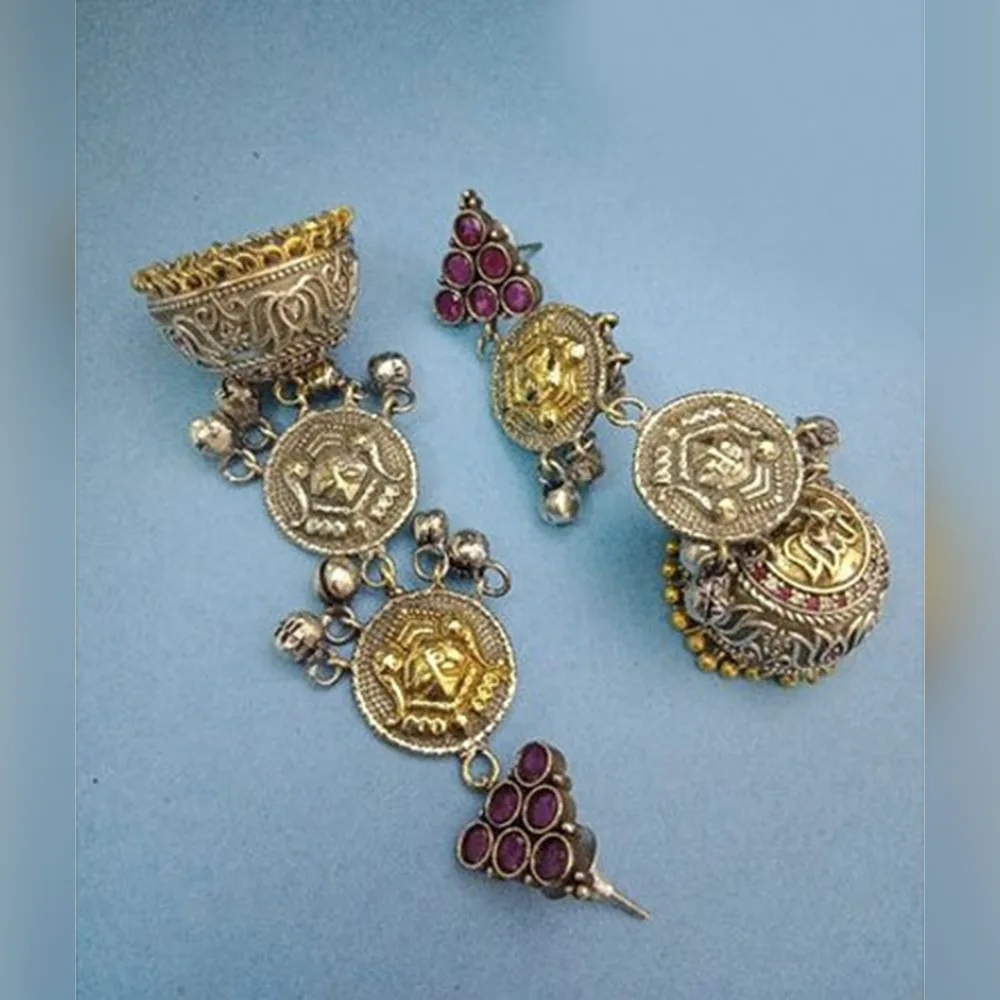
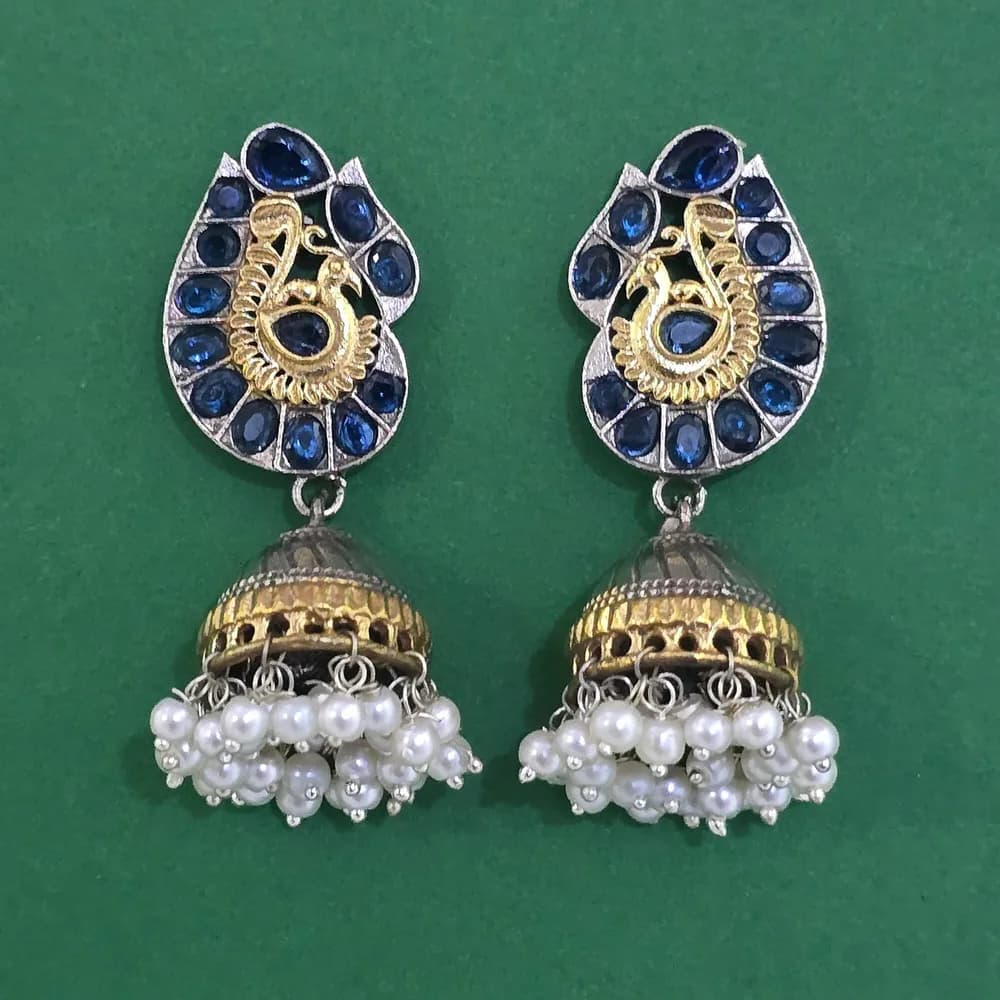
The Shakti Durga coin jhumki is brass in gold-tone and oxidised silver, with coin medallions, small ghungroo bells and ruby-red stones. The Kalapi peacock jhumki sets a gold-tone peacock inside an oxidised frame. Either sits comfortably next to a gold-toned meenakari bracelet or an oxidised choker.
What to check before you buy
- The base metal. German silver, brass, alloy or sterling. If a listing doesn't say, ask — or assume the cheapest option.
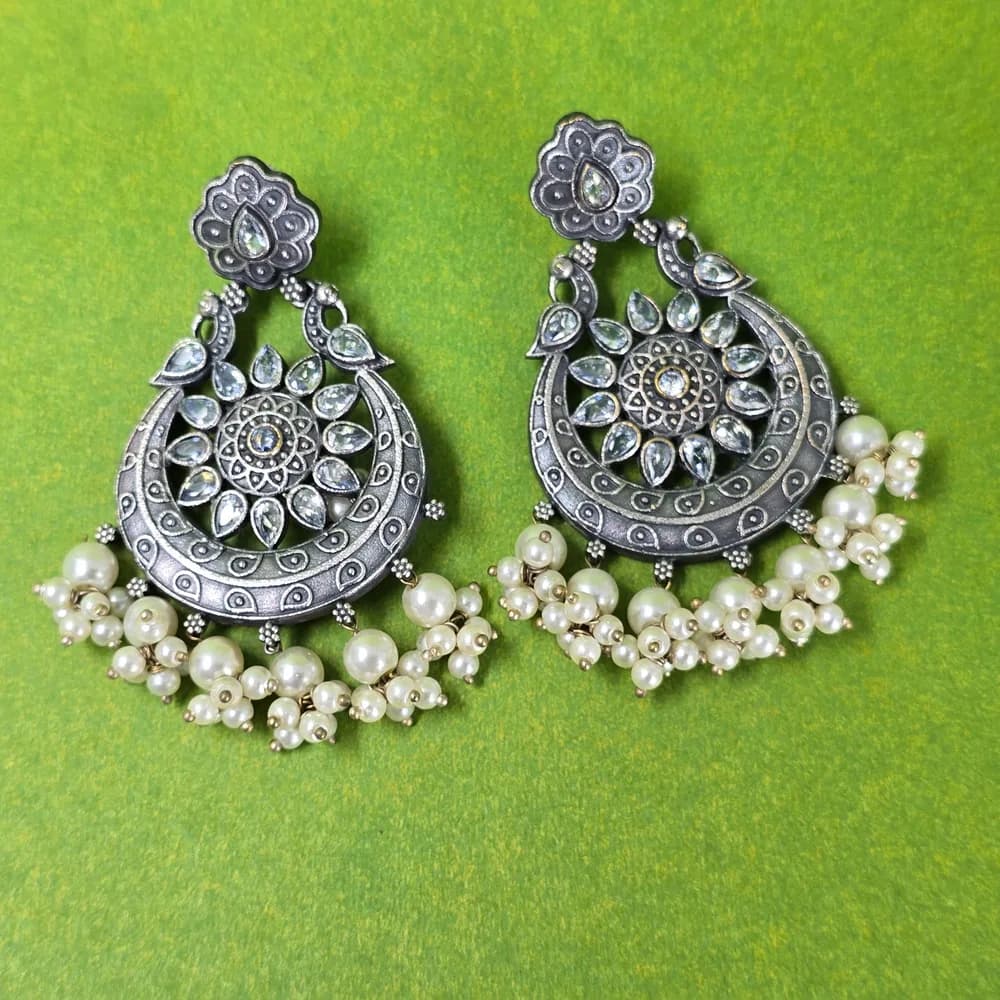
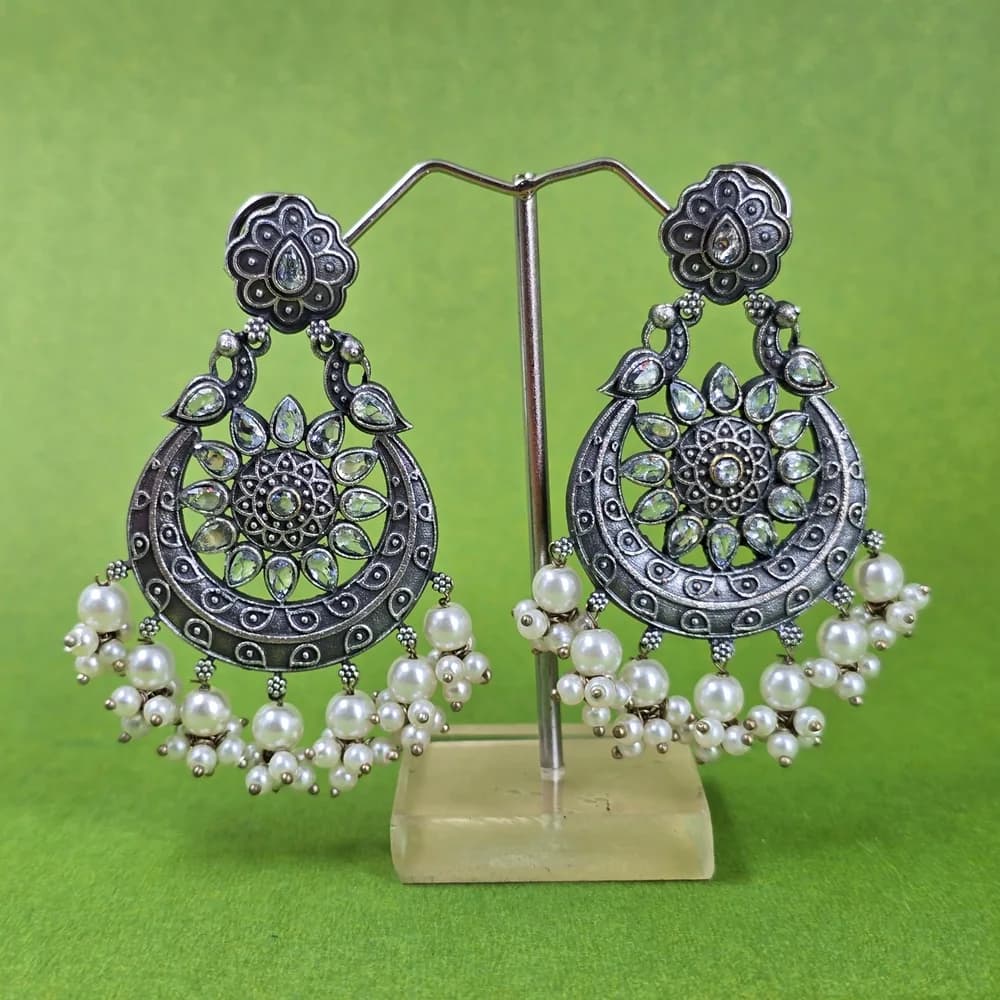
- The weight, for earrings. Oxidised pieces are often bigger than they look in a close-up. Our Chandni chandbali is about 40 g the pair: beautiful, and a statement weight that needs support backs for a long evening. The comfort guide explains what the numbers mean.
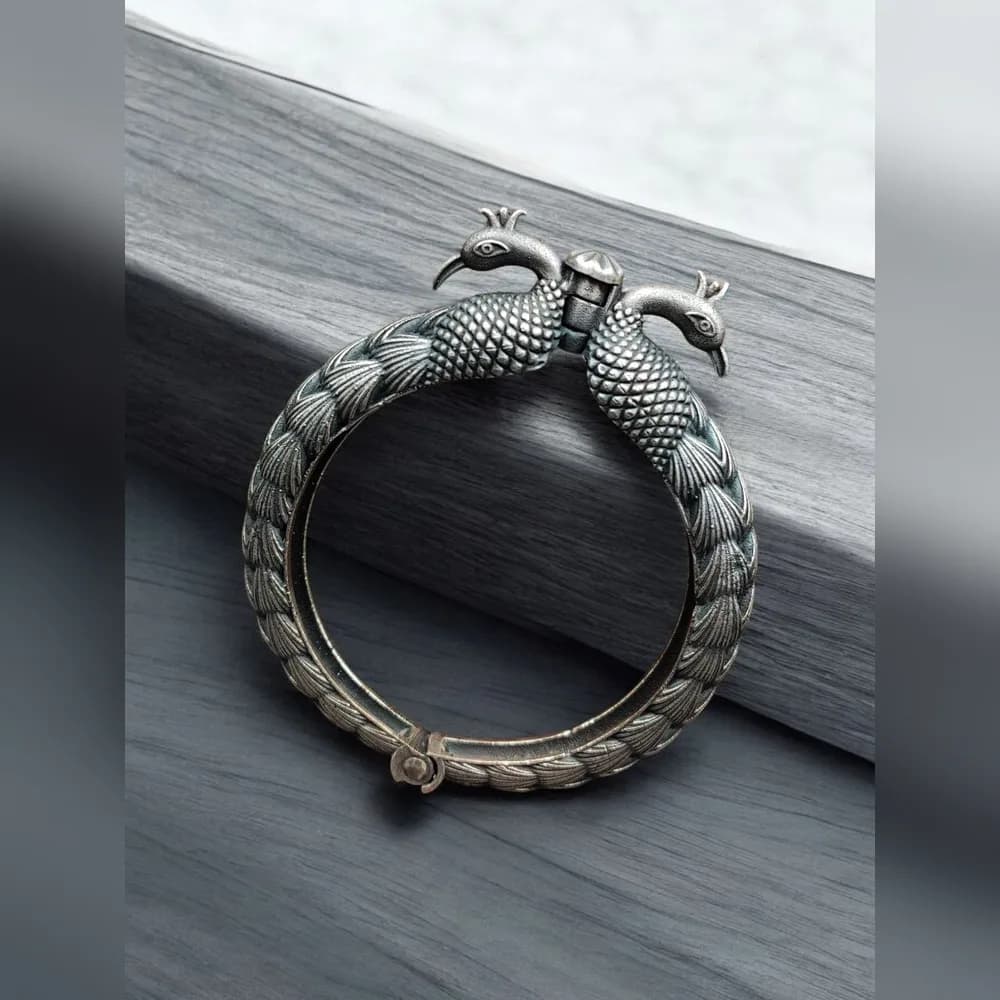
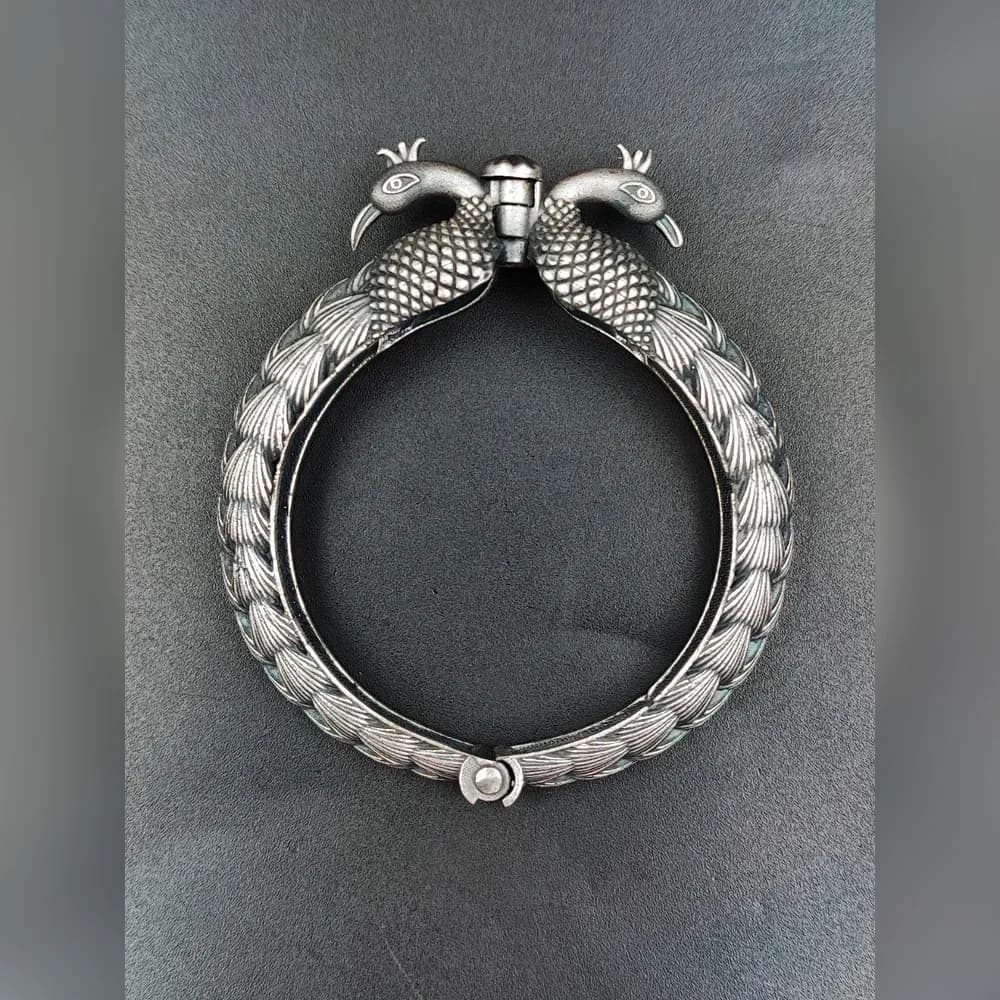
- The closure. Push-back, fish-hook, screw and dori tie all behave differently. A fish-hook is easy to put on but can work loose while dancing without a stopper; a screw-opening kada like Morni goes around the wrist instead of over the knuckles.
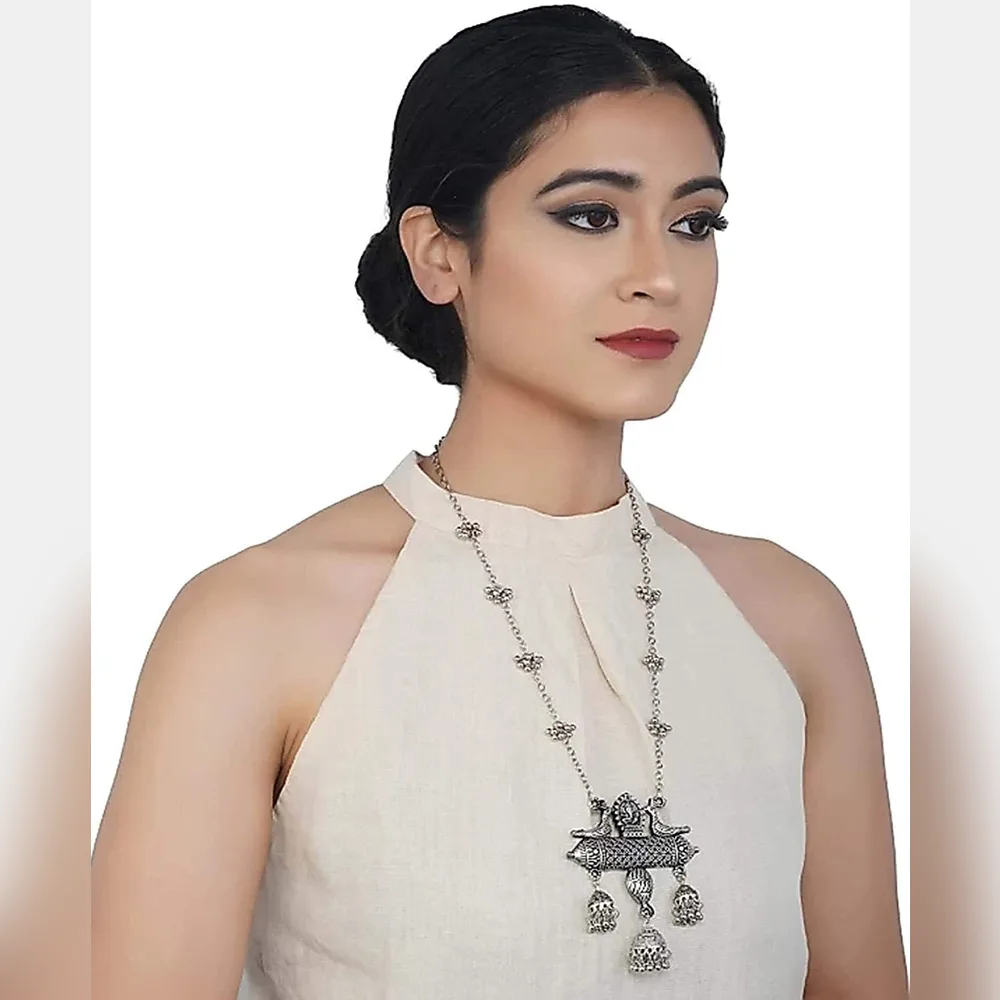
- The size, in centimetres. A listed length or height is worth more than any photo. The Rangeela fabric necklace is about 30.4 cm in height and around 92 g — a bold statement piece, not a delicate chain.
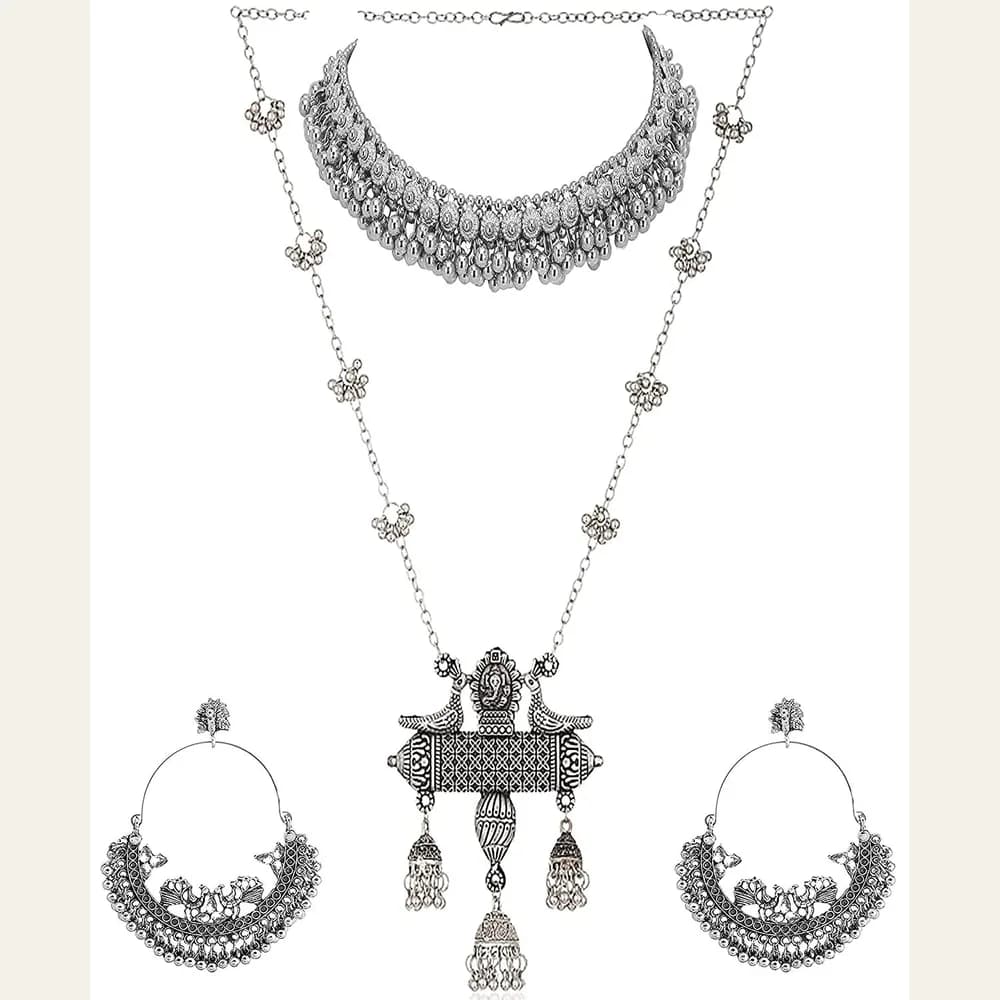
- What the set includes. Set means different things. Neelam is a choker, earrings and a maang tikka; the Mor ghungroo combo is a choker, a long pendant chain and earrings; Rangeela is the necklace alone.
- The colourway. Several pieces come in more than one stone colour. Choose before you order — each colourway is photographed on the product page.
And expect a little variation. On any oxidised piece, the depth of the darkening differs slightly from one recess to the next and from one piece to another. That is the nature of the finish, not a defect.
Frequently asked questions
What is the meaning of oxidised jewellery?
Jewellery with a deliberately darkened finish. The recesses of the design are blackened and the raised areas left bright, which gives the antique, high-contrast look associated with old silver.
Is oxidised jewellery real silver?
Sometimes. Oxidised sterling silver exists and is usually stamped 925, but most oxidised jewellery at fashion prices is German silver, brass or alloy. Ours is fashion jewellery, not sterling or solid silver.
What is the difference between German silver and oxidised silver?
German silver is a metal: an alloy of copper, nickel and zinc with no silver in it. Oxidised is a finish, which can be applied to German silver, brass, alloy or real silver. An oxidised German-silver necklace is a German-silver piece with a darkened finish.
Does oxidised jewellery turn black or green?
The dark finish is meant to be there. Over time, a plated surface wears at contact points, and the copper in brass or German silver can leave a harmless green mark on skin that washes off. Keeping pieces dry and away from perfume slows both.
Can I wear oxidised jewellery if I have a nickel allergy?
Be careful. German silver contains nickel, and other base-metal alloys and platings can too. With a confirmed nickel allergy, avoid German-silver earrings in particular and stop wearing any piece that causes itching or redness.
Shop this guide
Pieces mentioned above
Oxidised Necklace Combos
Mor Ghungroo Oxidised Necklace Combo
Oxidised Choker Sets
Panna Green Stone Oxidised Choker Set
Oxidised Choker Sets
Gulmohar Ruby Oxidised Choker Set
Jhumka Earrings
Shakti Dual-Tone Durga Coin Jhumki
Jhumka Earrings
Kalapi Two-Tone Peacock Jhumki
Chandbali Earrings
Chandni Pearl Oxidised Chandbali
Jhumka Earrings
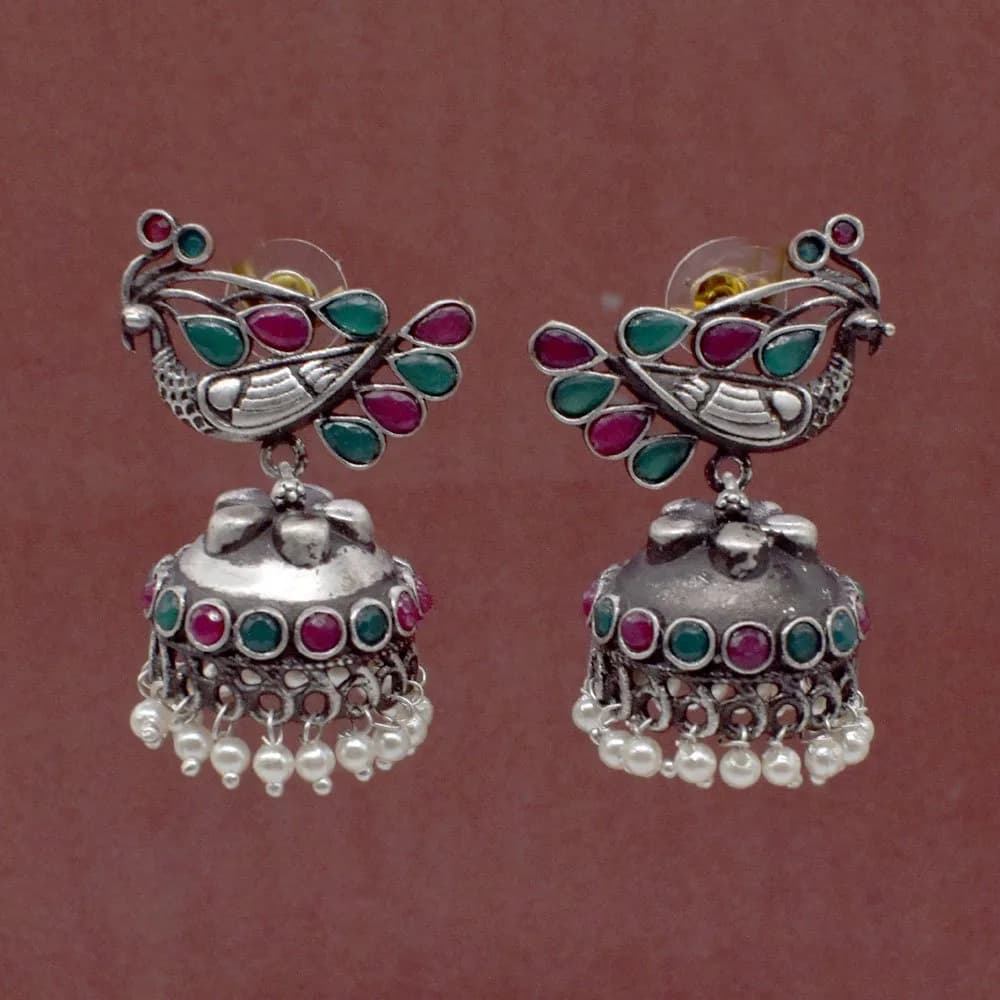
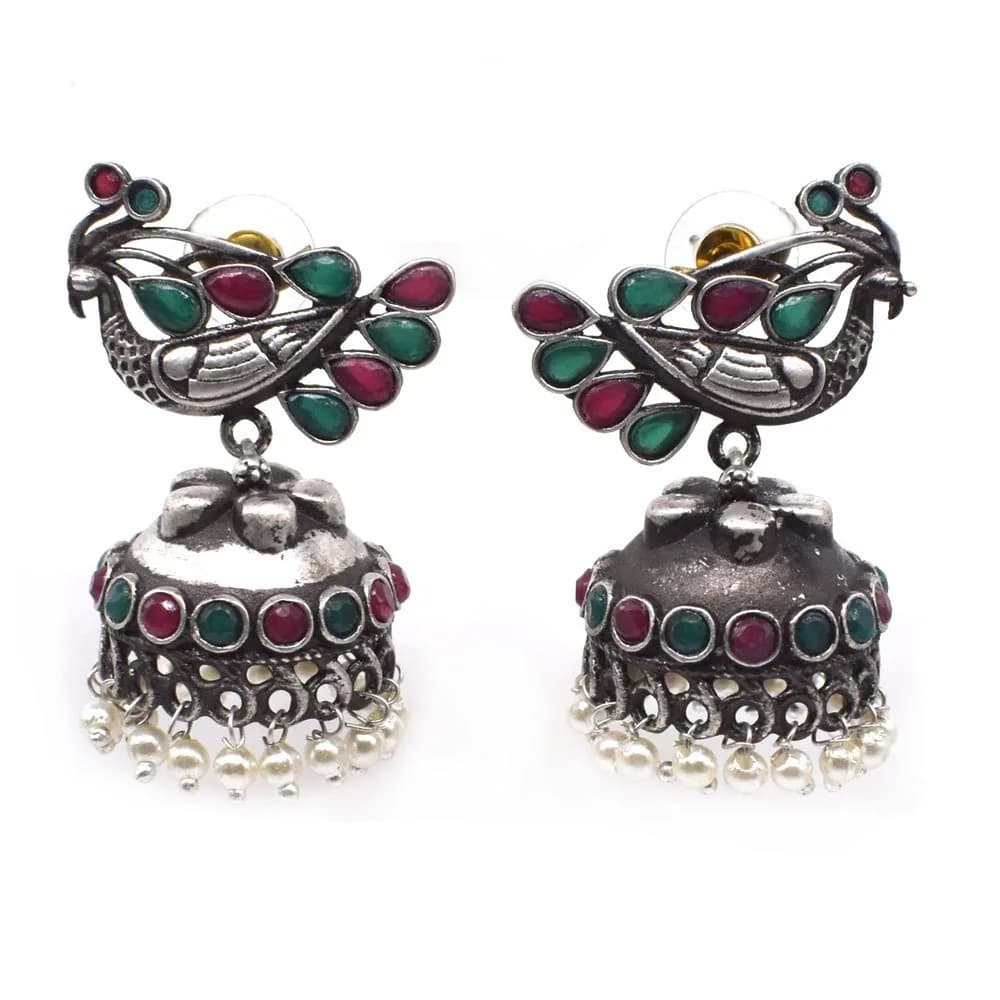
Mayura Peacock Oxidised Jhumka
Kada