Buying Guide
Oxidised Jhumkas, Chandbalis and Danglers: How to Choose Your Pair
Five oxidised pairs, five different jobs. Weight, length and closure decide more than the photo does.
Updated 7 min readRenu Ornaments
Three shapes, and what each is for
Oxidised earrings come in the same traditional shapes as gold-toned ones, but the finish changes how each reads. Darkened metal is quieter at a distance and more detailed up close, so shape and scale do more of the work.
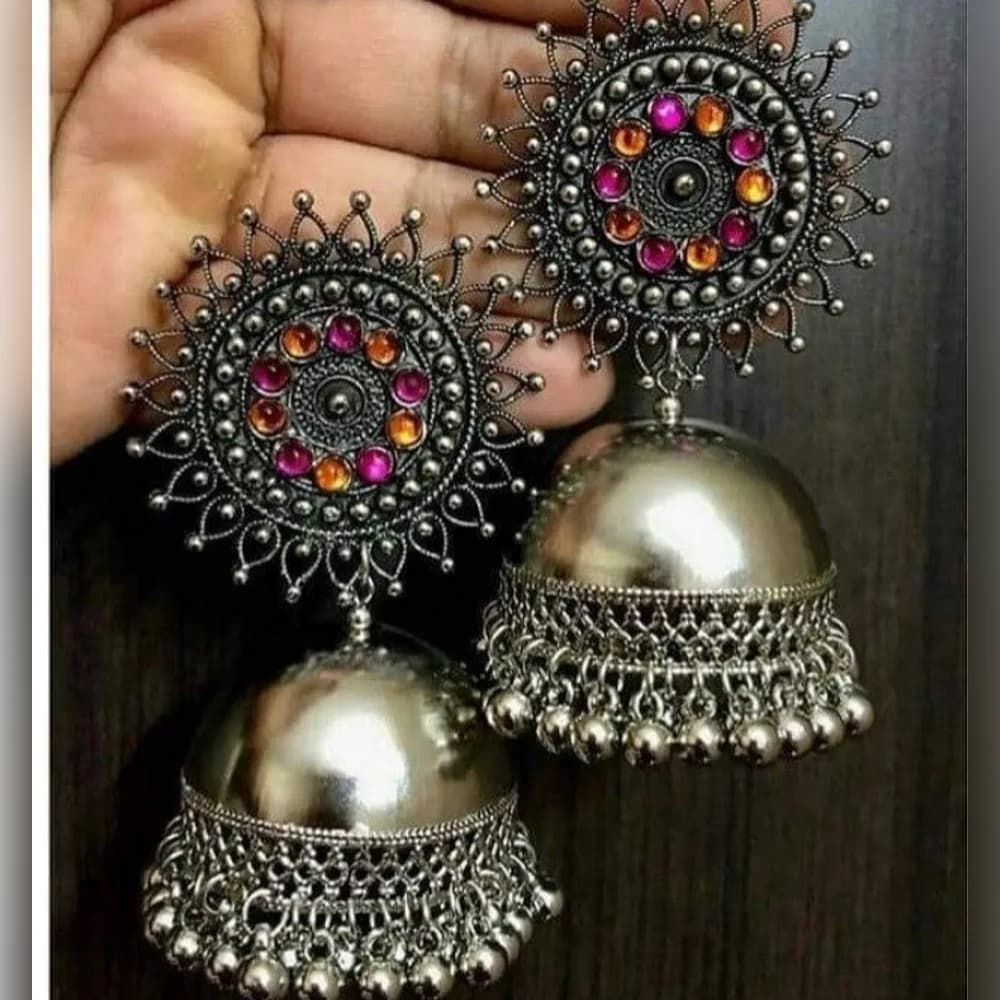
- Jhumka — a dome or bell that hangs downward. Vertical, traditional and the natural garba earring. Oxidised jhumkas often finish in a bead or pearl fringe that adds movement.
- Chandbali — a crescent moon, worn wide. More formal, it frames the face, and it is usually heavier because the metal spreads sideways.
- Dangler — long chains or strands falling from a decorative top. The longest silhouette and the one that moves most.
If you are choosing between the first two in general, chandbali vs jhumka compares them shape by shape. This guide is about our five oxidised pairs specifically.
Five pairs compared
| Pair | Shape | Size and weight | Closure | Best for |
|---|---|---|---|---|
| Kalapi | Two-tone peacock jhumka, pearl fringe | Medium | Push-back | Rotating across all nine nights; six colourways |
| Mayura | Peacock stud with a dome jhumka and bead fringe | About 5–6.5 cm long | Peacock stud top | Garba, kurtas, everyday festive wear |
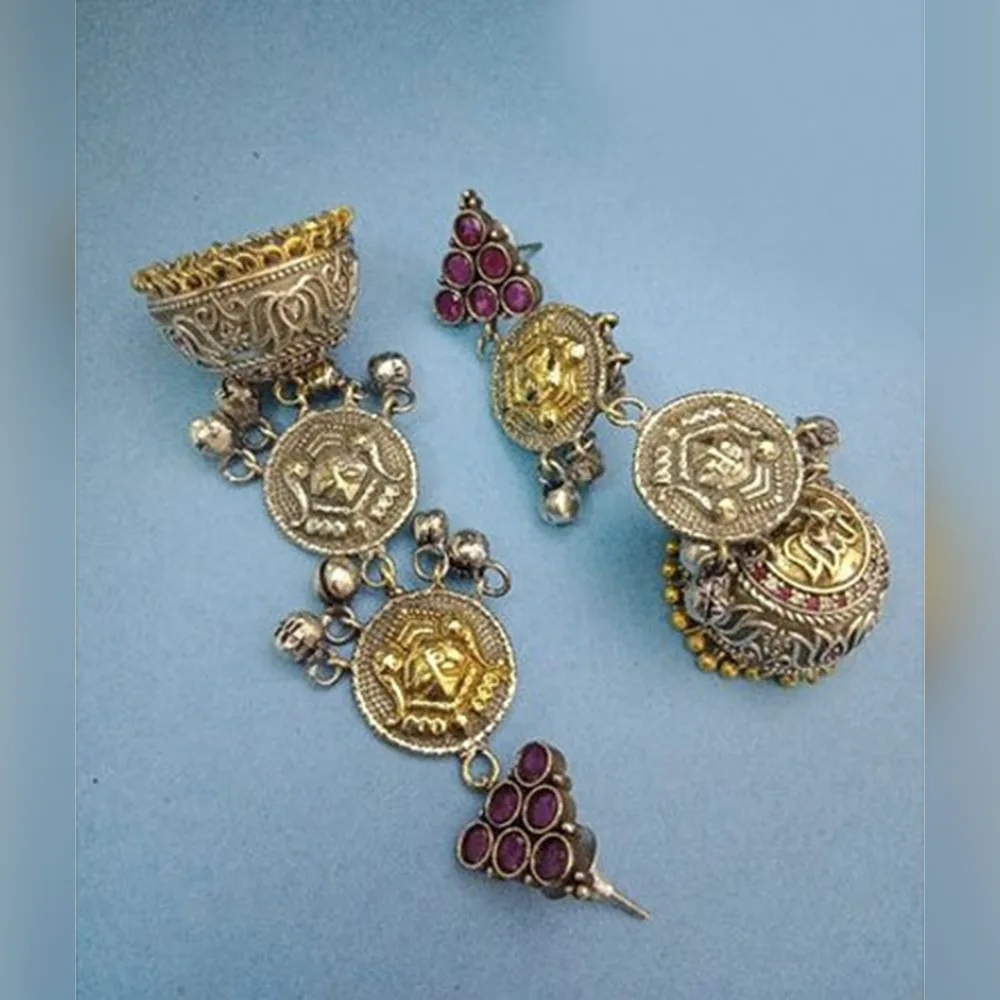
| Shakti | Long dual-tone coin jhumka with ghungroo | Long | Check the listing | Navratri and Durga Puja; the red night |
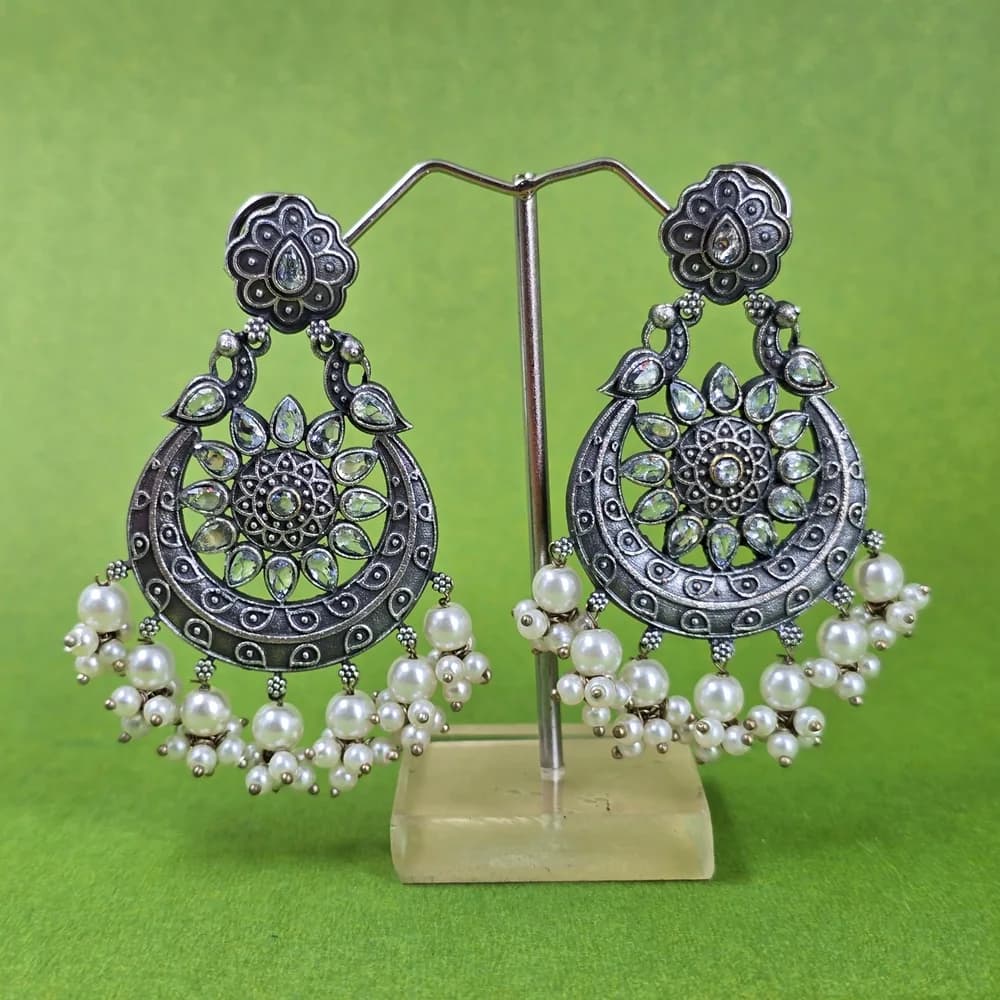
| Chandni | Crescent chandbali, deep pearl fringe | About 7.5 × 4 cm; about 40 g the pair | Push-back | Weddings, sangeet, saree evenings |
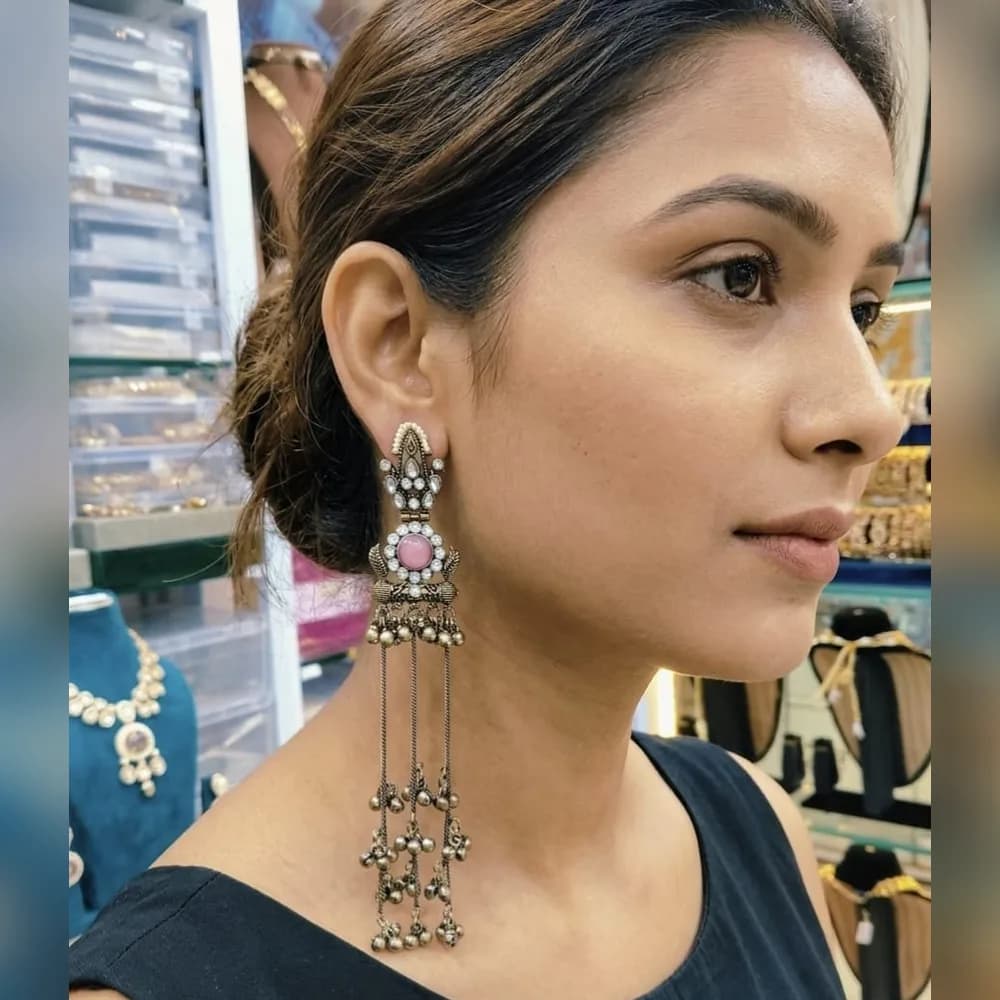
| Noor | Kashmiri-style long dangler with ghungroo | Very long — toward the neck and shoulder | Fish-hook | Hair-up looks, bare necklines, photographs |
Pair by pair: who each one suits
Kalapi — the one to rotate
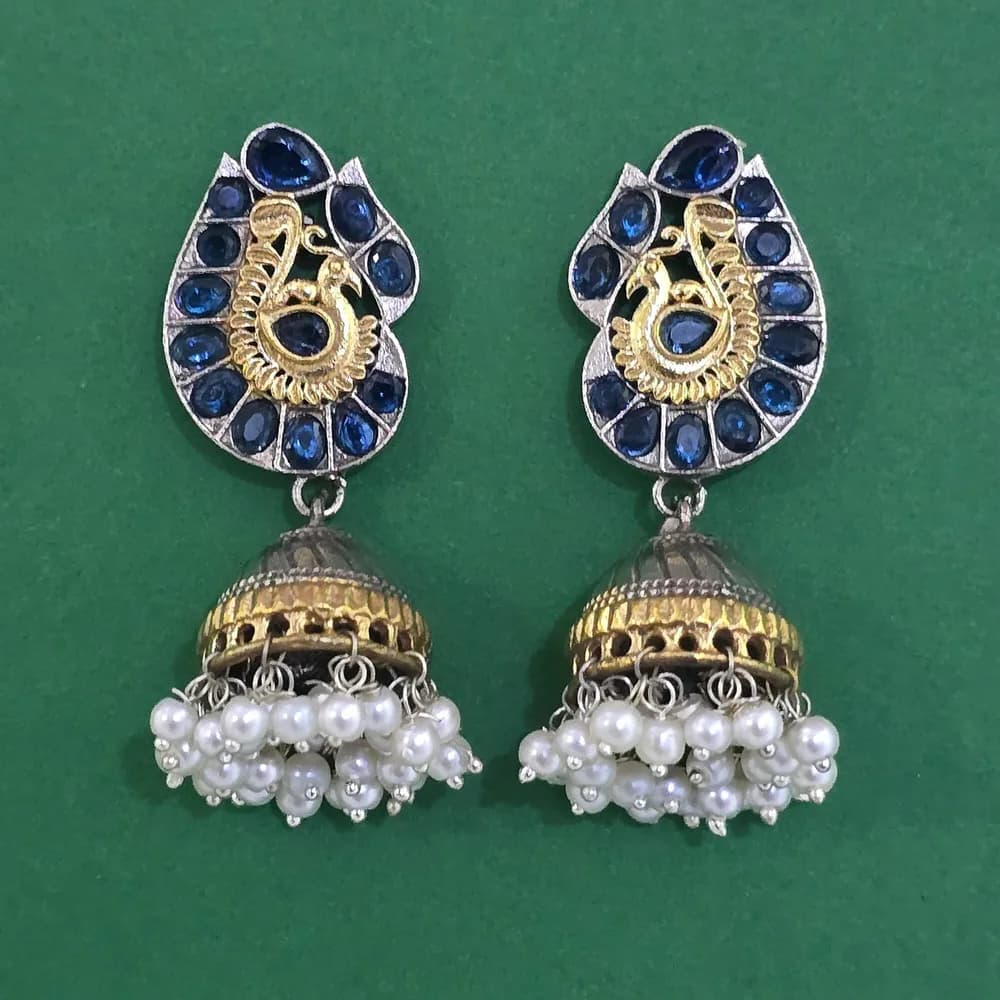
An oxidised silver frame around a gold-tone peacock, coloured stones around the bird, and a gold-and-oxidised dome jhumka finished with a white faux-pearl fringe. Medium size, push-back closure. Because it is two-tone, it sits as happily beside a gold-zari dupatta as beside an oxidised choker. If you are buying one pair for Navratri, this is the practical choice.
Mayura — the easiest jhumka
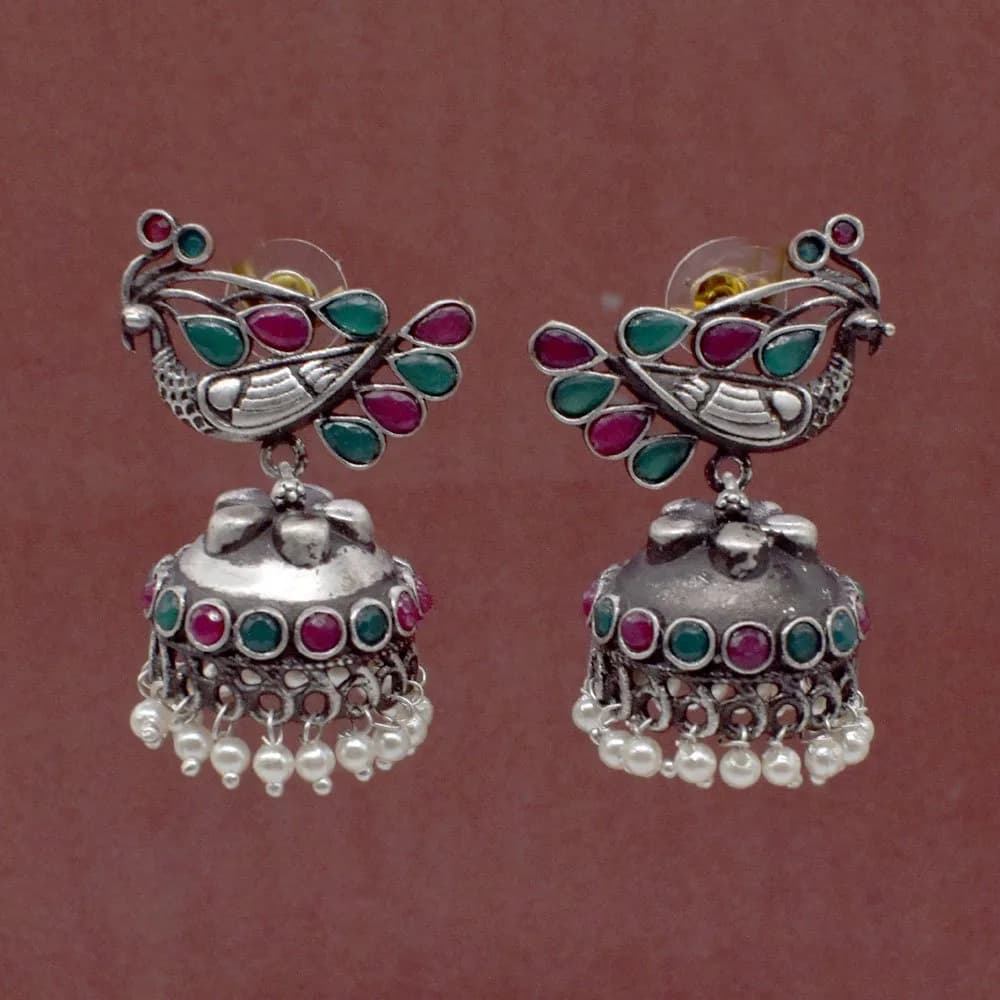
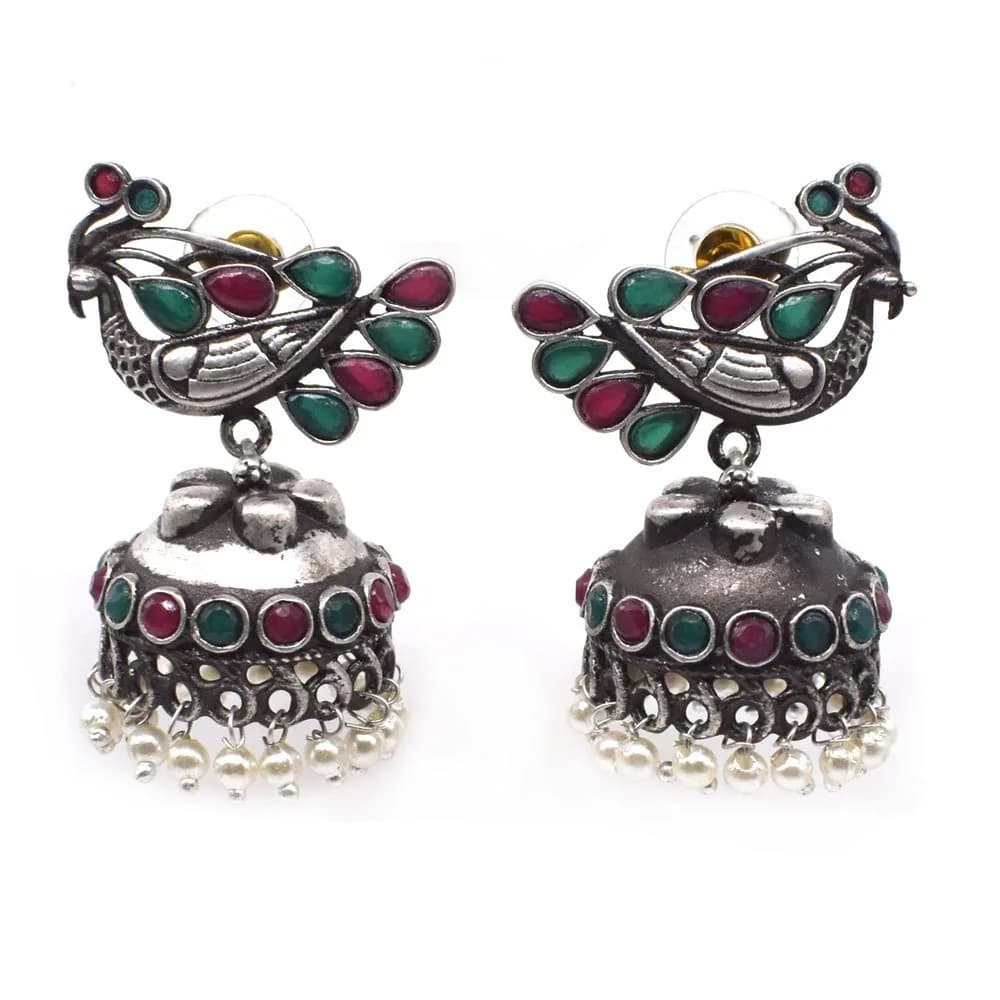
A peacock-shaped stud set with red and green stones, from which hangs a dome jhumka ringed in red and green stones with a white bead fringe. At roughly 5–6.5 cm it is a classic jhumka length: enough to swing, short enough not to hit your jaw in a fast raas. Red and green together cover a surprising number of chaniya cholis.
Shakti — for the goddess nights
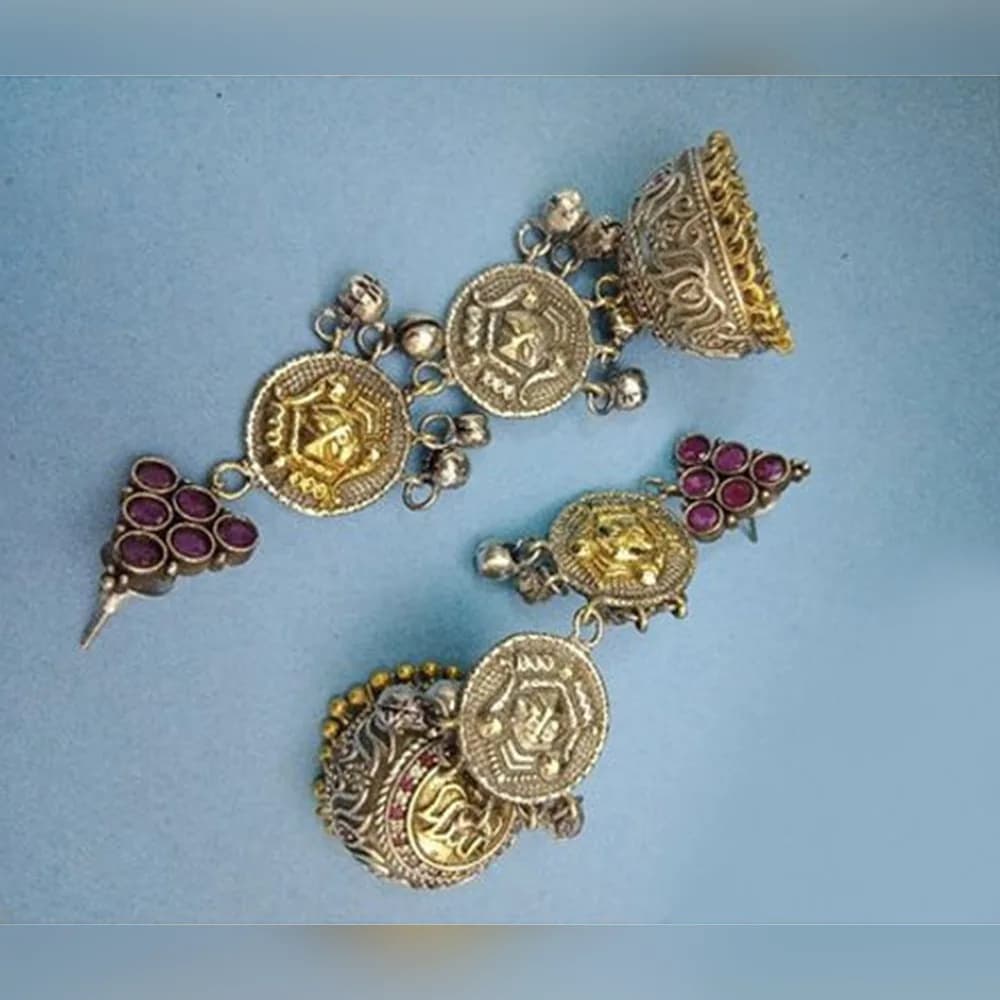
Brass in gold-tone and oxidised silver: a long drop of stacked coin medallions bearing a Durga face, small ghungroo bells, a dome jhumka and a triangular cluster of ruby-red glass stones. It is made for Navratri and Durga Puja, and it is the pair to save for the red night or for pandal visits. It is long, so pin your hair up.
The jhumkas
Chandni — the evening chandbali
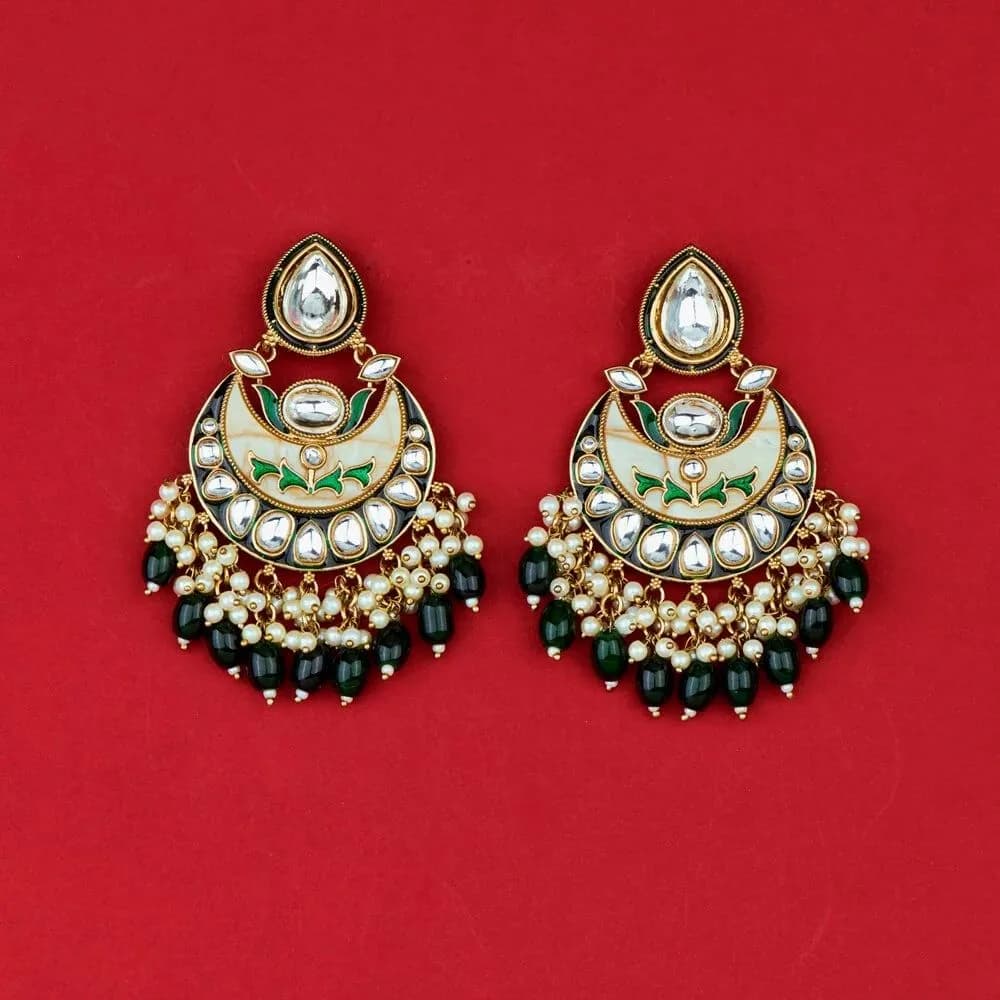
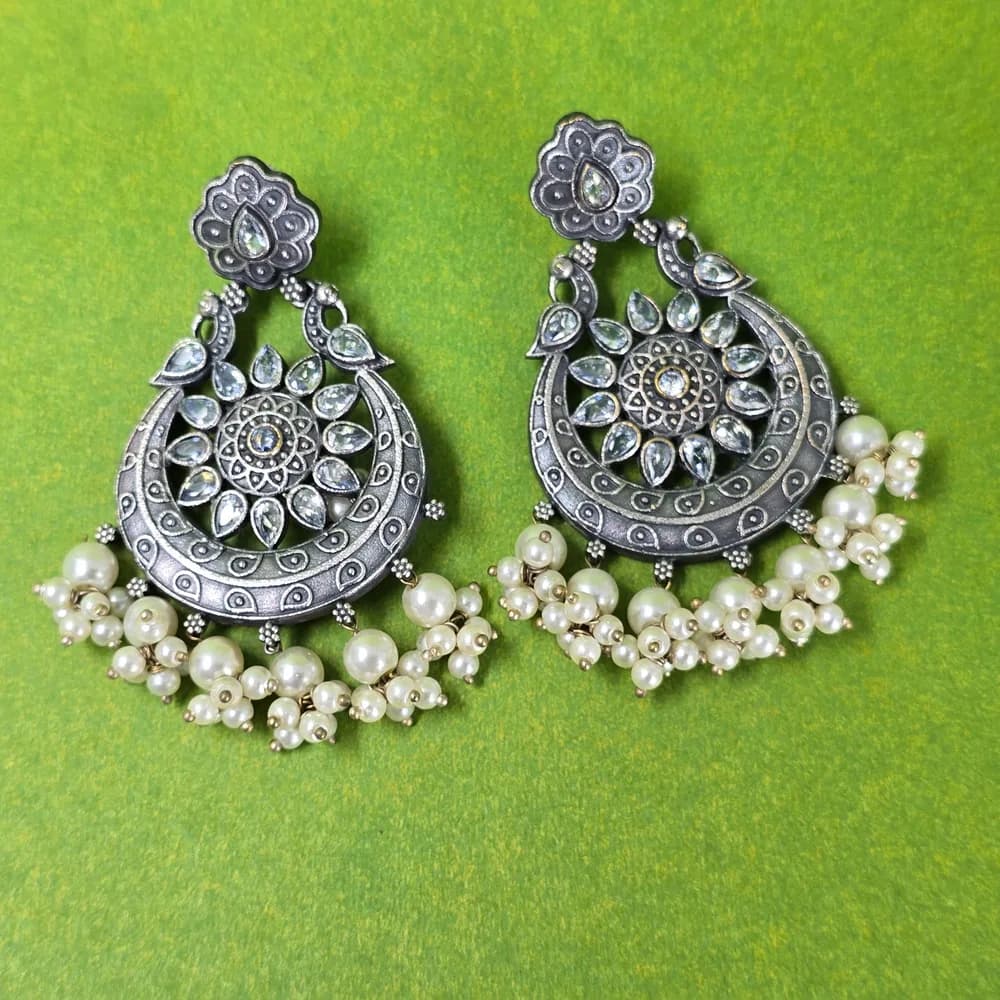
A crescent chandbali with a floral centre, small teardrop mirror and clear-stone accents, and a deep fringe of white faux pearls. About 7.5 cm long and 4 cm wide, with a push-back closure. It is the most formal silhouette of the five and photographs beautifully with a saree or lehenga. It is also about 40 g the pair, which is a real weight: wear it with wide support backs and treat it as a few-hours piece rather than an all-night one.
Noor — the long dangler
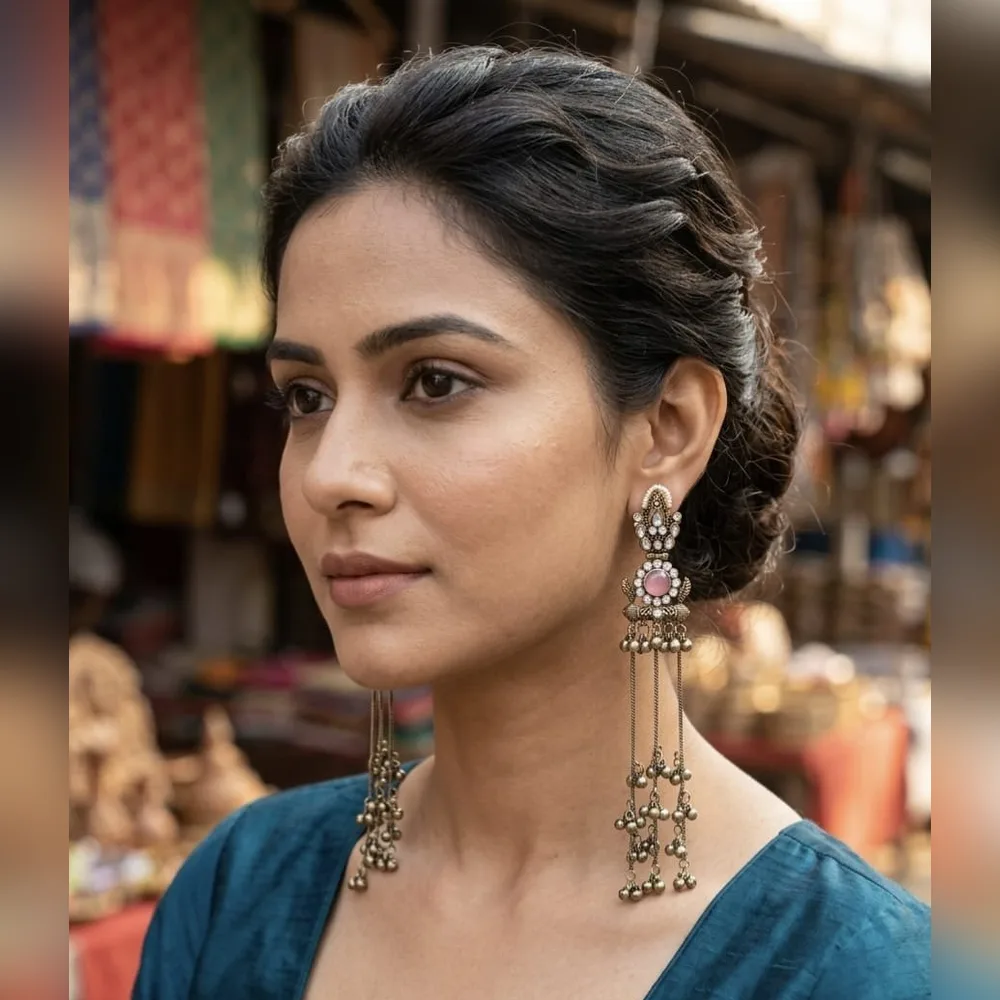
A floral top with a coloured centre stone and a white bead border, from which long chains fall to small ghungroo bells. It is very long, reaching toward the neck and shoulder, and it hangs from a fish-hook. That length is the point — nothing else frames the neck the same way — but it comes with two caveats. Long chains catch on dupattas and loose hair, and fish-hooks can work loose during energetic dancing. Add small silicone stoppers to the hooks and wear your hair up.
Chandbali and dangler
Two more: Nritya and Surajmukhi
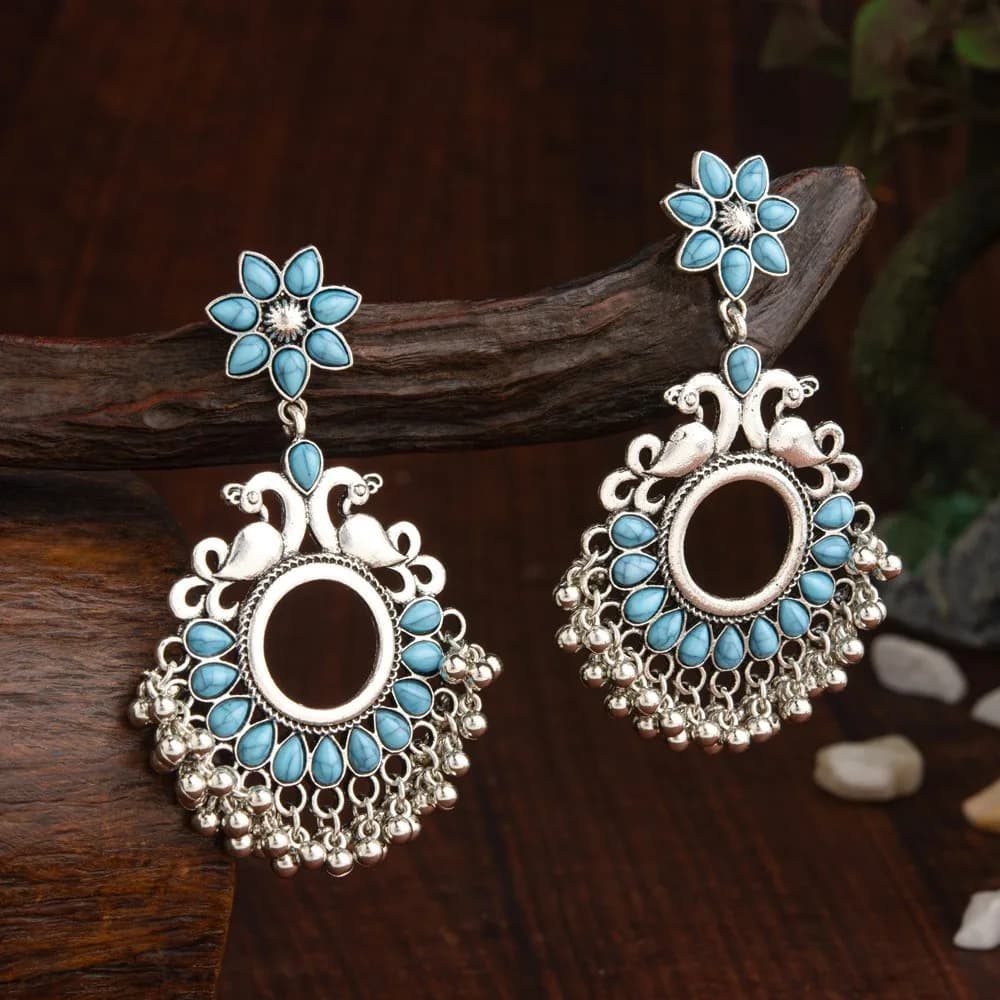
The Nritya peacock hoops sit between a chandbali and a dangler: a stone flower stud, twin peacocks, then an open hoop ringed with stones and fringed with tiny ghungroo bells, in turquoise, royal blue or rani pink. The Surajmukhi jhumka is the biggest jhumka in the edit — a sunflower stud over a wide dome, about 3.8 inches long and listed at 20 g — so wear it with support backs and treat it as a statement for a few hours. Our Navratri earrings guide maps every pair to a night.
Face shape, neckline and outfit
Face-shape rules are a starting point, not a law. Our face-shape guide explains the one principle behind them: contrast your face's dominant line.
- Round face: length helps. Noor and Shakti add a vertical line; Mayura and Kalapi work well with hair up.
- Long or narrow face: width and volume balance it. Chandni's crescent is the obvious choice. Noor's length can exaggerate a long face.
- Square jaw: curves soften the angle — the rounded domes of Kalapi and Mayura, or Chandni's crescent.
- Heart-shaped face: earrings that are fuller at the bottom balance a narrower chin, and jhumkas and chandbalis both do that.
- Oval face: any of the five.
Neckline and outfit
With a statement choker such as Neelam, wear the earrings that come with the set or a medium jhumka — not a long dangler competing for the same space. With a bare neck, a boat neck or an off-shoulder blouse, the long pairs, Noor and Shakti, have room to work. For a saree with an embroidered border, Chandni. For a plain kurta and jeans, Mayura or Kalapi.
Wearing them comfortably, night after night
- Swap the backs. Replace small push-backs with wide silicone or plastic disc backs. They spread the load over the lobe and stop the earring tipping forward. For Chandni, this is not optional.
- Stoppers on fish-hooks. A small silicone stopper on each of Noor's hooks keeps them in through a fast round.
- Hair up for long pairs. Loose hair catches on chains and fringes and tugs all night.
- Alternate. Don't wear the heaviest pair on consecutive nights. Give your lobes, and the piece, a night off.
- Wipe them that night. Sweat left on overnight is what dulls an oxidised finish; the routine is in how to clean oxidised jewellery.
Support backs and ear chains are covered in detail in how to wear statement earrings without hurting your ears. The full range is in oxidised earrings, every pair under ₹1,000.
Frequently asked questions
Are oxidised jhumkas good for Navratri?
Yes — they are the classic garba earring. Choose a medium pair with a secure stud or push-back fitting, use wide disc backs, and put your hair up so the fringe doesn't catch.
Which is better for a wedding, an oxidised jhumka or a chandbali?
A chandbali reads more formal and frames the face, so it suits a wedding evening or sangeet. Check the weight first: statement chandbalis can be heavy enough to need support backs.
How heavy are oxidised chandbali earrings?
It varies widely with size. Our Chandni chandbali is about 40 g the pair, around 20 g each, which is a statement weight best worn with wide support backs for a few hours at a time.
What is a dual-tone jhumka?
A jhumka that combines gold-tone and oxidised silver finishes in one piece. It pairs with both gold and silver-toned outfits and jewellery, which makes it one of the most versatile festive earrings to own.
Will long dangler earrings fall out while dancing?
Fish-hook earrings can work loose during energetic dancing. A small silicone stopper on each hook fixes this, and wearing your hair up stops the chains catching.
Shop this guide
Pieces mentioned above
Jhumka Earrings
Kalapi Two-Tone Peacock Jhumki
Jhumka Earrings
Mayura Peacock Oxidised Jhumka
Jhumka Earrings
Shakti Dual-Tone Durga Coin Jhumki
Chandbali Earrings
Chandni Pearl Oxidised Chandbali
Dangler Earrings
Noor Kashmiri Ghungroo Dangler Earrings
Dangler Earrings
Nritya Peacock Hoop Oxidised Earrings
Jhumka Earrings