Occasions
What Jewellery to Wear for Dandiya Night (and What to Leave at Home)
Two sticks, a partner at arm's length and a crowded floor. Dandiya changes what works at the wrists, the ears and the neck.
Updated 9 min readRenu Ornaments
What jewellery should you wear for dandiya night?
For dandiya night, wear a single wide kada instead of a bangle stack, a fitted choker, and earrings with a solid shape rather than long chains. Leave rings, hathphools and long malas at home: both hands grip a stick for hours, and your partner's sticks pass close to your face.
Dandiya raas is not garba with props. Garba is danced in a circle, with claps, turns and open hands. In dandiya raas you hold a pair of decorated sticks, usually facing a partner in two lines or two concentric circles, strike the sticks in rhythm, then move on to the next partner. At many venues garba comes first and the sticks come out later in the evening, so one outfit, whether a chaniya choli, a kediyu or a saree, has to manage both.
That changes the brief in three ways. Your hands are busy and take every impact. Someone is facing you at arm's length, swinging wood near your shoulders and head. And every strike jolts your wrists, so anything loose there rattles. The general garba rules, secure closures and weight close to the body, still apply and are covered in the oxidised garba look. This guide covers what is specific to the sticks. Navratri 2026 runs from Sunday 11 October to Monday 19 October, with weekend nights on 11, 17 and 18 October.
Kada or bangles: what works with dandiya sticks?
Your wrists are where dandiya is hardest on jewellery. You grip each stick near its base, and every strike sends a jolt up the forearm.
| At the wrist | With dandiya sticks | Verdict |
|---|---|---|
| Glass bangle stack | Slides onto the hand, clashes with the stick, and the jolt of each strike can crack glass | Leave at home |
| Metal bangle stack | Survives, but slides and clatters, and bruises the wrist bone by midnight | Two or three at most, pushed up the forearm |
| Single wide kada | Sits in one place above the wrist bone, clear of the grip | The best choice |
| Heavy carved kada | Stays put, but the weight tires the wrist over hundreds of strikes, and a slipped stick scuffs the finish | Better on garba nights |
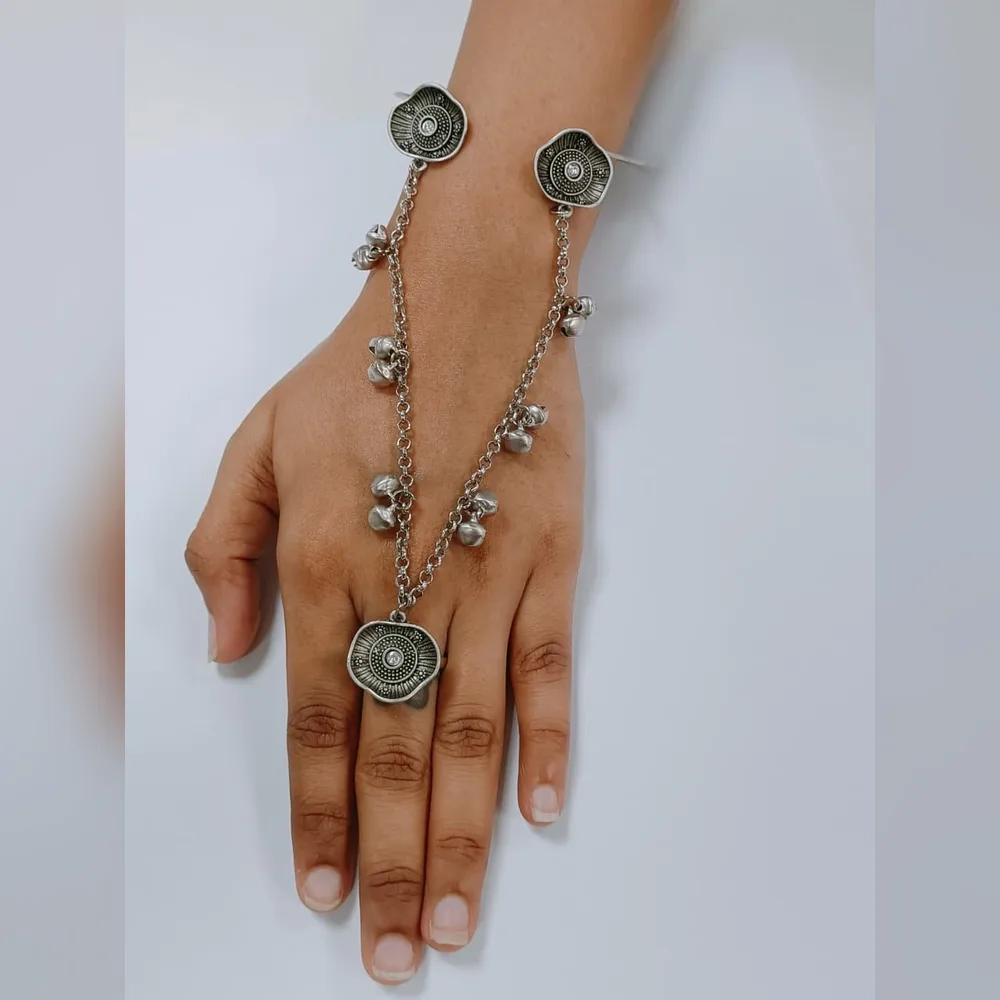
| Hathphool | The ring presses between finger and stick; the chain catches on decorated sticks | Wear for the aarti, then take it off |
| Statement ring | Presses into the neighbouring finger with every grip | Leave at home |
The kada wins because it is one rigid piece. A kada that fits sits in one place rather than sliding down onto the hand like loose bangles, and there is nothing to chain, hook or crack. Wear it pushed slightly up the forearm, above the wrist bone, so it stays clear of where you hold the stick.
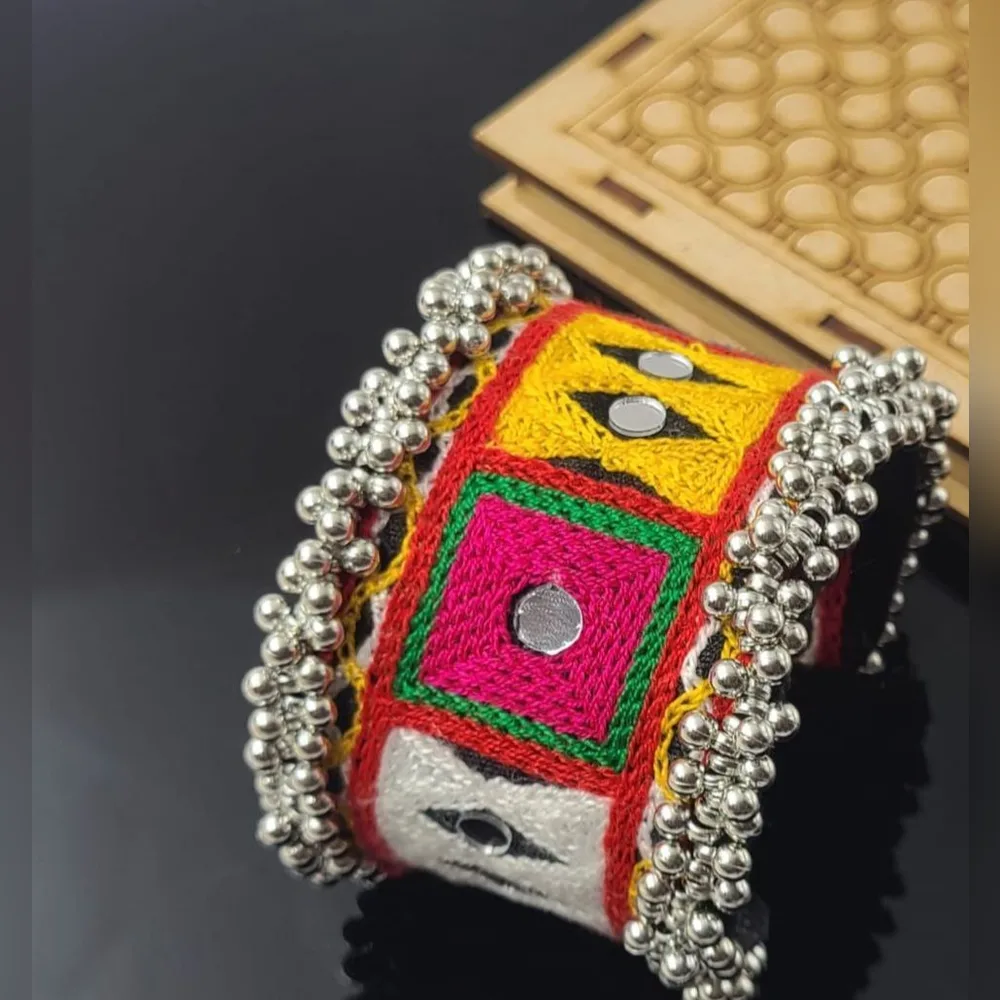
The Toran thread-work ghungroo kada is our dandiya pick. It is a wide kada with a band of colourful thread embroidery and small mirrors, edged top and bottom with rows of oxidised ghungroo bells, so every strike of the stick shakes the bells in time with the rhythm. It is sold as one kada, not a pair, in a single standard size; compare it with a bangle you already own before ordering. The designs are Yellow Pink, Multicolour Diamond, White Pink, Blue Green and Pink Mirror.
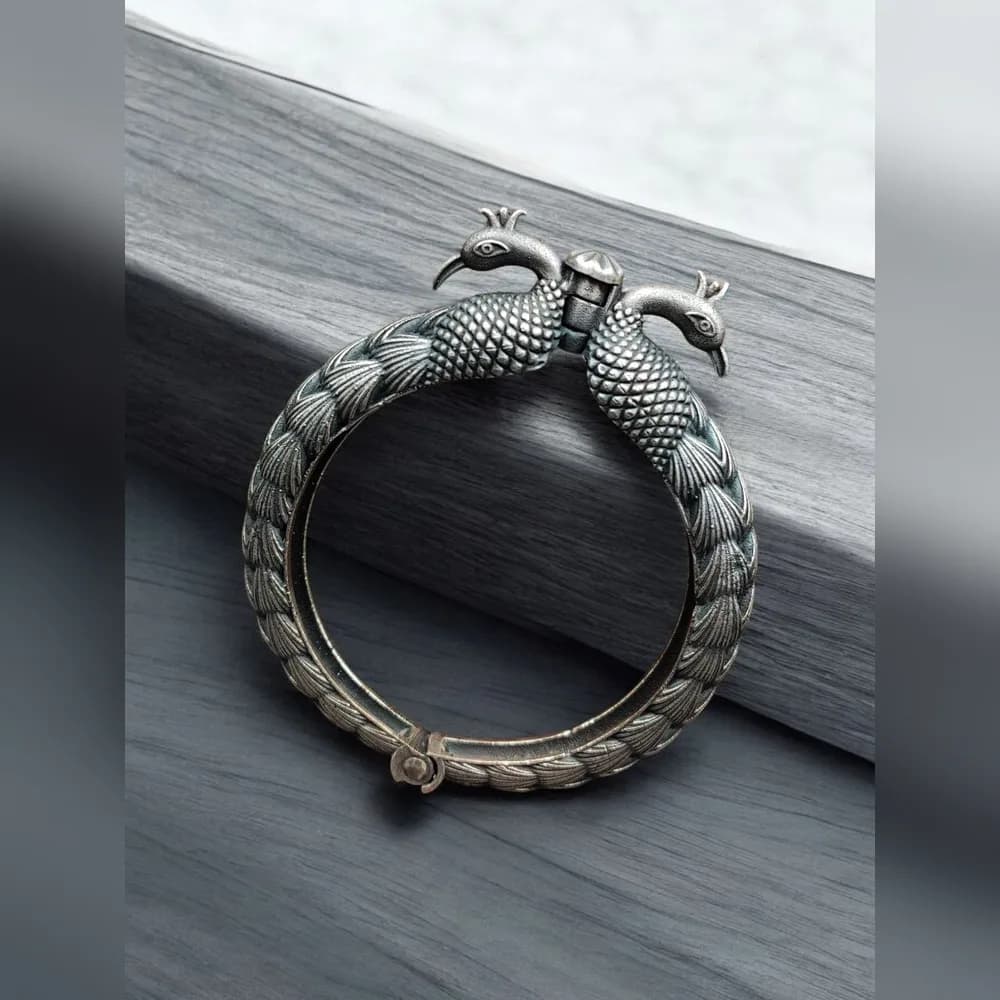
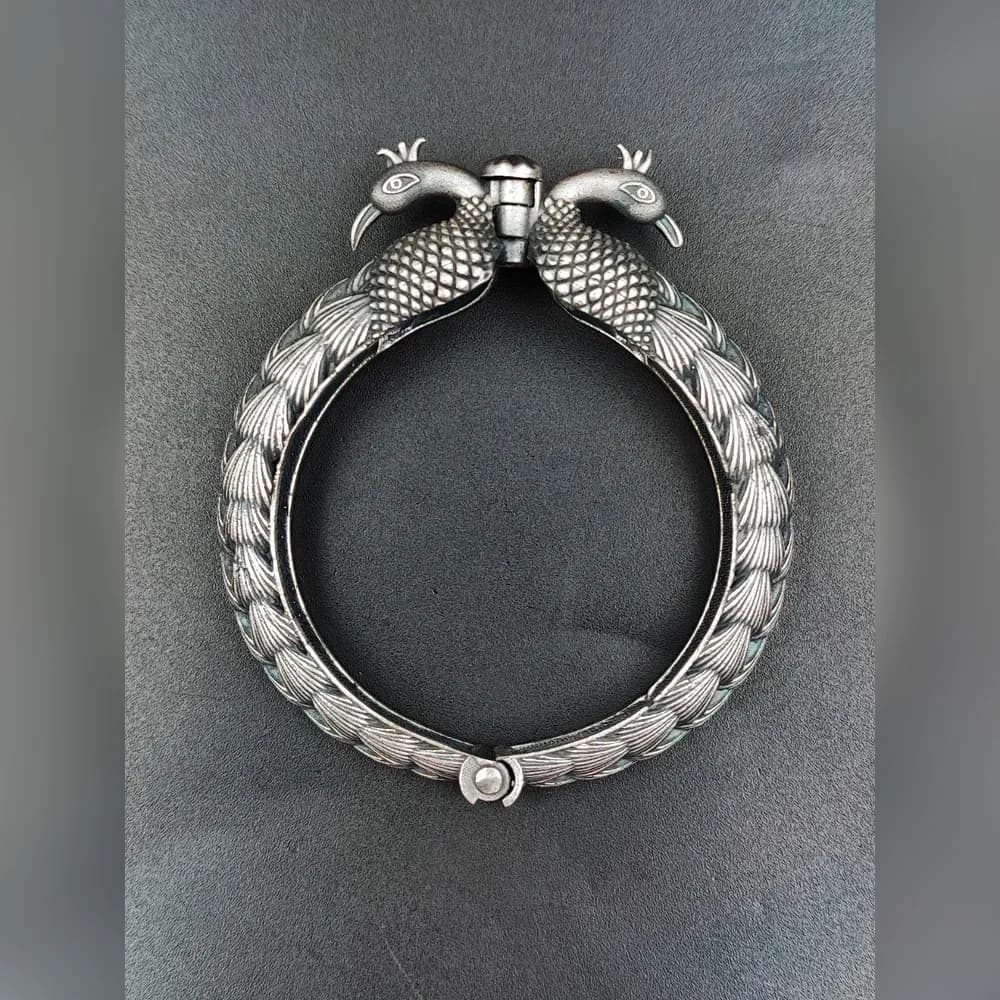
The Morni peacock kada is the heavier alternative: brass with an oxidised finish, carved with two facing peacock heads, about 78 g, opening with a small screw clasp. It is at its best on a garba night, when hands clap rather than grip. For dandiya the weight works against you over a few hundred strikes, so save it for the garba rounds and the photographs. More on both is in the hathphool and kada guide.
Which earrings won't tangle in dandiya raas?
In raas your partner stands about an arm's length away and the sticks meet between you: at chest height, beside the shoulder, sometimes above the head. Some formations have you turn and strike with the dancer beside or behind you. Anything hanging from your ears is in that space.
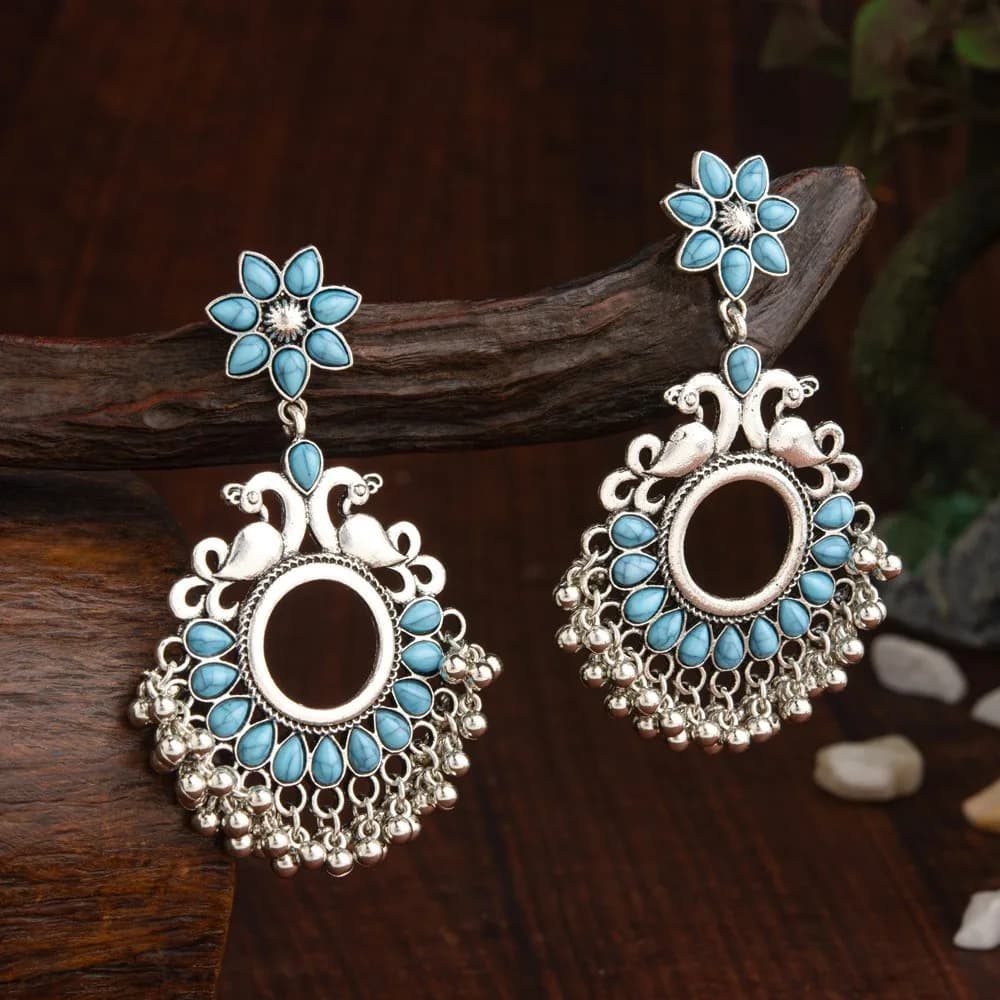
The answer is shape rather than size. A solid earring, such as a dome jhumka or a stud, can swing, but it can't wrap around a stick tip or a partner's sleeve. Long chain danglers can, and so can wide earrings with long, loose fringes.
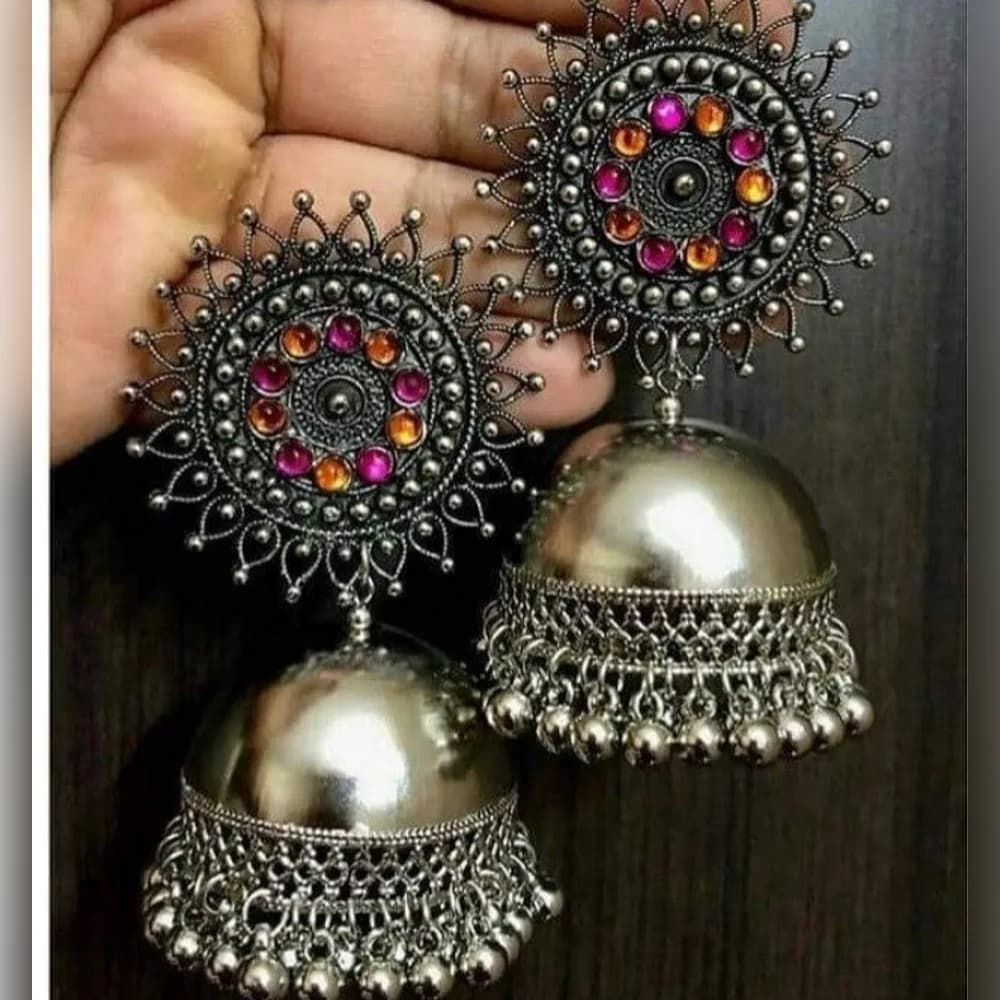
If you want a big earring for dandiya, make it a solid one. The Surajmukhi oxidised jhumka is a large sunflower-shaped stud ringed with coloured stones over a big dome jhumka with a bead fringe, in Orange Pink or Blue. It is listed at about 9.5 cm long and about 20 g, so it is a statement: put your hair up, use wide silicone support backs, and wear it on a night you plan to dance at a steady pace rather than every round. For smaller pairs, our Navratri earrings guide compares the options by length and weight.
Sound: one set of bells
Dandiya has its own percussion: the clack of sticks on every beat, on top of the dhol. Ghungroo jewellery adds to it, and one main source is plenty. If the Toran kada is on your wrist, its bells already ring with every strike, so choose earrings without bells. If you would rather have the chime at the neck, wear a plain kada. Bells at the wrist, ears, neck and waist all at once just add noise to an already loud ground.
Neck and waist: where the statement belongs
With the hands kept simple and the earrings kept solid, the neck and the waist are where a dandiya look gets its impact. Both are what a partner sees at arm's length, and neither is in the path of the sticks.
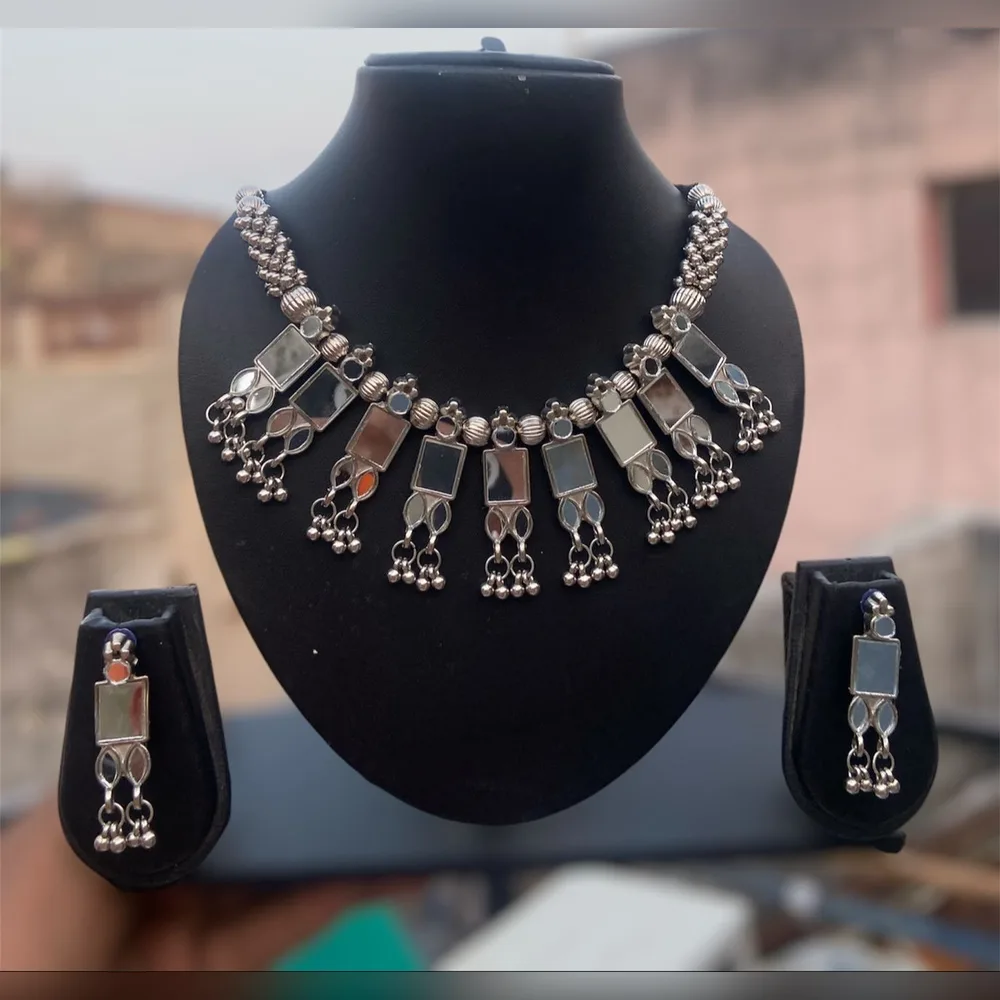
At the neck, a fitted choker is the right shape: it can't swing into a stick, and it stays put through turns. The Aaina mirror oxidised choker set is an oxidised choker of rectangular mirror plates with bell drops, plus matching mirror drop earrings, and the mirrors pick up the light on a floodlit ground. Its silver-white look suits every Navratri colour, and at ₹499 it is the least expensive set in the store. Its bell drops are your sound for the night, so pair it with a plain kada rather than the Toran.
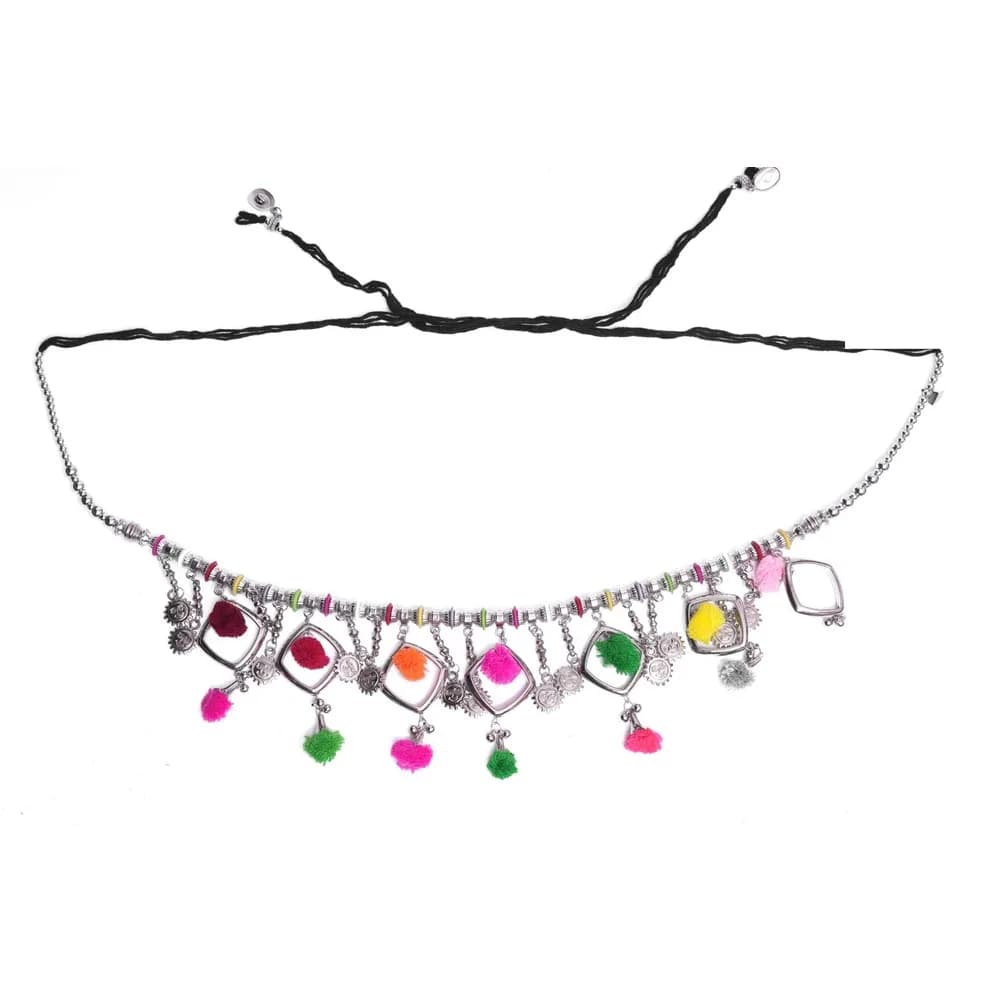
The waist is the other answer. The Kesar pompom kamarbandh is an oxidised waist chain on an adjustable thread tie, hung with drops, so the statement sits where sticks rarely reach and the drops swing with the skirt on turns. Tie it with a double knot and pin it at each hip; the kamarbandh guide covers fitting it to a chaniya choli or saree.
| Look | Wrists | Ears | Neck | Waist |
|---|---|---|---|---|
| The chime at the wrist | Toran ghungroo kada | Surajmukhi jhumka | Bare | Bare |
| Mirror at the neck | One plain kada, or bare | Aaina's mirror drops | Aaina mirror choker | Bare |
| The waist leads | Two or three light bangles | A medium jhumka | Bare or a light choker | Kesar kamarbandh |
Statement pieces out of the sticks' way
What to leave at home on dandiya night
Some of the best Navratri jewellery is wrong for dandiya specifically. None of it has to stay in the box all festival; it just needs a different night, or a different hour of the same night.
- Long malas and pendant chains. The Bhakti beaded mala set is a long strand of coloured beads ending in a large round oxidised medallion with leaf drops, with matching three-tier earrings. At about 30 cm of drop and about 119 g, it swings into the sticks in a raas and pulls at the neck over hours. It is the right piece for the evening aarti or Ashtami puja; take it off before the sticks come out.
- Hathphools and statement rings. Both sit exactly where you grip the stick. A hathphool is lovely for the aarti and the photographs, so slip it into a pouch for the raas.
- Glass bangles. The jolt of repeated strikes cracks them, and broken glass on a crowded floor is a hazard to anyone dancing barefoot.
- Very long danglers. Chain earrings that reach the shoulder are made for slower garba and photographs, not for a partner swinging sticks at head height.
- Thread and fabric pieces, if rain is forecast. Thread jewellery must never get wet, and some cities still see late-season showers in October.
- Anything you couldn't bear to lose. A dropped earring on a grass or mud ground at night is usually gone.
Statement pieces: choose the hour
Outdoor dandiya grounds: practical notes
Many of the biggest dandiya nights, in Ahmedabad, Vadodara, Mumbai and Pune, are held on open grounds rather than in halls. That brings its own problems.
- Check closures twice. Push-backs fully on, the kada's fit checked and a kamarbandh knot doubled. On grass or dust, a dropped piece is hard to find in the dark.
- Carry a small zip pouch. Anything that comes off between rounds goes into it, not loose into a bag or a pocket.
- Expect dust and damp. Open grounds are dusty early in the night and can turn damp after midnight. Wipe every piece with a dry cloth when you get home, and let thread pieces air flat in the shade before they go away.
- Deal with sweat the same night. A floodlit ground is warm even in October, and sweat left on the back of a kada or choker is what dulls an oxidised finish. The routine is in how to clean oxidised jewellery.
Frequently asked questions
Can I wear bangles for dandiya?
A few, not a stack. Glass bangles crack from the repeated jolt of the sticks, and a full metal stack slides onto the hand and clatters. One wide kada, or two or three light bangles pushed up the forearm away from where you grip the stick, is the practical choice for dandiya raas.
Should I wear a hathphool for dandiya?
Not during the raas itself. A hathphool's ring sits between your finger and the stick and presses with every grip, and its chain can catch on decorated sticks. Wear it for the aarti and the photographs, then slip it into a pouch before the sticks come out.
What earrings are best for dandiya night?
Earrings with a solid shape, such as a dome jhumka or a stud, fastened with secure backs. In partner-facing raas the sticks pass close to your face, and long chain danglers can catch on a stick or a sleeve. Put your hair up and use wide silicone backs for any heavier pair.
What is the difference between garba and dandiya jewellery?
Garba is danced with open hands, claps and turns, so hand jewellery such as a hathphool or a heavy kada works. Dandiya raas is danced holding two sticks and facing a partner, so the hands should stay simple and the earrings solid, with the statement moved to the neck or the waist.
Is ghungroo jewellery good for dandiya?
Yes, in moderation. Ghungroo bells chime with each strike of the sticks, which suits the dance, but dandiya is already loud with sticks and dhol. Choose one piece with bells, such as a ghungroo kada or a choker with bell drops, and keep the rest of your jewellery quiet.
Shop this guide
Pieces mentioned above
Kada
Toran Thread-Work Ghungroo Kada
Kada
Morni Peacock Oxidised Kada
Oxidised Choker Sets
Aaina Mirror Oxidised Choker Set
Kamarbandh
Kesar Pompom Oxidised Kamarbandh
Jhumka Earrings
Surajmukhi Oxidised Jhumka
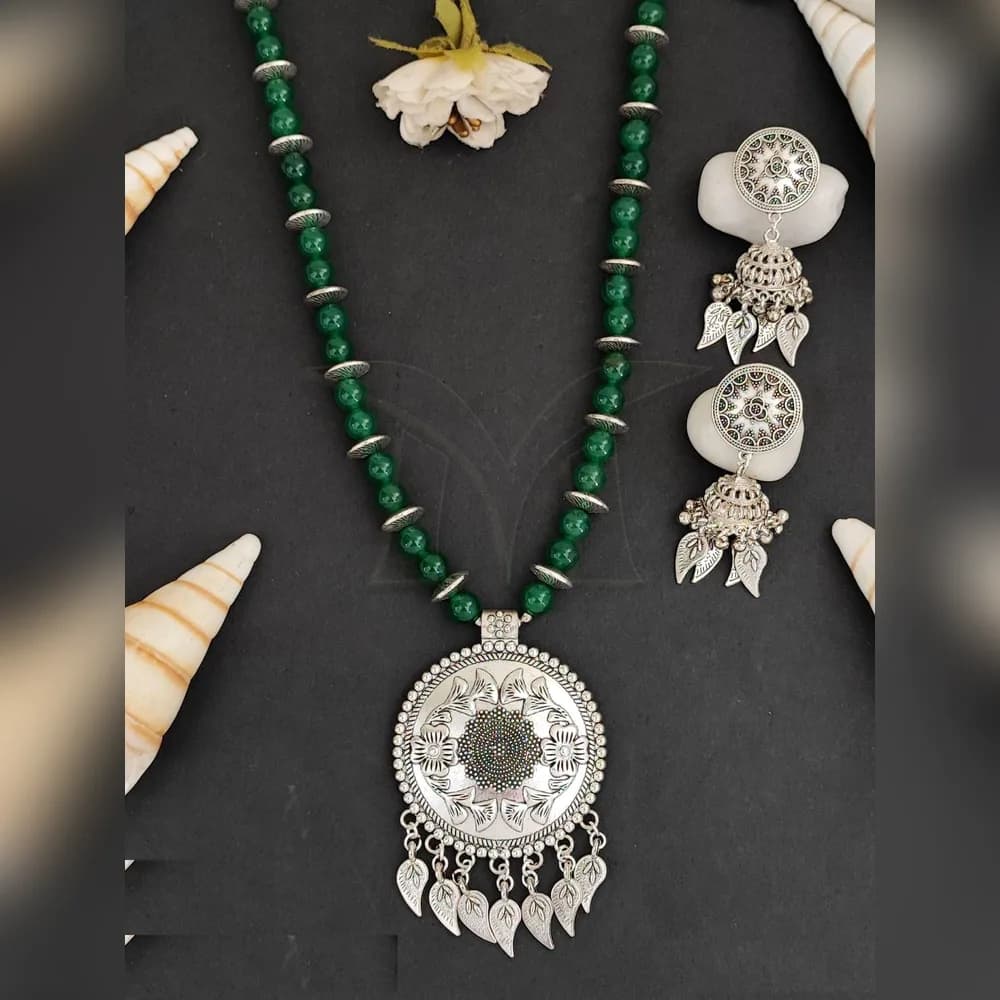
Mala Sets