Styling
How to Wear a Kamarbandh for Garba, Navratri and Weddings
Where a waist chain sits on a chaniya choli, saree or lehenga, how to size it with the tie, and how to keep it in place through garba.
Updated 9 min readRenu Ornaments
How do you wear a kamarbandh?
Wear a kamarbandh over your outfit at the waistline: along the top of the skirt on a chaniya choli or lehenga, and at the natural waist, above the pleats, on a saree. Fasten it snug enough that it doesn't slide when you move, secure it with two small safety pins, and keep the rest of your jewellery lighter.
A kamarbandh, from kamar, waist, and bandh, a band or tie, is jewellery for the waist. It goes by other names: kardhani across much of north India, kamarpatta for the wider belt styles, and vaddanam or oddiyanam in the south, where a broad waist belt is part of bridal dress. In English it is usually called a waist chain or waist belt. It can be a fine chain or a solid jewelled band, and it is worn over the clothes, not under them.
For Navratri it has a particular job. A chaniya choli is a short blouse over a full, flared skirt, and the kamarbandh marks the line where the two meet, which is exactly the point that swings out when you turn in garba. It adds movement to every turn and draws the eye to the waist, which flatters the shape of a flared skirt.
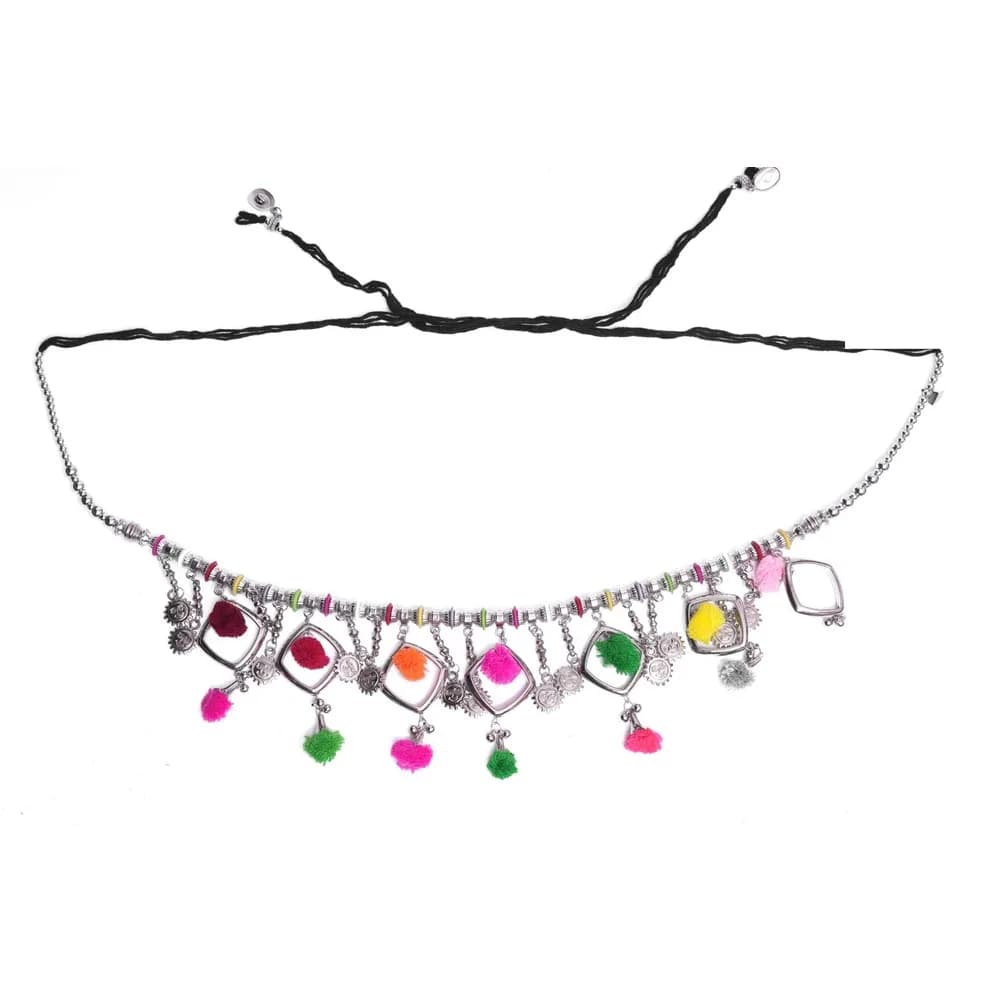
Our Kesar pompom oxidised kamarbandh is an oxidised waist chain on a thread tie, hung with drops. The tie is what adjusts it, so it fits a range of waists without a clasp to fight with. It comes in five designs, Mirror Pompom, Orange Black Pompom, Multicolour Tassel, Silver Leaf and Mirror, and it is under ₹1,000.
Where should a kamarbandh sit?
It depends on the outfit, but the rule underneath is the same: a kamarbandh rests where the clothes give it something to sit on, so it doesn't slide.
| Outfit | Where it sits | Watch out for |
|---|---|---|
| Chaniya choli | On the skirt's waistband, just below the choli | Bare midriff: on skin it slides with every step |
| Lehenga | On the waistband, or a little lower on the hips if the lehenga is cut low | A dupatta draped across the front hides it; take it over one shoulder instead |
| Saree, nivi drape | At the natural waist, just above where the pleats are tucked | Too low flattens the pleats; too high rides up when you sit |
| Saree, Gujarati seedha pallu | At the waist, over the pallu where it spreads across the front | Keep it flat on the pallu border so the border doesn't buckle |
| Kediyu or flared kurta | Usually nowhere, or low on the hips below the flare | A band at the waist crushes the flare the outfit is built on |
| Anarkali or gown | At the waist, where the flare begins | Skip it over a heavily embroidered bodice |
On a chaniya choli the gap between choli and skirt is usually bare. Sit the kamarbandh on the skirt, not on the skin above it: on fabric it stays put, while on skin it travels with every step and the drops press into you when you sit.
With a saree, a kamarbandh does real work as well as decorating. It holds the pleats and the drape in place, which is why it is so common in South Indian bridal dressing. Oxidised suits cotton, handloom and festive sarees best; with a heavy gold-zari silk, a gold-toned waist belt is the more natural partner. Of the five Kesar designs, Silver Leaf and Mirror are the quieter choices for a saree, while the pompoms and tassels are made for garba.
How tight should a kamarbandh be?
Snug over the clothes, not tight against the body. You should be able to slide two fingers under it at the side, and it should stay where you put it when you walk, sit and lift your arms.
- Put the outfit on first. Size the kamarbandh over the skirt, saree or lehenga you will actually wear. Pleats, a petticoat and a tucked dupatta add more than you would expect.
- Find the line. Hold it where it will sit and check that the drops hang evenly at the front.
- Set the length with the tie. Pull the thread tie to take up the slack, keeping the drops centred at the front.
- Double knot, then tuck. A bow comes undone in a fast round. Tie a double knot and tuck the ends under the chain so they don't dangle.
- Test it. Sit down, stand up, raise both arms and turn. If it rides up or slips toward the hips, retie it.
The safety-pin trick
However well it is tied, a kamarbandh on a full skirt will try to rotate during garba spins. Two small safety pins solve it. From the inside of the waistband, pin through a link of the chain at each hip, so the pins are hidden behind the chain and the drops stay centred. On a saree, pin it at both sides to the saree beneath. Use small pins in a metal colour that disappears against the chain, and close them fully: an open pin on a dance floor is worse than a loose kamarbandh.
What to wear with a kamarbandh
A kamarbandh adds a focal point at the waist, and the most common mistake is wearing it on top of a full set. A heavy necklace, big earrings and a jewelled waist split the eye three ways. Pick two.
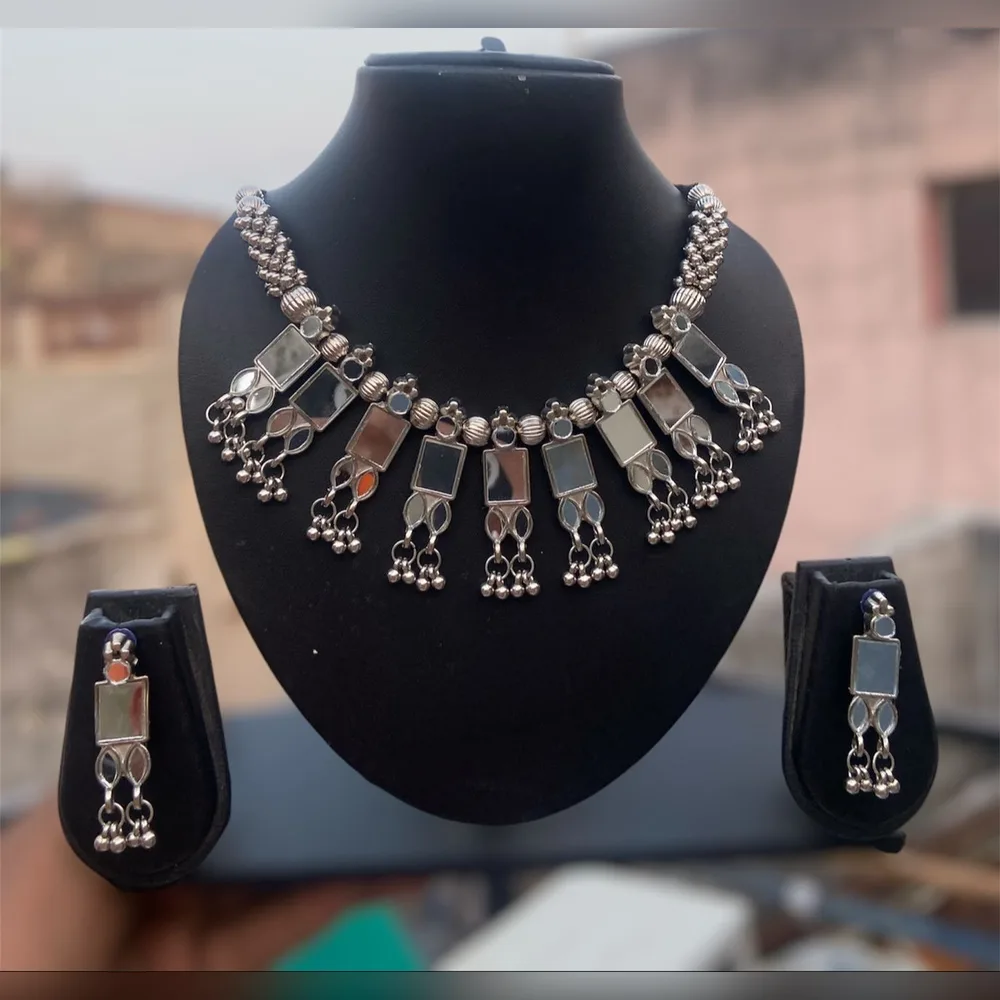
- Neck: light or bare. A fitted choker sits well clear of the waist and doesn't compete. The Aaina mirror choker set, with rectangular mirror plates and bell drops plus matching mirror drop earrings, at ₹499, is the natural partner for the Mirror and Mirror Pompom designs. Skip long malas and pendant chains, which hang toward the waist and tangle with the kamarbandh's drops.
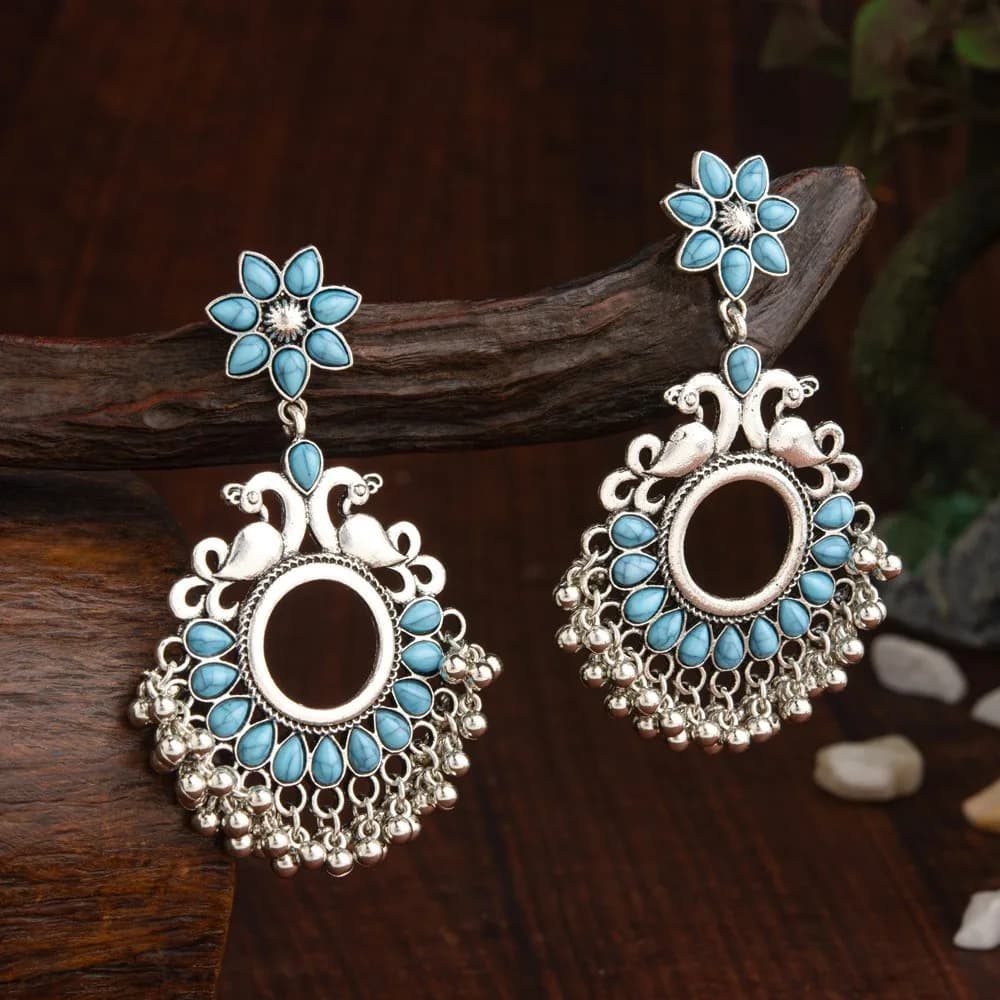
- Ears: the second focal point. With a light neck, earrings can do more. The Nritya peacock hoop earrings have a flower stud, a pair of peacocks and an open hoop ringed with coloured stones and tiny ghungroo bells, in Turquoise, Royal Blue and Rani Pink. Royal Blue is the Day 4 colour, Wednesday 14 October.
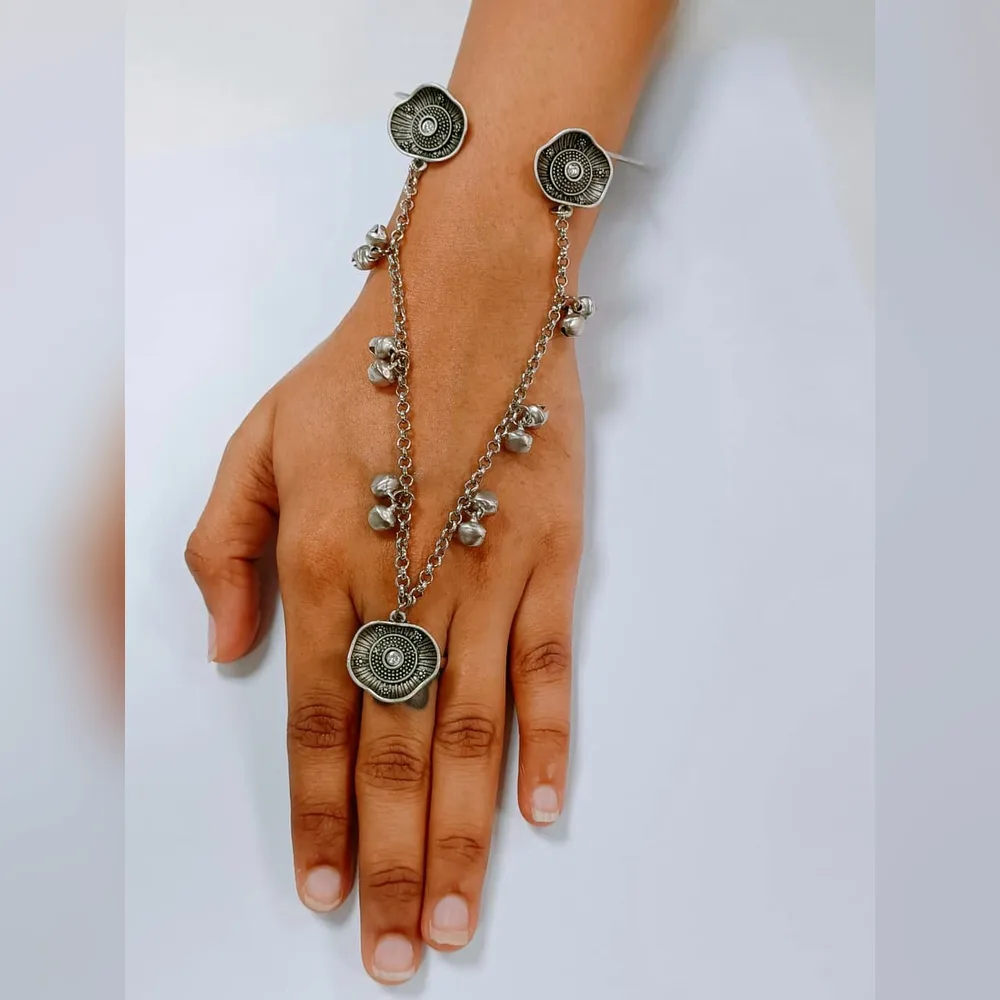
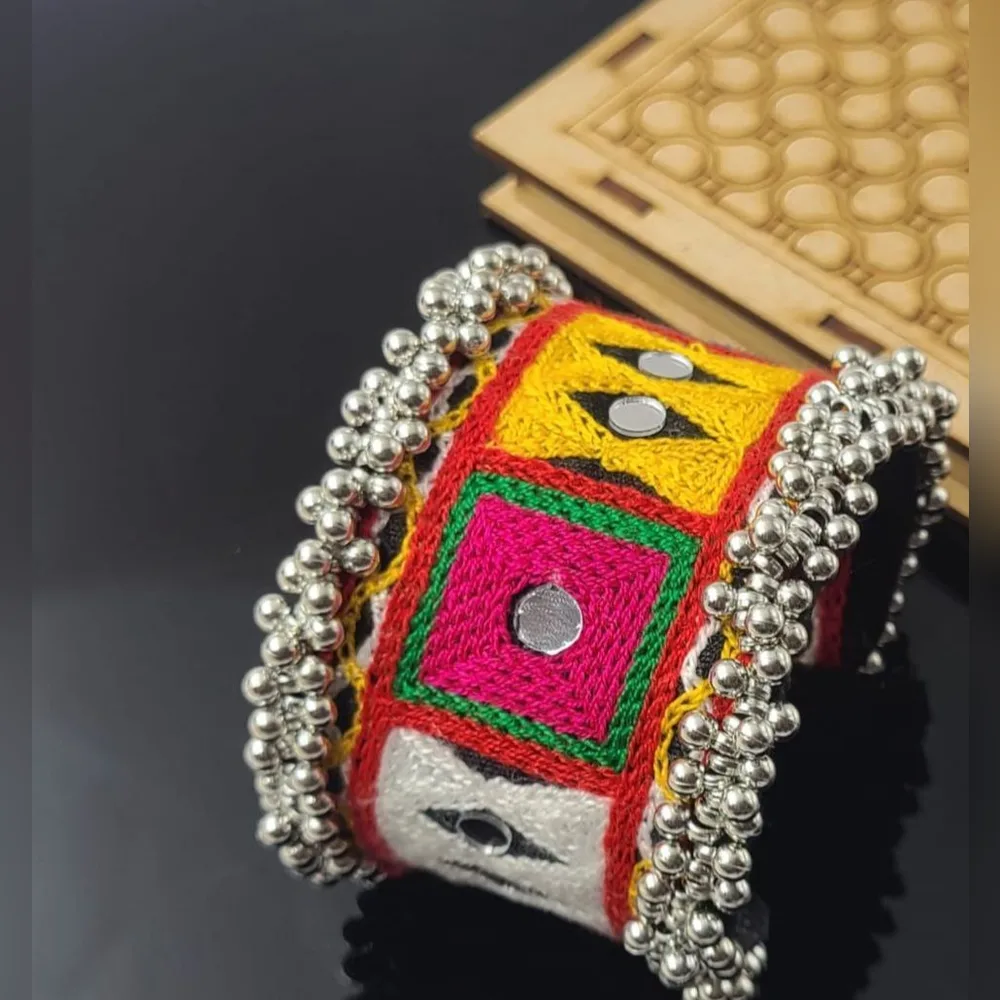
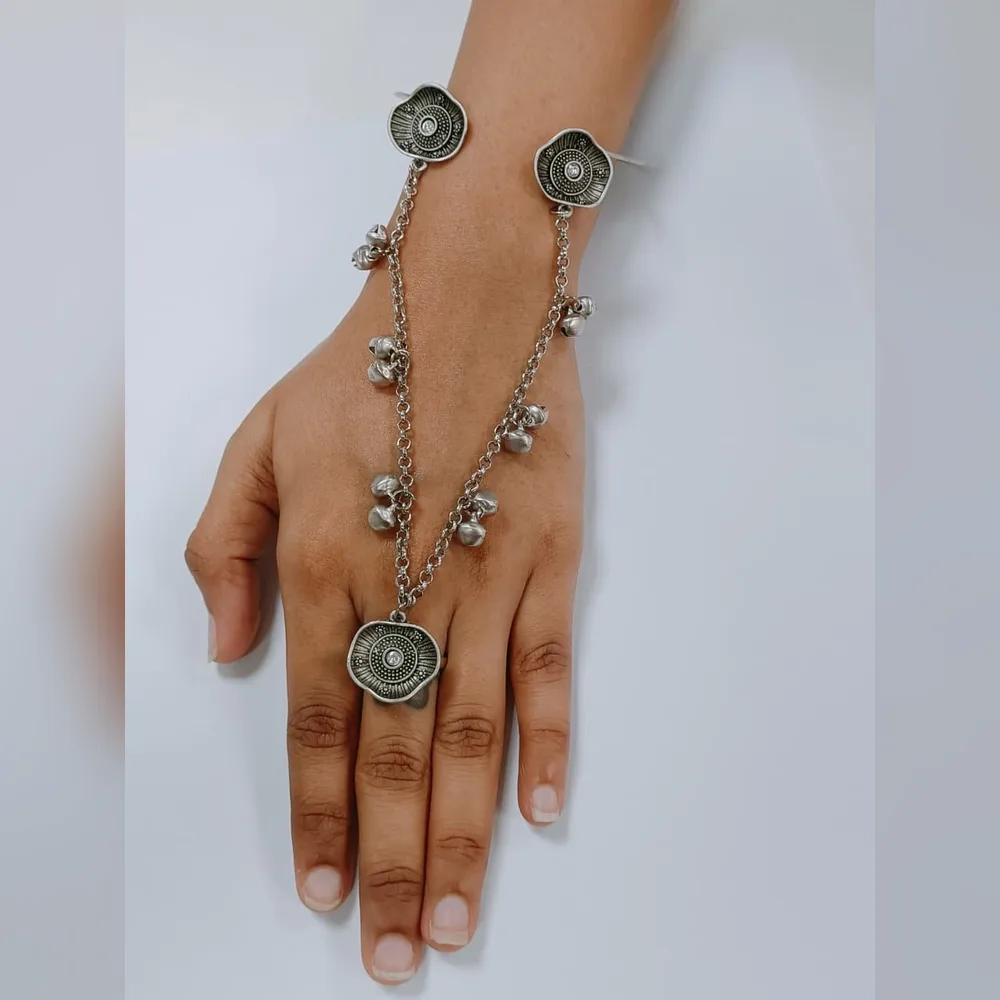
- Hands: one piece. The Toran ghungroo kada shares the thread-and-mirror look of the pompom designs; the Phoolwari hathphool, listed at under 10 g, is the lighter option.
- One source of sound. Nritya's bells, Toran's ghungroo and Aaina's bell drops all chime. Choose one of them per night, so the jewellery keeps time rather than competing with the dhol.
For the neck and the ears
| Occasion | Kesar design | Neck | Ears | Hands |
|---|---|---|---|---|
| Garba, plain chaniya choli | Mirror Pompom or Multicolour Tassel | Aaina mirror choker | Aaina's mirror drops | Phoolwari hathphool |
| Garba, mirror-work chaniya choli | Silver Leaf | Bare | A medium jhumka without bells | Toran kada |
| Orange day, Sunday 11 October | Orange Black Pompom | Bare | Nritya in Rani Pink | Phoolwari hathphool |
| Cotton or festive saree | Silver Leaf or Mirror | A light choker | A medium jhumka | Bare |
| Mehendi or sangeet | Mirror Pompom | Bare | Nritya peacock hoops | Phoolwari hathphool |
Dancing garba and dandiya in a kamarbandh
A kamarbandh suits garba better than most jewellery, because it sits at the steadiest point of the body. The practical issues are the drops, the dupatta and the knot.
- The drops swing out on turns. In a fast spin the skirt flares and the drops go with it. That is part of the effect; the pins stop the chain itself travelling round.
- Dupattas catch. Many women tuck the dupatta in at the waist for garba, right where the kamarbandh sits. Tuck the dupatta first and put the kamarbandh over it so it holds the dupatta down, or pin the dupatta across the opposite shoulder. A mirror-work border dragged across the drops will snag.
- Check the knot between rounds. A ten-second check while you drink water is easier than searching for a kamarbandh on a garba ground at midnight.
- Dandiya. Sticks are swung at chest height and above, so the waist is one of the few places they rarely reach. That makes a kamarbandh a good home for the statement on a dandiya night.
At weddings
The wedding season after Diwali, which falls on 8 November this year, is where a Navratri kamarbandh gets its second life. Oxidised suits mehendi, sangeet and Gujarati or Rajasthani-themed evenings best. Take it off for haldi, because turmeric settles into the oxidised recesses, and for the main ceremony, where gold-toned jewellery is usually expected, choose gold-toned pieces instead. More ideas are in wedding guest jewellery.
Caring for a kamarbandh
- Untie it fully after wearing and let the thread tie dry straight. Thread absorbs sweat, and it should never be wetted to clean it.
- Wipe the chain and drops with a soft, dry cloth the same night. Don't polish them: the dark finish is the design.
- Air the pompoms and tassels, then brush them gently with a soft, dry brush. Keep perfume away from them.
- Store it in its own pouch, loosely coiled, so the drops don't tangle with each other or with other jewellery.
- Check the drops before each wear. They hang from small rings that take strain during dancing.
The full routine for oxidised pieces is in how to clean oxidised jewellery and on our jewellery care page.
Frequently asked questions
What is a kamarbandh called in English?
A waist chain or waist belt, or a hip chain for lower-slung styles. Kamarbandh comes from kamar, waist, and bandh, band. It is also called kardhani in much of north India and vaddanam or oddiyanam in the south, where broad waist belts are part of bridal dress.
Where do you wear a kamarbandh on a saree?
Over the saree at the natural waist, just above where the pleats are tucked. It holds the pleats and drape in place as well as decorating them. Worn too low it flattens the pleats, and too high it rides up when you sit. Pin it at both sides to stop it moving.
Can I wear a kamarbandh with a chaniya choli for garba?
Yes. Sit it on the skirt's waistband rather than the bare midriff above it, tie it with a double knot, and pin it at each hip so it doesn't rotate during spins. Keep the neck light, because the waist is already a focal point, and let earrings carry the rest of the look.
How do I stop a kamarbandh from slipping?
Size it over the outfit you will wear, sit it on fabric rather than bare skin, and tie a double knot. Then pin it from inside the waistband through a chain link at each hip with small safety pins. On a saree, pin it at both sides to the saree underneath.
Is a kamarbandh adjustable?
Many are. Ours, the Kesar pompom kamarbandh, adjusts with a thread tie rather than a clasp, so it fits a range of waists. Size it over the clothes rather than bare skin, finish with a double knot, and keep the tie dry, because thread should never be wetted to clean it.
Shop this guide
Pieces mentioned above
Kamarbandh
Kesar Pompom Oxidised Kamarbandh
Oxidised Choker Sets
Aaina Mirror Oxidised Choker Set
Dangler Earrings
Nritya Peacock Hoop Oxidised Earrings
Kada
Toran Thread-Work Ghungroo Kada
Hathphool