Styling
Why Pearls and Meenakari Work So Well Together
Bright enamel needs somewhere for the eye to rest. That, in one sentence, is why pearls keep showing up next to it.
Updated 3 min readRenu Ornaments
The visual reason
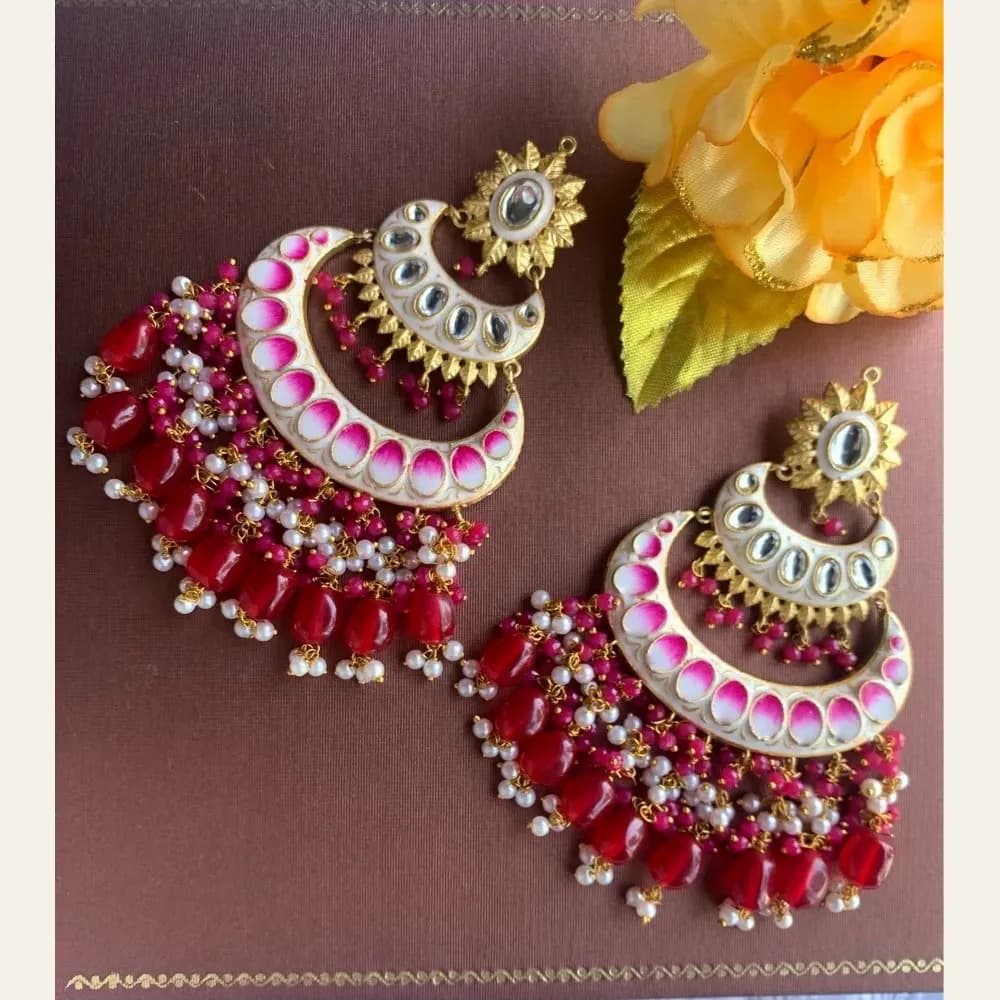
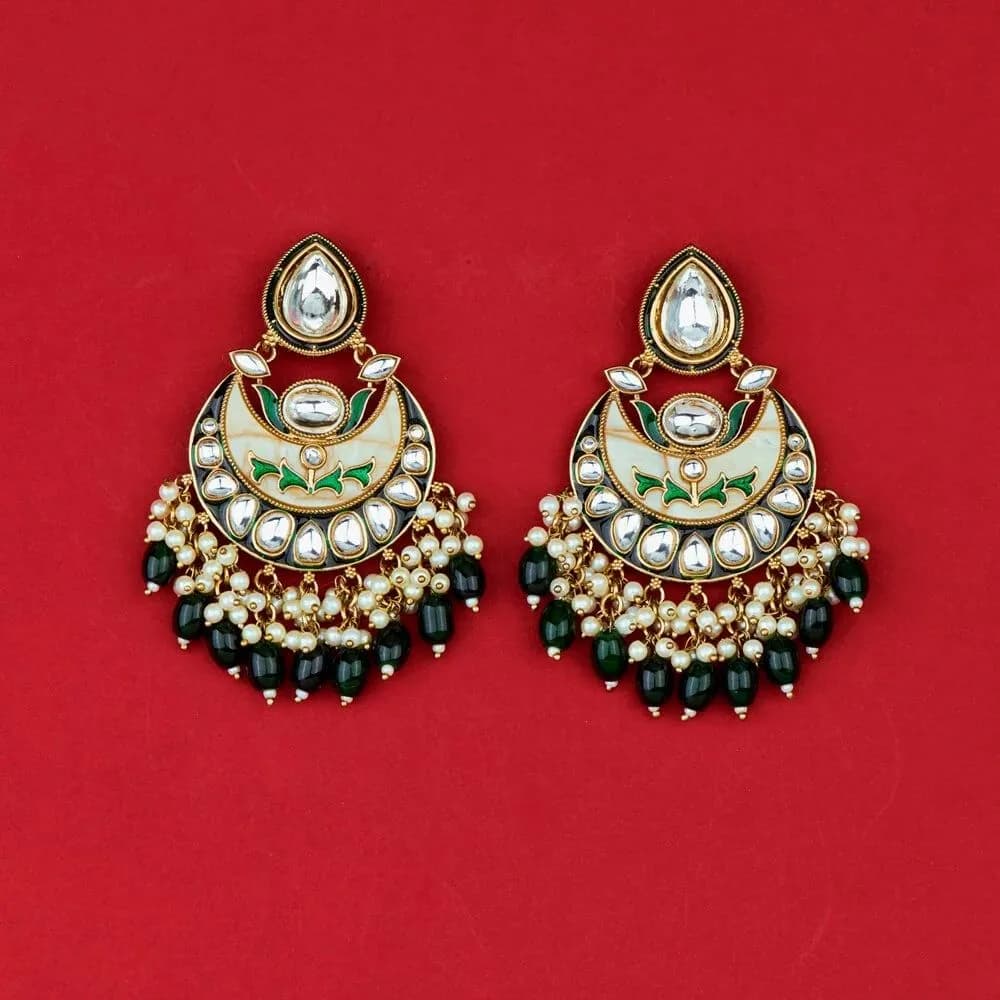
Meenakari enamel is saturated colour on a reflective metal base. Left alone across a large piece, that is a lot for the eye to process. Pearls are the opposite: matte, pale, uniform, low-contrast. Placing them next to enamel gives the eye somewhere to settle, and the enamel reads brighter by comparison.
This is the same principle behind negative space in design. The pearls aren't decoration in their own right so much as they are the pause that makes the colour work.
The historical reason
The pairing is not new. Mughal-era jewellery routinely combined enamelled gold with strung pearls, and the tradition carried into Hyderabadi and Rajasthani work, where pearl fringes on chandbalis and pearl-strung necklaces over enamelled plaques were standard.
Pearls were also practical: they added volume and movement without much weight, which matters a great deal for an earring. That structural argument still holds in fashion jewellery today.
How to style it
- With traditional wear: pearls soften bright enamel enough to work with a heavily coloured saree or lehenga, where pure enamel might compete.
- With Western wear: pearl-and-gold is formal in both traditions, so it reads as elegant rather than as fusion. Against black or ivory it is close to foolproof.
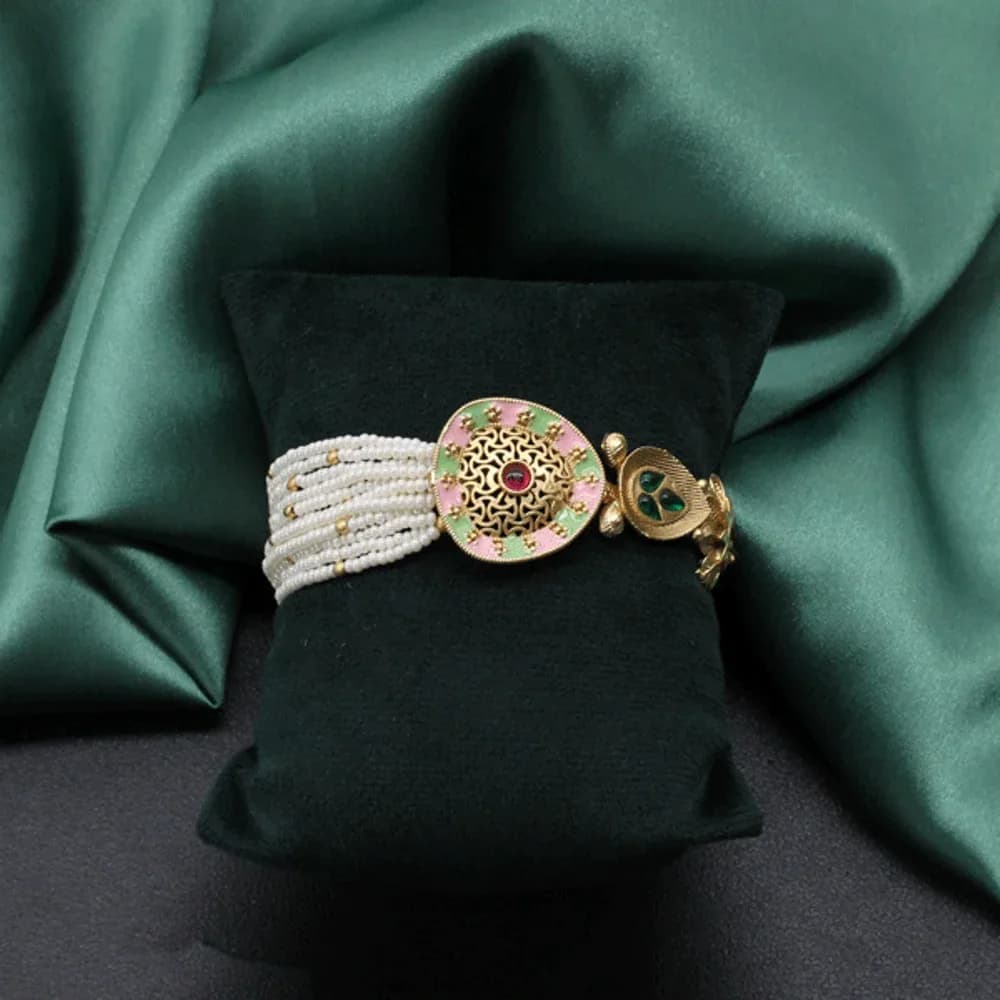
- With other pearls: you can wear pearl earrings with a pearl bracelet, but keep the pearl sizes noticeably different or the look flattens.
- What to avoid: pearl jewellery with a heavily pearl-embellished outfit. Two identical textures at the same distance cancel each other out.
Looking after imitation pearls
This is where honesty matters. Imitation pearls — ours included — are a bead with a pearlescent coating. That coating is thinner and more delicate than the plating on the metal around it, so it is usually the first part of a piece to show wear.
- Put pearls on after perfume, hairspray and lotion, and give them a minute to dry. Alcohol in fragrance is the fastest way to dull the coating.
- Wipe with a soft dry cloth after wearing. Never use a jewellery cleaning liquid, ultrasonic cleaner or toothpaste on imitation pearls — all three strip the coating.
- Store separately, in a pouch. Pearls rubbing against metal or stones scratch, and the scratches show as dull patches.
- Keep them out of water. A wet pearl bead can lift its coating at the drill hole and, on strung pieces, weakens the thread.
- Don't leave them in a hot car or in direct sun. Heat degrades the coating and can yellow it.
Buying: what to check
- Look at the drill holes in the photos. Clean, unchipped holes indicate better-quality beads.
- Check whether pearls are glued or strung. Strung is more repairable; glued is more secure day to day.
- Uniform beads look neater; slightly irregular beads look more natural. Both are fine — just know which you're getting.
- For earrings, pearls add visual size at very little weight, which is why they are the sensible way to buy a large pair.
Frequently asked questions
Are imitation pearls worth buying?
For fashion jewellery, yes. They provide the visual effect of pearls at a fraction of the weight and cost. They need more careful handling than metal, which is the trade-off.
How do I clean imitation pearl jewellery?
A soft, dry cloth only. No water, no cleaning solutions, no ultrasonic cleaners — all of them damage the pearlescent coating.
Do pearls suit every skin tone?
Cream and ivory pearls flatter warm and deeper skin tones; very white pearls read crisper on cooler tones. The gold-toned metal around them matters more than the pearl colour does.
Can I wear pearls to a wedding as a guest?
Yes. Pearl-and-gold is one of the most reliably appropriate wedding-guest combinations, formal enough for a reception and comfortable enough for a long evening.
Shop this guide