Styling
Indo-Western Styling: Ethnic Jewellery With Western Clothes
One ethnic element, one Western outfit. Break that and it stops looking like a choice.
Updated 3 min readRenu Ornaments
The one-element rule
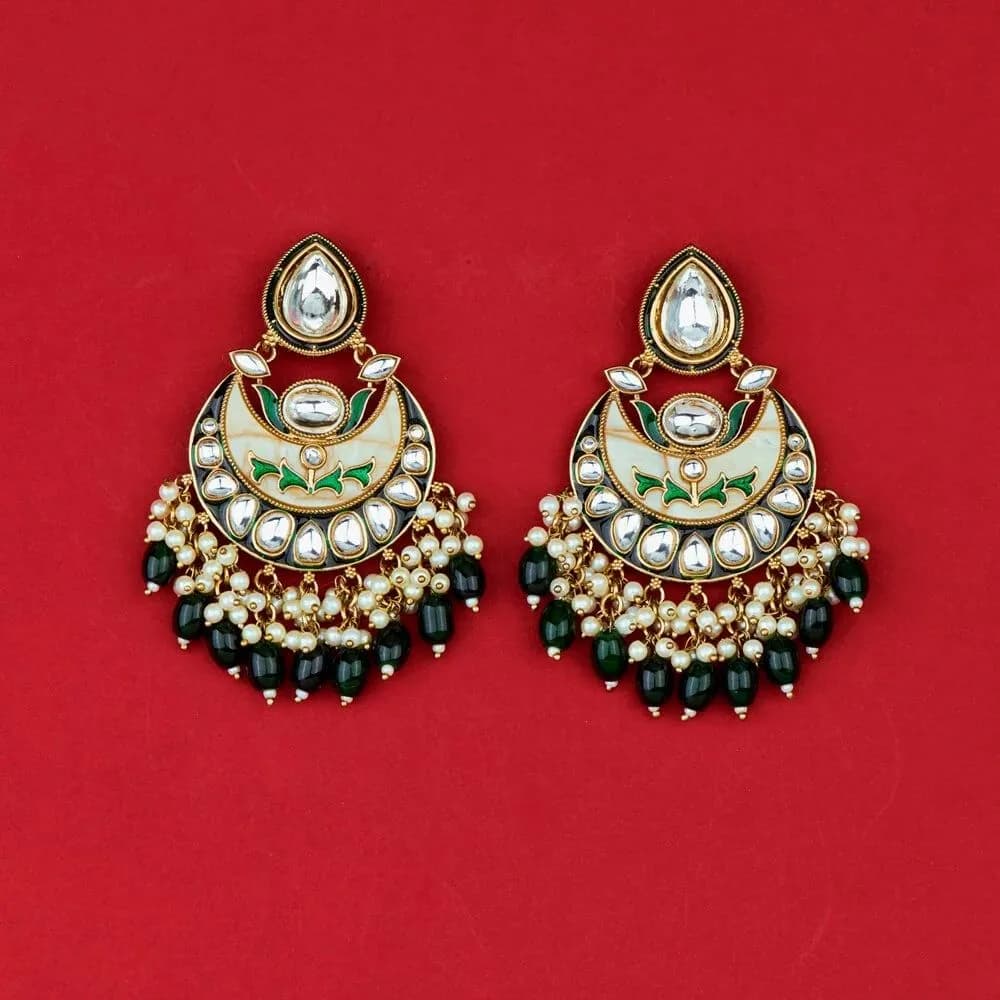
Indo-Western dressing fails in a predictable way: two or three ethnic pieces added to a Western outfit, so the look reads as an ethnic outfit that didn't quite happen. The fix is arithmetic. One ethnic element, and everything else stays firmly Western.
That one element is usually earrings, because they sit near the face and get read as intentional. A single ring works too. A full necklace set with a Western dress is the combination most likely to look confused.
What the outfit needs to be
| Outfit | Works? | Why |
|---|---|---|
| Solid-colour dress | Yes — best case | Clean field, jewellery is the only ornament |
| White or black shirt | Yes | The classic; endlessly repeatable |
| Denim + plain top | Yes | Contrast is the point |
| Printed dress | Rarely | The print already occupies the ornament role |
| Textured or embellished top | No | Two kinds of detail competing at the same distance |
| Structured blazer + trousers | Yes — go bigger | Tailoring supports a larger earring |
Pairings that consistently work
Jhumkas with a white shirt
The most durable Indo-Western combination in Indian wardrobes. Roll the sleeves, keep the neck open, wear nothing else. It reads as put-together in an office and at dinner.
Pearl statement earrings with a black dress
Pearls plus gold tone against black is a formal-wear combination in both traditions, which is why it never feels like fusion at all. This is the safest way to wear a large ethnic earring to a Western-dress-code event.
Small meenakari drops with denim
Everyday, low effort, and the enamel colour does more work against indigo than it does against a printed kurta.
A delicate kundan necklace over a plain co-ord
The only necklace pairing on this list, and it needs a genuinely plain outfit — a matching top and trouser set in one colour with no detailing at the neck.
Where people go wrong
- Adding a dupatta to a Western outfit to 'justify' the jewellery. It rarely reads as intended.
- Wearing oxidised and gold-toned pieces together. Pick one metal story.
- Matching enamel colour exactly to the outfit colour. Contrast is safer than a near-match.
- Choosing a delicate ethnic piece for a bold outfit. If the clothes are loud, the jewellery has to be loud enough to be read as a choice.
Occasion-by-occasion
- Office: one small piece. Details in everyday ethnic jewellery for work.
- Dinner or party: statement earrings with a solid dress, nothing at the neck.
- Mehendi brunch in Western dress: a bracelet and small earrings; hands are on display.
- Reception with a gown: either large earrings or a choker, never both.
- Travel: light drops. They survive a flight, a hotel room and a dinner without needing a second piece.
Frequently asked questions
Can I wear jhumkas with jeans?
Yes — medium jhumkas with denim and a plain top is a standard, well-established look. Keep everything else plain.
Does ethnic jewellery work with a Western gown?
It does, provided the gown is a solid colour and you wear only one piece. Large earrings are the easiest choice; a choker is the alternative.
Should I match my jewellery to my outfit colour?
Contrast is more reliable. Multi-colour meenakari behaves almost like a neutral because the eye reads it as ornament rather than as a colour that must coordinate.
Can I mix gold-toned and silver jewellery?
In Indo-Western styling, better not to. Mixed metals need a very confident, deliberate outfit to read as a choice rather than an accident.
Shop this guide